A New Kind of Travel Drone: Why 360 Capture Changes the Way You Record the World
Travel content has changed dramatically in the last few years. A phone can still handle basic clips, action cameras remain useful for quick moments, and traditional drones continue to dominate for sweeping landscape shots. But for travelers who want a more flexible way to document a trip, the latest generation of 360-degree drone technology opens up a very different workflow. Instead of trying to nail the perfect angle in real time, you can capture the entire scene first and decide on the framing later. That simple shift changes how you move through a city, how you approach outdoor adventures, and how much creative freedom you have when you return home to edit.
That is what makes the Antigravity A1 so interesting. It is not just another flying camera with a few cosmetic upgrades. It is built around the idea that the camera should capture everything around it, not just what sits in front of the lens. For travelers, that matters. Markets feel busier, coastlines look more cinematic, and mountain paths become easier to film because you are no longer constantly worried about whether the drone is pointed in the right direction. You fly, you explore, and later you choose the angle that best tells the story.
For anyone who has ever missed a great shot because the subject moved too quickly or the drone was pointed the wrong way, this is a meaningful change. It is also one that fits travel particularly well, because travel rarely happens on cue. The best moments are often spontaneous, and a 360 drone is designed to be forgiving in exactly those moments.
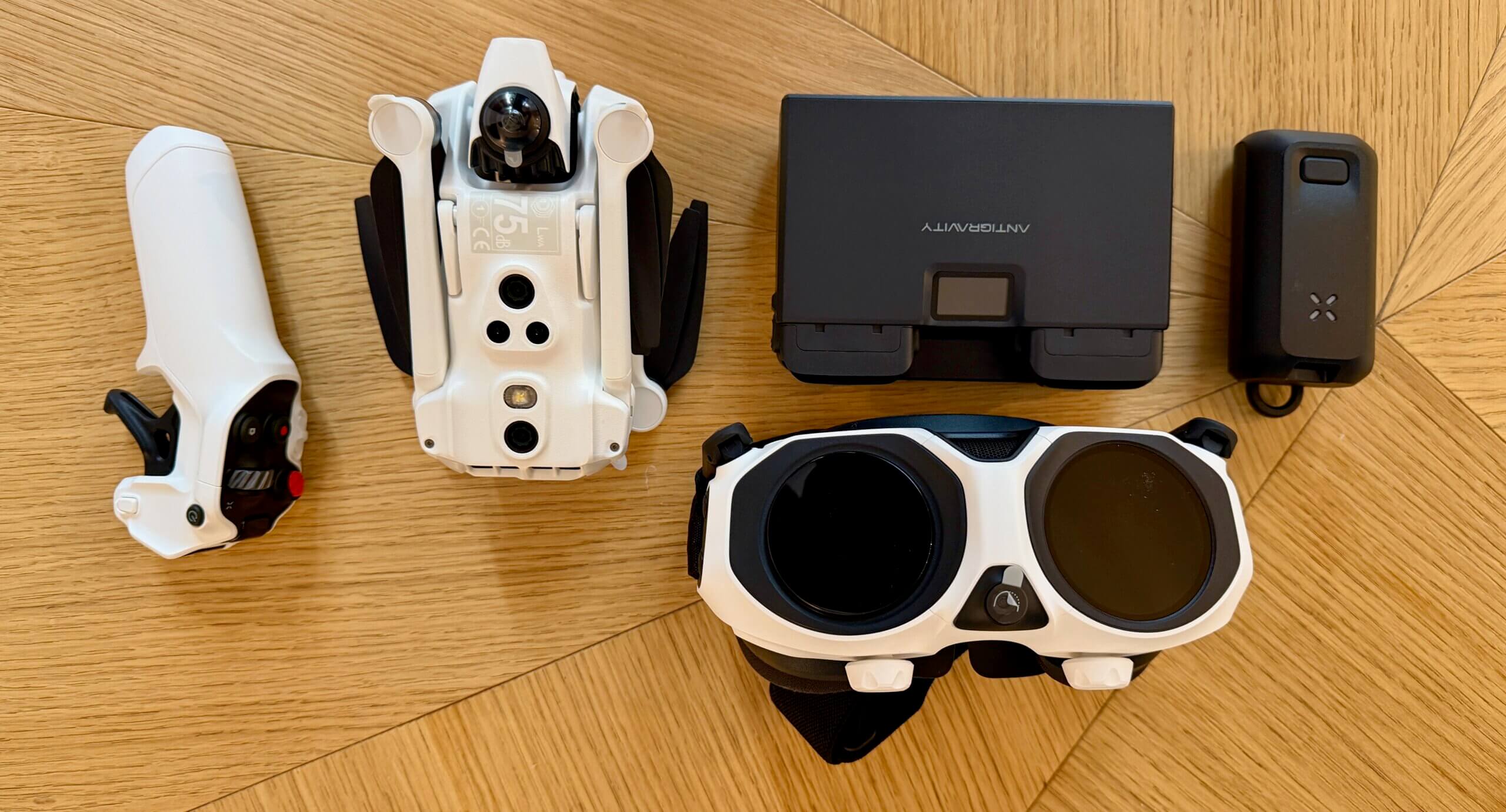
Why the Antigravity A1 Stands Out
The Antigravity A1 is built around a dual-lens 360-degree capture system that records in every direction at once. In practical terms, that means the drone is always gathering more visual information than a standard forward-facing camera. Instead of making you commit to a single composition before takeoff, it lets you reframe later in post-production. For travel creators, this is a major advantage. You can concentrate on flying safely and following the story, then decide afterward whether the best version of the scene is a wide reveal, a close-follow shot, or a dramatic overhead sweep.
The system is especially appealing for creators who want polished footage without carrying a full production setup. Traditional drone filming often requires a mental checklist: position, angle, movement path, exposure, subject placement, and whether the gimbal is level. With a 360 drone, that pressure eases. You still need to fly responsibly and understand your surroundings, but you no longer need to solve every framing decision in the air. That gives the A1 a very specific appeal for travelers who want beautiful footage without a steep learning curve.
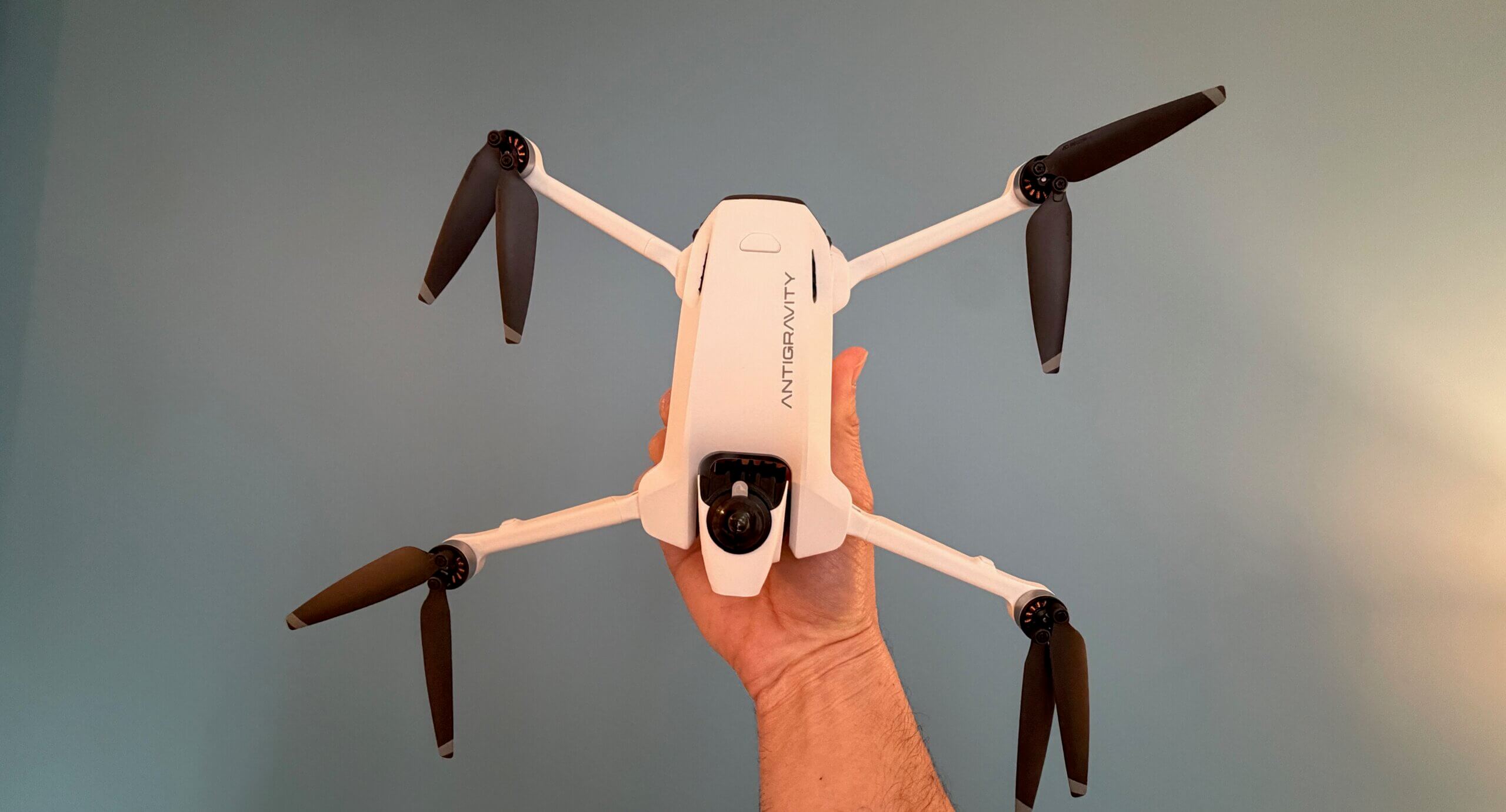
Another important point is portability. Many travelers want drone capability, but they do not want to sacrifice luggage space or deal with bulky gear that becomes a burden on the road. The A1’s lightweight build and folding design make it easier to pack than many larger aerial cameras. It feels like gear made for actual travel rather than for a studio shelf. That alone makes it appealing for people who move between airports, trains, road trips, and different types of accommodation.
Two Lenses, One Seamless Sphere
What makes the camera system so distinctive is the way the two ultra-wide lenses work together. Each lens captures a huge portion of the environment, and the stitched result is a full 360-degree sphere. That means you are not just recording the view in front of the drone; you are recording the whole environment around it. When the footage is exported, the drone itself can be removed digitally, creating the effect of a camera floating in the air. For travel footage, this can look remarkably clean and immersive.
This approach is particularly effective in scenic destinations where there is something interesting in every direction. Picture a cliffside road, a crowded waterfront, or a summit with clouds rolling over the ridge. A conventional drone can only tell part of that story at a time. A 360 system captures the broader atmosphere, which is often what people actually remember when they travel. It is less about a single perfect angle and more about preserving the feeling of being there.
The 1/1.28-inch CMOS sensors are another reason the A1 is more serious than a typical novelty drone. While they are not as large as the sensors found in some high-end cinema drones, they offer a meaningful improvement over smaller action camera sensors, especially when the light is not ideal. Travel rarely gives you perfect conditions. Sunrise happens quickly, shade falls unevenly across streets, and dusk often arrives before you are ready. Better low-light performance and stronger dynamic range help preserve detail in skies, buildings, and shadowed landscapes when the day is working against you.
Just as importantly, the drone’s 249-gram weight with the standard battery is a practical travel advantage. In many places, drones above 250 grams are subject to stricter registration and flight rules. Staying just under that threshold can simplify the process in some destinations, though travelers still need to check local regulations carefully before flying. The lesson is simple: lighter gear can mean fewer hassles, but responsibility still matters no matter where you are filming.
Build Quality That Feels Ready for the Road
Travel gear takes abuse. It gets packed into backpacks, stuffed into overhead bins, carried through humid cities, and unpacked on beaches, boats, and mountain trails. A drone designed for travel needs to feel sturdy enough to survive that lifestyle. The A1’s carbon-fiber-reinforced polymer construction gives it a more substantial feel than many cheaper plastic models. The folding mechanism also matters more than people think. If a product opens and closes with confidence, it inspires confidence in the field.
The size is another advantage. Folded down, it becomes compact enough to sit comfortably in a carry-on or camera bag. That does not make it tiny, but it does make it manageable. For travelers, manageable is often the difference between bringing a drone on a trip and leaving it at home. If a piece of gear is easy to access, easy to protect, and easy to repack, you are more likely to use it regularly instead of treating it like a fragile special occasion item.
The Flight Experience
Flying the A1 feels different from piloting a conventional drone because the system is designed to reduce friction. The vision goggles provide a highly immersive experience, and the dual micro-OLED displays help create a clear sense of what the drone is seeing. Head tracking is one of the most useful parts of the experience, especially for travel filming. If you turn your head, the view pans with you. That means you can naturally inspect the landscape while flying, which feels more like standing in the scene than monitoring a machine from a distance.
For many travelers, the best part is the single-handed motion controller. It is intuitive enough that even someone who is not deeply experienced with drones can understand the basics quickly. Point where you want to go, adjust your wrist, and use the trigger to move forward. That simplicity is valuable when you are trying to film in unfamiliar surroundings. Street corners, trail edges, harbor walls, and open fields all demand quick judgment. A control system that feels natural reduces the cognitive load and lets you stay focused on the environment.
More experienced users may appreciate the option for a traditional stick controller, but the motion-based control is what gives this drone its travel-friendly personality. It lowers the barrier to entry without completely limiting control. That balance is hard to get right, and it is one of the reasons the A1 feels broader in appeal than many niche aerial devices.
Camera Performance for Travel Storytelling
The promise of 8K on a 360 drone needs to be understood in context. With 360 video, the resolution is spread across an entire sphere rather than a standard flat frame. That means the final reframed image is only a portion of the full capture, so the effective detail depends heavily on how you crop and edit. Even so, 8K capture remains a strong asset for travel creators because it gives you flexibility. You can decide later whether the best shot is a wide landscape view, a tighter travel vlog framing, or a dynamic follow shot that stays locked on a moving subject.
The color options are equally useful. The vivid profile is ideal for creators who want ready-to-publish footage with punchy color straight out of the camera. The 10-bit log profile, on the other hand, is better for those who want to color grade more carefully and match the drone footage to other cameras. That matters for travelers who mix drone clips with phone video, mirrorless footage, and action camera shots. A consistent look makes the final edit feel more intentional.
Stabilization is often the deciding factor in whether drone footage feels watchable or polished, and the A1’s flow-style stabilization is a major strength. Strong wind, quick directional changes, and uneven movement can ruin travel footage very quickly. A smooth stabilizing system makes the drone feel more professional and less like a novelty gadget. For outdoor destinations, this is especially important, because many of the world’s most dramatic travel scenes also happen to be the most difficult to film.
The Editing Workflow: Why the App Matters So Much
One of the most important parts of a 360 drone is not the drone itself but the software that helps you shape the final video. The Antigravity Studio app makes the workflow more approachable by allowing wireless transfers and phone-based reframing. That may sound like a small convenience, but on the road it can save time and keep your creative momentum going. If you are traveling through multiple destinations in a short period, you do not always want to sit with a laptop for hours. A mobile-first editing workflow can make the difference between posting while the experience is still fresh and letting footage pile up until it loses relevance.
The gyroscope-based reframing system is especially intuitive. Instead of learning a complicated editing interface right away, you can move your phone as if you were operating a camera in the scene. This makes the first round of editing feel more natural and less technical. The auto-framing tool is also valuable for solo travelers and independent creators because it can help follow subjects without constant manual input. That means you can spend more time observing the location and less time worrying about whether the shot has drifted away from the action.
For travel content, this is a meaningful workflow improvement. A drone that captures everything is only useful if the editing process remains practical afterward. The A1’s app ecosystem appears designed with that reality in mind.
Battery Life and Real-World Travel Use
Battery life is one of the unavoidable limitations of small drones. Even the best compact drone cannot escape physics. In ideal conditions, the A1 offers a respectable flight time, but real-world use will always reduce that number. Wind, temperature, repeated takeoffs, and extended recording all affect performance. For travelers, this means planning ahead. If you want one great sunrise sequence, one coastal pass, and one low-altitude reveal over a town square, you need to think about battery management before you leave the hotel.
That said, 360 capture changes the value equation. You do not need to repeat the same flight path multiple times just to try different angles. A single take can produce several usable edits. That means the work per minute is higher than with many traditional drones. On a trip, that translates into less repetition and more flexibility. If you are trying to make the most of limited time in a destination, that matters a lot.
The larger battery option offers more endurance, though it does add weight and shifts the drone away from its most travel-friendly form. This is a recurring tradeoff in travel gear: more performance often means less portability. The best setup depends on the kind of trip you are taking. A light, easy-to-carry configuration is often better for city breaks and multi-stop itineraries, while longer battery life may be more useful on road trips or in remote destinations where you have fewer chances to recharge.
Who This Drone Is Really For
The Antigravity A1 is not designed for every traveler, and that is part of its appeal. It is especially compelling for creators who want cinematic results without a complicated production setup. Extreme sports travelers will appreciate the ability to track movement without constantly worrying about losing the subject. That includes skiers, bikers, surfers, and hikers moving through unpredictable terrain. Because the camera captures everything, the drone can keep the action in frame far more easily than a fixed lens system.
Real estate videographers also have a strong use case, particularly for interiors and architectural storytelling. A 360 system can make it easier to capture the shape of a property in a way that feels continuous and fluid. For travel creators, though, the best fit is probably the person who wants a cleaner, more cinematic way to document journeys without carrying a large crew or spending hours on complex camera moves. If your travel style is hands-on and storytelling-driven, the A1 makes a strong case.
Hidden Gems
When people think about drone footage, they often imagine famous landmarks and obvious postcard views. But the real magic of a 360 drone often shows up in less obvious places. A quiet mountain pass at dawn, a narrow coastal footpath, a small fishing harbor before the boats leave, or a roadside overlook with no crowds can all become more interesting when captured from above. These are the places where a drone can reveal scale and atmosphere without needing a dramatic headline attraction.
Hidden gems are especially valuable for travel creators because they usually offer better freedom to film, fewer distractions, and more time to experiment. In popular destinations, you may have to work around people, restrictions, and limited launch space. In lesser-known locations, you can often move more slowly and think more creatively. A 360 drone rewards that kind of exploration because it captures more than the obvious subject. It records the environment, the texture of the landscape, and the small details that make a place feel memorable.
That is one reason this type of drone fits road trips so well. On long drives, the most memorable moments are often the unexpected ones: a roadside ridge with layered hills, a half-empty beach at sunset, or a village lane with dramatic weather moving in. Those scenes may not be famous, but they often become the clips people remember most.
Travel Logistics: Practical Advice for Carrying Drone Gear
Even the best drone is only useful if you can actually bring it with you and use it legally. Before any trip, check local drone regulations carefully. Weight thresholds, no-fly zones, permit requirements, park restrictions, and privacy rules can change from one country to another and even from one city to the next. A compact drone may simplify the process, but it does not eliminate the need to research. Travelers should also understand that weather conditions can vary sharply in coastal, mountainous, and urban environments. A drone that feels stable in calm conditions may become much harder to manage in gusty air.
Packing matters too. Keep batteries in a way that follows airline rules, protect the lenses from scratches, and make sure the controller, goggles, and charging cables are stored together so you are not searching for them after arriving at your destination. A good travel drone kit should be organized enough that setup does not feel like a production in itself. The easier it is to deploy, the more likely you are to use it often.
For travelers on a budget, it is also worth thinking about whether the drone replaces other gear. If one device can cover wide scenic shots, follow footage, and creative reframing, you may not need to carry as many alternative filming tools. That can save space and reduce the temptation to overpack.
Why This Kind of Gear Fits Modern Travel
Travel content has become more competitive, but audiences still respond to footage that feels immersive and human. A 360 drone supports that style well because it captures context rather than just a single polished angle. It lets creators tell richer visual stories without needing to stage every movement. That can be especially valuable when you are traveling solo, moving quickly between places, or trying to keep gear minimal.
The Antigravity A1 is impressive not because it solves every problem, but because it solves a very specific one in an elegant way. It removes the pressure of framing in the air and replaces it with the freedom to think later. For travelers, that freedom is worth a lot. It means more time enjoying the destination, more confidence while flying, and more usable footage when the trip is over.
How to Travel the World on $75 a Day

My New York Times best-selling book to travel will teach you how to master the art of travel so that you’ll get off save money, always find deals, and have a deeper travel experience. It’s your A to Z planning guide that the BBC called the “bible for budget travelers.”
Click here to learn more and start reading it today!
Book Your Trip: Logistical Tips and Tricks
Book your flight by comparing fares across multiple search engines so you can check both major airlines and smaller carriers. Prices vary constantly, and the cheapest option is not always the first one you see. For accommodation, compare hostels, guesthouses, and hotels before committing, especially if you are traveling with camera gear and want secure storage. Travel insurance is worth considering for any trip that involves electronics, outdoor activity, or international movement, because accidents and delays are much easier to handle when you are covered.
If you want to reduce the cost of travel over time, points and miles can help, especially for flights and hotel stays. Rental cars can also be useful if you are planning to chase scenic locations outside the city, and activity platforms can help you find local tours, guided experiences, and skip-the-line access when you want to balance independent exploration with convenience. The best trips usually combine good planning with enough flexibility to chase the unexpected, and that is often where the best footage happens.
For creators, the real value of the Antigravity A1 is not that it replaces every other camera. It is that it changes what is possible when you are standing in an unforgettable place and want to capture it with more freedom, more context, and a little less stress.
If you are a creator who wants to move beyond the same predictable drone footage and start capturing travel scenes with more depth and flexibility, the Antigravity 360 is a genuinely exciting tool to explore.