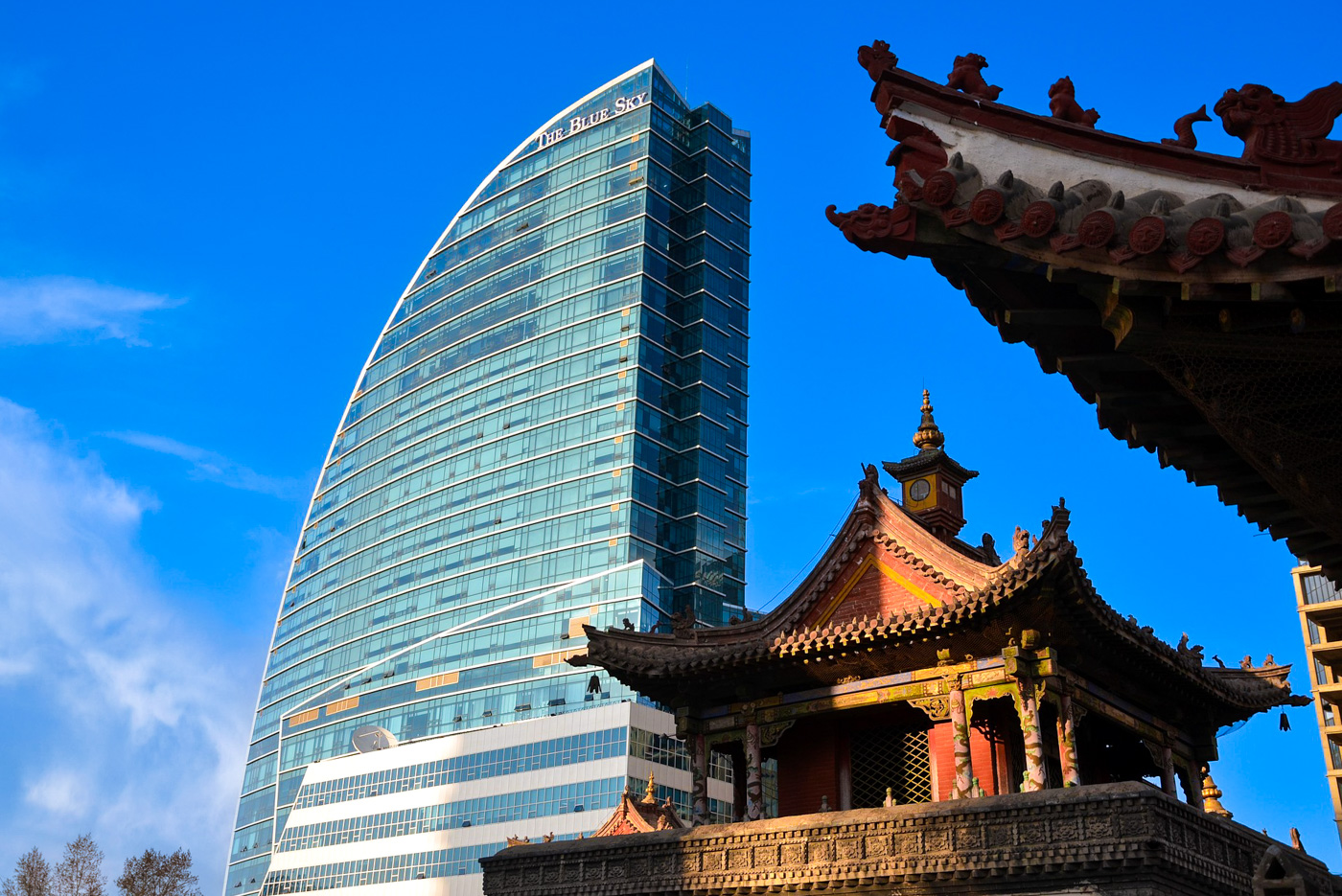
Ulaanbaatar is one of those cities that resists easy first impressions. For many travellers, it is simply the place where a Mongolian journey begins and ends: a practical stopover before the wide-open steppe, the Gobi Desert, or a long overland adventure deeper into the country. But spend a little time here and the capital starts to reveal a far more complicated identity. It is polluted, noisy, and often frustrating to navigate, yet it is also layered with history, cultural depth, and a surprising number of excellent museums and temples. The city sits at the crossroads of Mongolia’s past and present, and the tension between those worlds is visible everywhere, from Soviet-era apartment blocks to modern glass towers, from Buddhist monasteries to giant statues of Chinggis Khan.
That contrast is exactly what makes Ulaanbaatar worth more than a rushed overnight stay. If you give the city two full days, or better yet three with a countryside excursion, you can come away with a strong sense of Mongolia’s identity before heading beyond the capital. You’ll understand more about the country’s imperial legacy, its centuries of Buddhist influence, the trauma of Soviet rule, and the resilience of a society that has had to adapt repeatedly to political and environmental pressure. For a city that so many people dismiss before they arrive, Ulaanbaatar offers a genuinely rich introduction to Mongolia.
A Quick Primer on Mongolian History
To make sense of Ulaanbaatar, it helps to understand the broad strokes of Mongolian history. The city is full of symbols that can feel confusing at first: temples standing near concrete housing blocks, heroic statues of ancient conquerors, and public squares shaped by Soviet ideology. Once you know the background, those layers begin to fit together.
In the 13th century, Chinggis Khan united the Mongol tribes and built the largest contiguous land empire in history. His influence is still enormous in Mongolia today, and his image appears across the capital in statues, museums, product branding, and public monuments. After the empire fragmented, Mongolia’s political importance faded, but its nomadic traditions and sense of identity endured.
Centuries later, Tibetan Buddhism became central to Mongolian life. Monasteries grew in importance and religious leaders became politically powerful. That era left a deep mark on the capital, even though much of what survives today has been reconstructed after decades of destruction.
Then came the 20th century and another dramatic shift. Mongolia became a socialist state in the early 1920s and fell under heavy Soviet influence. Religion was suppressed, thousands of monks were killed, and many monasteries were destroyed. Ulaanbaatar was reshaped with large concrete buildings, broad public squares, and state monuments. Even the name of the city, which means “red hero,” reflects that political history.
In the 1990s, Mongolia moved peacefully toward democracy after the Soviet Union began to collapse. That transition transformed the city once again. Today, Ulaanbaatar is a mix of old and new, traditional and modern, local and global. Once you understand those eras, the capital becomes much easier to read.
Day One: Monasteries and Museums
A good place to begin is Gandan Monastery, one of the most important Buddhist sites in the country. It is the kind of place that immediately reminds you how deeply spirituality still matters in Mongolia, even in a city that can feel chaotic and secular on the surface. If you time your visit for the morning prayers, you may hear monks gathering as a gong echoes through the streets. It is a moving introduction to the city and a strong first stop for anyone hoping to understand Mongolia beyond its capital’s rough edges.
The main attraction here is the enormous golden statue of Migjid Janraisig, a figure associated with compassion. The current statue was reconstructed after the democratic era, following the destruction of the original under communism. Gandan is a living reminder of what was lost and what was restored. It is busy enough to feel active, but calm enough to offer a break from traffic and noise.
From there, the Natural History Museum of Mongolia is a short walk away and absolutely worth your time, especially if you have even a passing interest in dinosaurs. Mongolia’s Gobi Desert is one of the most important dinosaur fossil regions in the world, and the museum showcases that legacy well. The highlight is a massive Tarbosaurus skeleton, but the collection also includes fossils, eggs, skulls, and other remains that tell the story of a prehistoric landscape very different from the dry expanse you see today. On a practical level, this museum is often delightfully quiet, which makes it one of the best places in the city to slow down and look closely at what is on display.
Another essential stop on the same day is the Chinggis Khan Museum, which is one of the finest museums in Mongolia and one of the best introductions to the country’s long history. Spread across multiple floors, it traces Mongolia from early nomadic societies through the rise of the Mongol Empire and beyond. The museum is ambitious in scale and scope, with thousands of artefacts and carefully designed exhibitions that show how Chinggis Khan fits into a much wider national story. Visitors should plan to spend several hours here rather than rushing through. The museum is best approached as a journey rather than a checklist.
Just be prepared for practical frustrations. Some museums in Ulaanbaatar have limited English signage and rely heavily on QR codes, which can make a visit feel more cumbersome than it needs to be. Still, the substance usually outweighs the inconvenience. For travellers who want context before heading farther into Mongolia, this is one of the most rewarding places to spend time.
Depending on your pace, Dashchoilin Monastery can be added before heading to Sukhbaatar Square. It is quieter than Gandan and less famous, but that can be part of its charm. Restored in the 1990s, it offers a more intimate feel and a welcome pause from the city’s constant motion. If you are interested in Buddhist architecture and prefer places that feel less touristed, it is a worthwhile detour.
Sukhbaatar Square is the political heart of Ulaanbaatar. It is broad, open, and dominated by major government buildings, including the Parliament House. The square is named after Damdin Sukhbaatar, whose role in Mongolia’s 1921 revolution is commemorated here. This was once the stage for state parades and official ceremonies, and it later became a key gathering point during the democratic protests of 1990. Today, it remains a central civic space where locals pass through, events are held, and travellers stop to take in the scale of the architecture. It may not be the most atmospheric part of the city, but it helps ground the visitor in the political life of the capital.
If you enjoy shopping, the area around the square is also a practical place to browse for cashmere. Mongolian cashmere is among the best in the world, thanks to the country’s harsh climate and the fine undercoat produced by local goats. Stores such as GOBI Cashmere offer quality pieces at prices that are often far more reasonable than you might expect. A good sweater or scarf here is not just a souvenir; it is something you will likely wear for years. For anyone wanting a purchase that feels both useful and distinctly Mongolian, this is a strong option.
On the way back, you can make a few small detours that add texture to the day. The city sign, the Beatles statue, and other public art installations are not major attractions, but they reflect the city’s habit of mixing global references with local meaning. The Beatles monument, for example, nods to the way Western music became a quiet symbol of freedom during the socialist era. That kind of detail is what makes Ulaanbaatar interesting: even small monuments often have a bigger story behind them.
Hidden Gems
Some of the most memorable places in Ulaanbaatar are not the obvious headline attractions. The city rewards travellers who are willing to look a little closer, especially if they are curious about craft, religion, and the quieter corners of local life. One of the best lesser-known experiences is wandering through Choijin Lama Temple Museum. Because it was preserved as a museum rather than destroyed, it contains rare pre-1930s religious objects, elaborate interiors, and a sense of atmosphere that is difficult to find elsewhere in the city. The colours, gold detailing, and statues make it one of the most beautiful religious spaces in the capital.
Another underrated stop is the Fine Arts Zanabazar Museum. It is not always the most obvious choice for travellers, but it holds a fascinating collection of Buddhist sculpture, historical artefacts, and ceremonial masks. The tsam masks and costumes are especially striking, offering a vivid look at ritual dance traditions and Mongolia’s artistic heritage. For people who like museums that go beyond the standard historical narrative, this one is an excellent inclusion.
For something more contemporary and socially conscious, Mary & Martha is a standout souvenir shop. Everything sold there is made in Mongolia by local artisans, and the quality is refreshingly high. If you are the kind of traveller who wants to buy something meaningful rather than generic, this is one of the best places in town to do it. It is also a reminder that Ulaanbaatar’s cultural scene is not limited to monuments and museums; there is an emerging space for ethical craft and local design too.
Day Two: More Museums, More Monasteries
Day two can begin with the National Museum of Mongolia, which is an excellent broad overview of the country’s history. While some museums specialize in one theme or era, this one helps connect the dots. It covers prehistoric life, nomadic traditions, Buddhist influence, Soviet repression, and the democratic transition in a way that is accessible and genuinely informative. One of the most memorable details is the full-size ger displayed inside the museum, which gives visitors a better sense of how central nomadic architecture is to Mongolian identity. There is also a surprisingly varied mix of objects on display, including tools, horse gear, clothing, and even a spacesuit linked to Mongolia’s cosmonaut history.
From there, Choijin Lama Temple Museum is a natural next stop if you missed it earlier or want to spend more time exploring religious history. This complex is especially rewarding because of its preserved interiors and ornate objects. The atmosphere feels more intimate than at larger sites, and the setting offers a rare glimpse into the pre-communist religious world that shaped Mongolia for centuries.
Nearby, Ulaanbaatar Park and the enormous Mongolian flag provide a more modern change of pace. The park is a welcome green space, especially for locals looking to escape the density and traffic of the city. The giant flagpole, which is among the tallest in the country, is the sort of landmark some travellers actively seek out because it makes for a strong visual marker of place. It is not the sort of attraction that takes a long time to explore, but it can fit neatly into a day of city wandering.
No visit to Ulaanbaatar is complete without at least one proper market experience, and Narantuul Market delivers exactly that. Often called the Black Market, it is enormous and wildly varied. The market is less a place than a world of its own, selling everything from boots and clothing to saddles, musical instruments, household goods, and Soviet memorabilia. It is chaotic, crowded, and fascinating in equal measure. Because it is primarily geared toward locals, it offers a more grounded look at daily commerce than a tourist market ever could. If you are comfortable with crowds and keep an eye on your belongings, it is one of the most memorable places to wander in the capital.
If time allows, the Zaisan Memorial is well worth the climb. The structure was built to honour Soviet soldiers and the friendship between Mongolia and the Soviet Union after World War II, but today many visitors come as much for the views as for the ideology. The mural inside is a classic example of socialist monumental art, full of bold colours and heroic imagery. The panoramic view from the top is the real reward, however, with the city spreading out below in a mix of gers, apartment blocks, and modern towers, framed by mountains in the distance.
Day Three: An Epic Day Trip into the Countryside
While Ulaanbaatar itself is worth several days, one of the biggest reasons to base yourself in the capital is the easy access to the surrounding countryside. A day trip to Gorkhi-Terelj National Park and the Chinggis Khan Statue Complex can completely change your perception of what Mongolia looks like. The drive quickly moves you from city traffic into open landscapes, and the contrast is striking. One moment you are dealing with concrete and congestion; the next you are surrounded by grassland, hills, and big skies that feel almost unreal after a few days in the capital.
The Chinggis Khan statue is impossible to ignore. It is huge, gleaming, and proudly excessive, which is exactly why it works. You can enter the structure, learn a little about its symbolism, and climb to a viewing platform for a wide look at the surrounding steppe. Whether or not you are especially interested in monumental sculpture, it is worth visiting simply to understand how central Chinggis Khan remains to the modern national imagination.
The day usually includes cultural activities such as archery, camel riding, and time with an eagle, each of which offers a glimpse into traditions that remain important in Mongolian life. Archery is one of the country’s traditional sports and feels especially fitting in a landscape where hunting and horsemanship have historically shaped daily survival. Seeing a trained eagle up close is equally memorable, especially if you have only ever encountered them as symbols rather than living working animals. Camels may be less elegant to ride than their reputation suggests, but the Bactrian camels of Mongolia are perfectly adapted to the climate and landscape.
One of the most meaningful parts of the excursion is usually a visit to a local family’s ger. These homes are practical, portable, and deeply tied to the nomadic heritage of Mongolia. Inside, the arrangement of the space shows how every object has a purpose. Visitors may be offered aaruul, a dried fermented curd snack, and airag, the fermented horse milk that remains one of Mongolia’s most iconic beverages. Both are strongly associated with nomadic hospitality, and trying them in a family setting creates a more personal connection to the culture than a museum ever could.
Lunch on the road often includes a wide spread of local dishes, and khuushuur is usually the standout. These deep-fried meat pastries are one of the country’s most beloved foods and, for many travellers, the easiest thing to love in a cuisine that can otherwise feel heavy and repetitive. The combination of stews, noodles, grilled meats, and fried dough reflects the practical realities of life in a cold climate where rich, filling food has long been the norm.
Gorkhi-Terelj itself is a lovely surprise. Turtle Rock is the most famous landmark in the park, and once you see it, the name makes sense. The climb can be awkward in places, but the views from the top make it worthwhile. Forested hills, scattered gers, and open mountain scenery give the area a very different feel from the city. It is one of the best reminders that Mongolia is not only about desert and steppe, but also about dramatic highland landscapes.
Another highlight of the park is Aryabal Temple, a meditation centre carved into the mountainside. Reaching it requires climbing 108 steps, a number with symbolic importance in Buddhism. The temple’s bright colours and peaceful setting make it a fitting final stop before heading back to the city. It is one of the few places where the landscape, architecture, and spiritual history of Mongolia all seem to align naturally.
Where to Stay in Ulaanbaatar
Accommodation in Ulaanbaatar is generally affordable, and travellers can find good value without compromising too much on comfort. Danista Nomads is one option that stands out, especially for couples or visitors looking for a pleasant, well-located base. A free breakfast, helpful staff, reliable internet, and a homely atmosphere can go a long way in a city that sometimes feels overwhelming.
That said, it is worth paying attention to room choice. In some accommodations, one or two rooms may be affected by plumbing or ventilation issues, so it can be wise to ask questions before settling in. In general, though, Ulaanbaatar is not a city where you need to spend a fortune to stay comfortably. The bigger challenge is usually choosing a place that is convenient enough to reduce time spent battling traffic and uneven sidewalks.
What makes Ulaanbaatar compelling is not that it is easy or polished, but that it offers something many capital cities do not: a direct line into a country’s history, contradictions, and resilience. Spend a few days here and the city stops feeling like a necessary inconvenience. It becomes part of the journey, with all its rough edges intact and all its strange, memorable charm still visible in the dust and the temples and the museums and the wide open squares