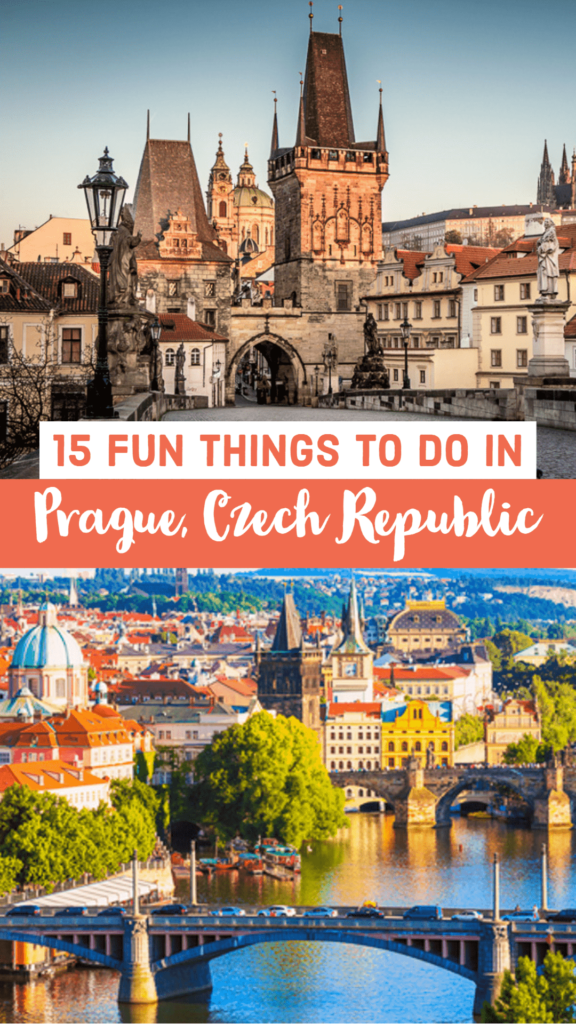
Prague earns every bit of its nickname, the Golden City of a Hundred Spires. Few European capitals layer history, architecture, and everyday life as gracefully as this one. Gothic towers rise above narrow lanes, Baroque façades catch the light at dusk, and medieval streets still carry the rhythm of modern Prague, where trams clatter past cafés, jazz drifts out of cellar bars, and locals linger over coffee as if time has learned to slow down here. It is a city that feels theatrical without being artificial, romantic without trying too hard, and deeply lived-in in ways that make a short visit feel strangely intimate.
Whether you arrive for a long weekend, a family holiday, or as part of a larger Central Europe itinerary, Prague has a way of unfolding in layers. At first, it is all postcard beauty: castle views, bridge statues, and the famous clock in Old Town Square. Then, almost as soon as you settle in, the city begins to reveal quieter pleasures. A tucked-away courtyard. A neighborhood pub serving honest Czech food. A riverside path where locals stroll after work. A park with a skyline view that tourists often miss. That combination of grandeur and ease is what makes Prague one of Europe’s most satisfying city breaks.
For travelers planning their time carefully, Prague also offers excellent value compared with many major European capitals. The city is compact enough to explore on foot, public transport is efficient, and there are accommodation options for nearly every budget. You can find comfortable guesthouses and hostels without stretching your wallet, while boutique and luxury hotels still tend to be more affordable than similar properties in Paris, Vienna, or London. If you like the idea of seeing a city that feels both magical and manageable, Prague belongs near the top of the list.
![17 Unmissable Things To Do In Prague, Czech Republic [Updated 2026]](https://www.ytravelblog.com/wp-content/uploads/2010/10/dreamstime_xs_42628509.jpg)
One of Prague’s great strengths is that it suits almost every style of trip. Couples come for the atmosphere and the river views. Families appreciate the walkability, parks, and easy sightseeing rhythm. Solo travelers enjoy the balance of culture and comfort, with enough to do to fill several days without ever feeling rushed. Backpackers find a city that is easy to navigate and full of social energy, while food lovers and architecture enthusiasts can spend hours moving from one neighborhood to the next, discovering how each district has its own personality. Prague is not just beautiful; it is versatile.
Prague at a glance
Before diving into the city’s most memorable sights, it helps to know the basics. Prague is highly walkable, especially in the historic center, but trams and the metro make longer distances simple and inexpensive. The city has a broad range of accommodation, from budget-friendly guesthouses and hostels to stylish boutique hotels and luxurious historic properties. Many of the main attractions can be visited in a single trip, though the city rewards slower travel just as much as checklist sightseeing. If you want to save money on admissions, city passes such as the Prague Cool Pass can reduce the cost of several attractions, restaurants, and entertainment options. For travelers staying longer, that can make a noticeable difference.
It is also worth remembering that Prague changes with the seasons. In winter, the city glows with markets, candlelit interiors, and atmospheric cold-weather views. Spring brings fresh green parks and quieter streets. Summer is lively and bright, though busier, and autumn is often ideal for photography, with softer light and fewer crowds. No matter when you go, the city’s sense of drama remains intact.
Marvel at the Astronomical Clock
![17 Unmissable Things To Do In Prague, Czech Republic [Updated 2026]](https://www.ytravelblog.com/wp-content/uploads/2010/10/astronomical-clock-close-up-in-prague-old-town-square-czech-republic.jpg)
The Astronomical Clock in Old Town Square is one of Prague’s defining landmarks, and it deserves its reputation. Installed in 1410, it is widely regarded as the third-oldest astronomical clock in the world and the oldest one still operating. That alone would make it remarkable, but what makes the clock especially fascinating is the way it blends engineering, symbolism, and spectacle into one enduring attraction. It is not simply a timepiece; it is a medieval machine with a story to tell.
At the center of the clock is the astronomical dial, which shows the positions of the Sun, Moon, Earth, and zodiac constellations. It also includes a calendar dial marking the days and saints’ feast days throughout the year. For visitors, the clock is both an object of curiosity and a window into the scientific imagination of the Middle Ages. It reflects a time when the sky, religion, and daily life were closely connected, and when public buildings were designed not only to function but to impress.
Of course, most people gather for the hourly show, the famous Walk of the Apostles. As the hour strikes, small windows open and twelve apostles pass across the clock face while bells ring and a rooster crows. The performance is brief, but the energy in the square makes it memorable. Street musicians, photographers, and travelers waiting for that exact moment all contribute to the atmosphere. If you can, come early or return later in the day when the square is quieter, because the clock itself is worth seeing outside the crowds as well.
Visit Prague Castle
![17 Unmissable Things To Do In Prague, Czech Republic [Updated 2026]](https://www.ytravelblog.com/wp-content/uploads/2010/10/Prague-castle-prague-view.jpg)
Prague Castle is one of those places that reshapes your sense of scale. It is not a single building but a sprawling complex of palaces, churches, courtyards, gardens, and defensive structures, spread across the hill above the city. Often described as the largest ancient castle in the world, it has been expanding since the ninth century and remains one of the most significant landmarks in the Czech Republic. From a visitor’s point of view, the castle is less about ticking off one sight and more about moving through a living historical landscape.
The most striking building inside the complex is Saint Vitus Cathedral, a Gothic masterpiece with soaring vaults, detailed stonework, and vibrant stained glass. It is one of Europe’s great cathedrals, and even if you have seen many churches across the continent, this one has a distinct sense of vertical drama that fits Prague perfectly. Nearby, Golden Lane offers a contrasting mood. Its tiny, colorful houses line a narrow street that once housed castle workers and craftsmen, and today the lane has become one of the most photographed corners of the complex. The Mihulka Powder Tower adds yet another layer, reminding visitors that the castle was once a fortified stronghold as much as a royal residence.
Time is your friend here. Prague Castle is best explored slowly, with pauses to look back over the city and across the Vltava River. Evening can be especially rewarding if you want to avoid the largest crowds. As the light softens, the complex takes on a more dramatic character, and the cathedral silhouette becomes even more striking against the darker sky. This is one of the best places in Prague to appreciate the city from above and understand how its historic districts fit together.
Walk across Charles Bridge
Charles Bridge is Prague at its most iconic, but it also rewards those who look beyond the postcard view. Completed in 1357 under Charles IV, the bridge was built to connect the Old Town with Prague Castle and Malá Strana, and it remains a crucial link between the two banks of the city. The 516-meter-long stone bridge, with its 16 arches and 30 statues, has become one of the most recognizable urban crossings in Europe. It is beautiful, yes, but also deeply functional in the history of Prague, which is part of what makes it so compelling.
The bridge’s statues create a moving outdoor gallery, and the best-known is the statue of St. John of Nepomuk, said to be the oldest and most famous of the group. Around him, the bridge becomes a stage for artists, musicians, portrait sketchers, and early-morning joggers. During the day it can be crowded, but at sunrise it becomes something else entirely. The river is quieter, the stonework glows in soft light, and the view toward Prague Castle feels almost suspended. If romance is what you are after, this is the hour to choose.
See the Dancing House
Among Prague’s historic spires and orderly façades, the Dancing House stands out as a playful interruption. Designed by Vlado Milunić and Frank Gehry and completed in 1996, the building was created on a site damaged during World War II and has since become one of the city’s most photographed modern landmarks. Nicknamed Fred and Ginger, it was inspired by the movement and grace of the famous dance duo, and the design really does seem to suggest two figures leaning into motion.
What makes the building interesting is not only its shape but the fact that it proves Prague’s visual identity is not frozen in the past. The city embraces contrast, and the Dancing House is a good example of how contemporary architecture can hold its place beside medieval and Baroque buildings without feeling out of place. Visitors can browse the gallery, dine at the restaurant, or head to the rooftop terrace for panoramic views of the river and skyline. It is one of the best spots in the city for seeing how Prague’s historic core and modern life coexist.
Admire the Lennon Wall
The Lennon Wall is one of Prague’s most changeable and expressive landmarks. What began as a wall filled with love notes and anti-regime graffiti became associated with John Lennon after his death in 1980, and since then it has continued to evolve with each new layer of paint and protest. Unlike many attractions that stay fixed in time, this wall is alive with shifting messages, artwork, symbols, and slogans that reflect current concerns as much as personal hopes.
Part of the appeal is that no two visits look exactly the same. Some layers are political, others playful, others simply poetic. The wall has become a place where visitors and locals alike leave a mark, and its meaning comes not from one permanent image but from the ongoing conversation written across it. If you enjoy street art, social history, or the energy of public expression, it is worth spending a few unhurried minutes here. It is also a reminder that Prague is not only a city of monuments; it is a city where people continue to speak, argue, and create in public space.
Wander the Jewish District
Josefov, Prague’s Jewish Quarter, is one of the city’s most powerful historic districts. Once a confined neighborhood where Jewish residents lived under strict restrictions, it is now a place where memory, architecture, and everyday city life intersect. Walking through the area is an experience that asks for more than casual sightseeing, because the district’s synagogues, cemetery, and museum holdings speak to centuries of Jewish life in Prague, including periods of hardship and persecution.
The Old-New Synagogue, dating back to 1270, is among the oldest active synagogues in Europe. The Old Jewish Cemetery, with its layered headstones and dense arrangement, is another remarkable site, offering a sense of endurance across generations. The Jewish Museum brings these places together through artifacts and interpretation that help visitors understand the broader cultural history of the community. This is not a place for rushing. Give yourself time, and let the district’s quieter tone balance the more crowded parts of the city.
Step back in time at the Národní Muzeum
Located on Wenceslas Square, the Národní Muzeum is one of Prague’s most important cultural institutions and one of the best places to understand the Czech Republic through objects, documents, and exhibits. Founded in 1818 and opened to the public later in the nineteenth century, the museum now houses millions of items that span prehistoric times, the medieval era, and modern Czech history. Its collections are broad enough to appeal to casual visitors and serious museum-goers alike.
The building itself is worth noticing. The neoclassical façade contributes to the grandeur of Wenceslas Square, while the interior offers a more detailed look at the country’s artistic and historical identity. For travelers who want to go beyond the city’s surface beauty, the museum provides valuable context. It helps explain why Prague feels the way it does, and how the city’s political, cultural, and intellectual history shaped the streets you see today.
Relax in Stromovka Royal Game Reserve
When the pace of the city starts to feel full, Stromovka offers breathing room. This large park, once a royal hunting ground, is now one of Prague’s best green spaces, stretching across 95 hectares and offering a welcome shift in atmosphere. Families come for the playgrounds and open lawns, runners use the trails, and walkers drift among ponds, trees, and quiet paths that make it easy to forget you are still in a capital city.
Stromovka is especially useful for travelers with children or anyone who wants a slower day between major sightseeing stops. There are places to stop for a coffee, room to spread out a picnic, and enough space to feel genuinely relaxed. The park also shows another side of Prague: not only monument-filled and dramatic, but practical, leafy, and built for daily life.
Hidden Gems
Some of Prague’s most rewarding experiences come from looking beyond the standard itinerary. Vyšehrad, for example, is often overshadowed by Prague Castle, yet it offers some of the best river views in the city and a far more peaceful atmosphere. The hilltop fortress holds the Basilica of St. Peter and St. Paul, landscaped grounds, and the Vyšehrad Cemetery, where major Czech figures such as Antonín Dvořák and Bedřich Smetana are buried. The area feels reflective rather than crowded, and that alone makes it valuable.
Another memorable hidden experience is a pedal boat ride on the Vltava River. It is simple, slightly old-fashioned, and exactly the kind of activity that helps you slow down and see Prague differently. From the water, the city’s architecture takes on new proportions, and the bridges feel even more graceful. On warmer days, the sheltered stretches near Slovanský Ostrov are particularly pleasant.
For travelers who enjoy unusual experiences, beer spas have become one of Prague’s signature quirks. Soaking in a warm bath infused with beer extracts might sound like a novelty, but many visitors find it unexpectedly relaxing. Add in unlimited beer, a cedar sauna, and a wheat straw bed in some rooms, and the experience becomes more than a gimmick. It is one of the few activities in Prague that feels both playful and distinctly local.
Food tours also qualify as hidden gems in their own way, because they help you move past the obvious tourist snacks and into everyday Czech flavors. Goulash with dumplings, open-faced chlebíčky, and sweet trdelník all have their place, but a knowledgeable local guide can introduce you to dishes and neighborhoods you might otherwise miss. This is especially useful if you want to understand Prague through its kitchens rather than only its landmarks.
Take the best day trips from Prague
Prague is rich enough to fill several days on its own, but the surrounding region adds even more depth. Český Krumlov is one of the most appealing day trips, a beautifully preserved medieval town in southern Bohemia with a castle complex, river bends, and cobblestone streets that seem almost too picturesque to be real. The town’s historic center is a UNESCO World Heritage Site, and a walk through its lanes reveals why travelers consistently put it high on their Czech Republic lists. If you visit, give yourself time to enjoy the courtyards, gardens, and small cafés rather than rushing only to the castle viewpoint.
Kutná Hora is another memorable excursion, especially for travelers interested in architecture, history, and the uncanny side of heritage travel. The Gothic splendor of St. Barbara’s Church contrasts sharply with the Sedlec Ossuary, where human bones were arranged into elaborate interior decoration. It is eerie, yes, but also fascinating as an expression of medieval mortality and devotion. For a more sobering outing, Terezín offers an essential if difficult historical visit. The former concentration camp and ghetto site is now a memorial and museum, and while it is emotionally heavy, it plays an important role in understanding the tragedies of World War II in the Czech lands.
Dine in style at Boccaccio Hall
Prague is full of atmospheric restaurants, but few dining experiences match the drama of Boccaccio Hall. Set inside a protected historic space, the hall pairs classical music with a refined multi-course dinner influenced by Czech and Austrian culinary traditions. Even if Mozart is not the main reason you go, the setting alone makes the experience worthwhile. Crystal glass, gold detailing, and artificial marble create a sense of old-world elegance that feels distinctly Prague-like: ornate, theatrical, and a little indulgent in the best possible way.
Discover David Černý’s art around the city
David Černý’s work adds a layer of provocation to Prague’s visual landscape. His art is often humorous, critical, or intentionally unsettling, and it has become part of the city’s modern identity. The rotating head of Franz Kafka is perhaps his most famous piece, a constantly shifting sculpture that mirrors Prague’s fascination with introspection and transformation. His upside-down horse statue in Lucerna Passage is another example of his irreverent style, subverting the traditional heroic monument and inviting visitors to question what public art is supposed to do.
Černý’s work matters because it reminds travelers that Prague is not only preserving its past; it is also debating its present. His installations make people stop, stare, laugh, or puzzle things out, and that makes them especially memorable in a city already full of visual interest.
Where to stay in Prague
Choosing where to stay in Prague is fairly straightforward because the city is so walkable. Old Town places you close to the Astronomical Clock, Charles Bridge, and many of the city’s most photographed corners. It is the most atmospheric choice for first-time visitors, though it can be busy and tourist-oriented. Malá Strana, on the other hand, feels calmer and more intimate, with a charming location near the river and easy access to Prague Castle.
If you prefer a more local feel, Vinohrady and Žižkov are both excellent options. These districts offer a stronger sense of neighborhood life, with parks, cafés, bars, and a good range of hotels and apartments. They are also useful if you want to experience a different side of Prague after the central sights have been ticked off. Wherever you stay, it helps to prioritize easy access to tram lines or a central metro stop, because that gives you flexibility without sacrificing convenience.
Prague’s appeal lies not only in its famous landmarks but in the way those landmarks fit into a city that remains easy to explore, richly layered, and full of surprises. You can spend a morning in a cathedral, an afternoon on a bridge, an evening in a beer spa, and the next day in a riverside park or a medieval town beyond the city limits, and somehow it all feels connected. That is what makes Prague such a rewarding place to return to, and why even a first visit tends to stay with you long after you have left the old stone streets behind.