Favelas are among the most misunderstood neighborhoods in Brazil. Often described too quickly and too loosely, they are better understood as dense, lived-in communities shaped by resilience, creativity, work, and deep local identity. In Rio de Janeiro, one of the most famous of these communities is Rocinha, a hillside neighborhood that has long drawn the curiosity of travelers who want to see a side of the city that goes beyond beaches, polished avenues, and postcard views. A visit here is not about chasing danger or novelty for its own sake. It is about seeing how everyday life unfolds in one of the most closely packed urban areas in the country, and about understanding the people, the food, the movement, and the visual energy that make Rocinha feel so distinct.
Rocinha is not a slum in the simplistic sense that outsiders sometimes imagine. It is a large, functioning neighborhood with homes, schools, shops, banks, pharmacies, cafés, restaurants, and a street economy that keeps the area moving from morning to night. Like many communities in Brazil, it grew in response to practical need and limited access to formal housing, but today it is also a place of identity and daily routine. For travelers, that means the experience is much richer than a quick drive-by look from a distance. Walking through Rocinha with respect and attention can reveal a side of Rio that is deeply human and unexpectedly beautiful.
## Should You Visit Rocinha?
Many travelers ask whether visiting a favela is appropriate, worthwhile, or safe. The honest answer is that it depends on how you do it. Rocinha should not be approached as a spectacle. It deserves the same common sense you would use anywhere unfamiliar: stay alert, go with a reputable local guide if possible, avoid flashing valuables, and be mindful that this is a residential area where people are living their daily lives. At the same time, fear often distorts the reality of places like this. Media coverage tends to focus on conflict and crime, while leaving out the ordinary rhythms of work, family, commerce, and community that define life here. If you arrive with humility and curiosity, the visit can be one of the most meaningful parts of a Rio itinerary.
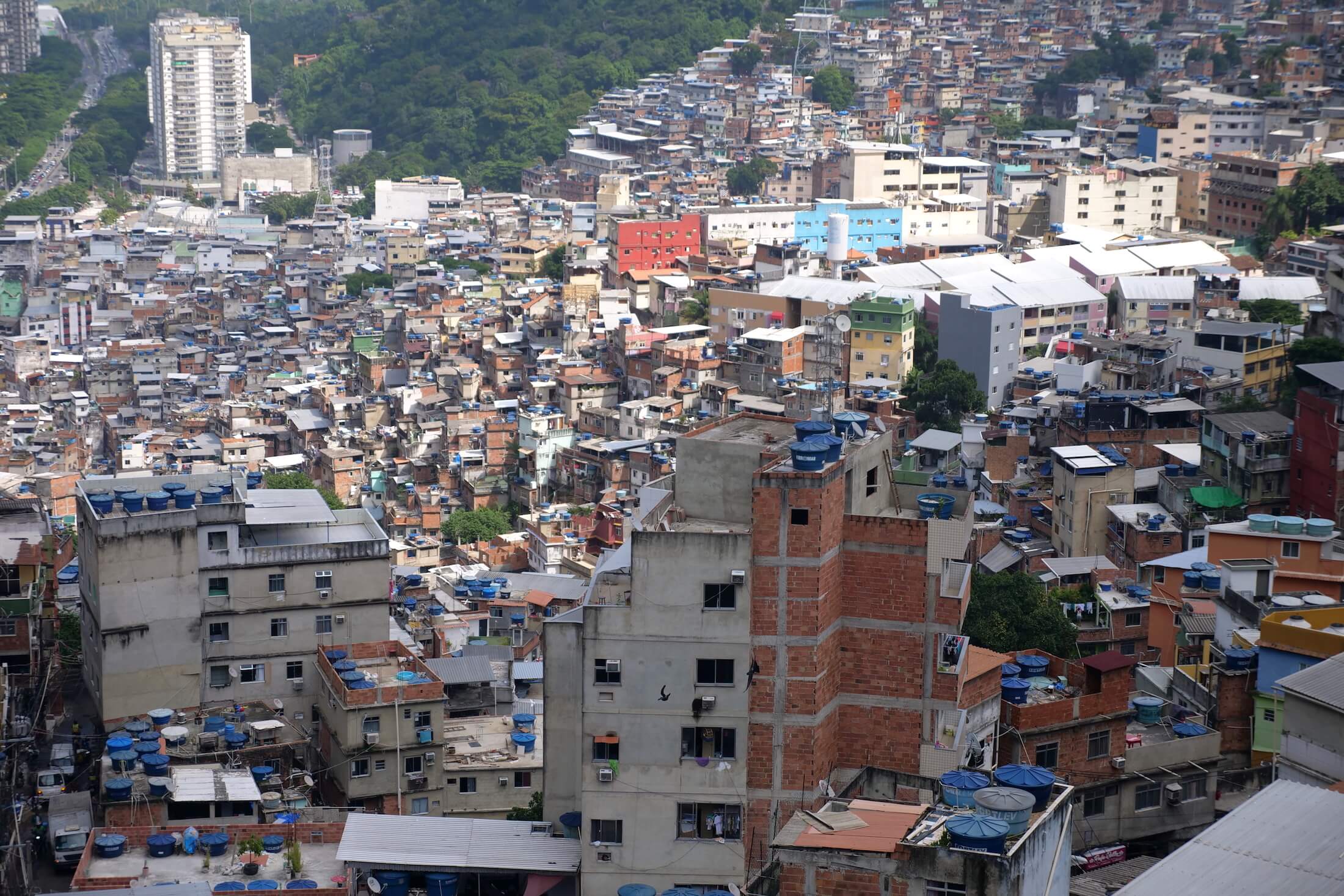
Rocinha is especially compelling because of its scale. It is one of the largest favelas in Brazil and home to a huge population, which means there is an entire ecosystem inside it. Streets bend around the hills, homes stack into the landscape, and daily life unfolds in layers of sound, color, and movement. This density creates an atmosphere that is both intense and memorable. You can hear music from open doors, smell food frying in small kitchens, and watch people weaving through narrow lanes with the confidence of those who know every slope, shortcut, and corner.
## Arriving in Rocinha
A common first stop is the upper viewpoint often referred to as the Gate of Heaven. Starting from the top can make the experience easier physically, especially if you prefer to walk downhill afterward rather than climb steep streets in the heat. Getting there by moto taxi is part of the adventure, and the ride itself offers an immediate introduction to the neighborhood’s pace and geography. It is quick, practical, and slightly exhilarating, and it gives you a first sense of how tightly the community is built into the hillside.
From the viewpoint, the scale of Rocinha becomes much clearer. You can see how homes spread across the slope, how the city extends beyond the neighborhood, and how the ocean and surrounding districts frame the landscape below. It is one of those places where the geography tells its own story. The view is not just scenic; it is explanatory. It helps you understand why roads are narrow, why motorcycles are so useful, and why everyday movement here is shaped by elevation as much as by distance.
## Life, Color, and Art
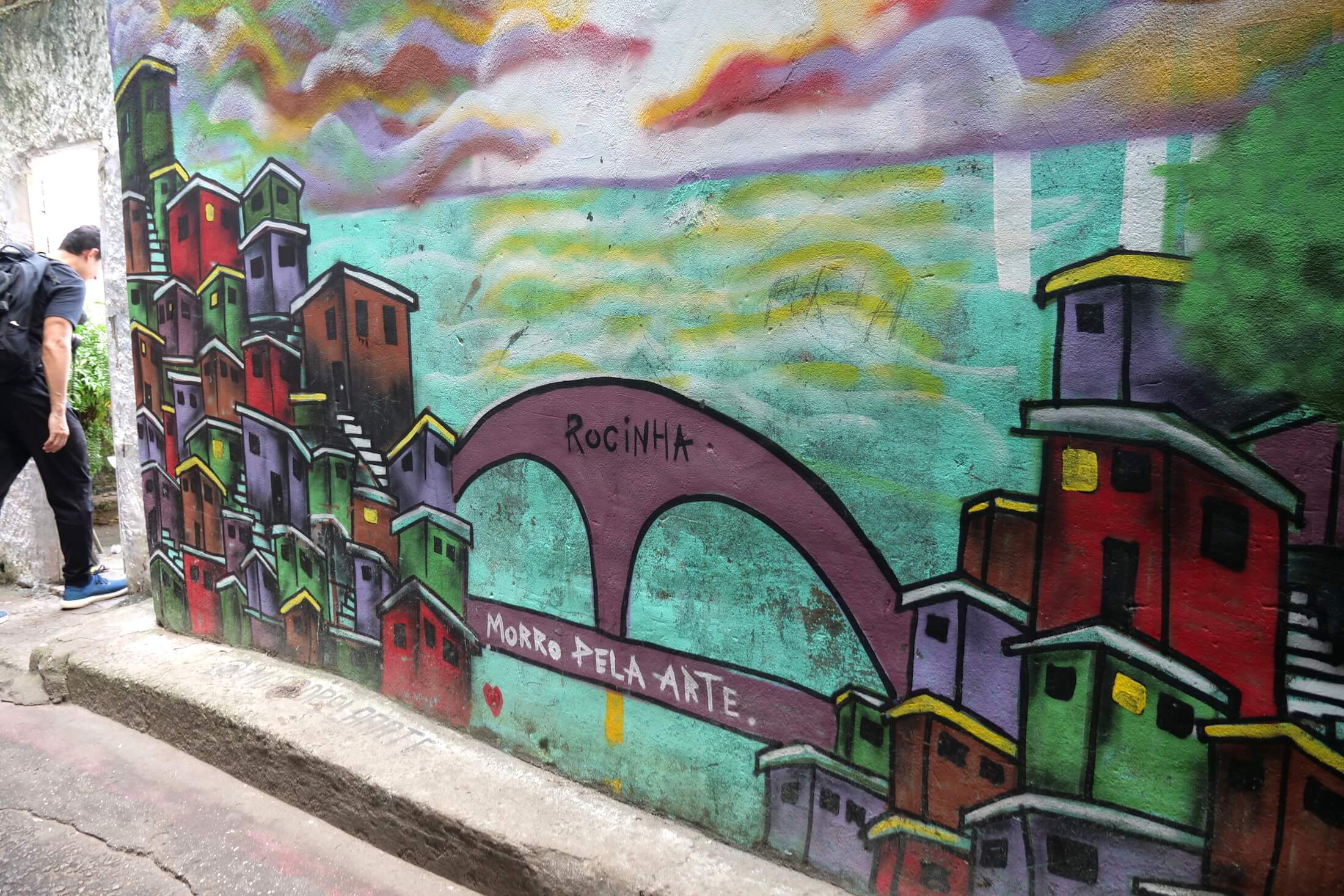
One of the first things many visitors notice in Rocinha is the visual density. Art appears on walls, shop fronts, stairways, and leftover patches of concrete, often without warning and often with real power. Murals, painted signs, informal decorations, and small creative touches turn ordinary spaces into something expressive. This layering of art is not staged for visitors. It is part of how the neighborhood presents itself to the world and to itself. In many ways, the art offers a kind of local language, one that speaks of pride, memory, and neighborhood identity.
That artistic energy is part of what makes Rocinha feel so alive. The neighborhood never reads as static. It is active, noisy, and full of motion. Small businesses operate from tight storefronts, street corners function as social points, and homes often open directly onto lively walkways. What could feel cramped in another setting instead becomes dynamic here. There is an improvisational quality to daily life that makes the neighborhood especially interesting to walk through, photograph, and listen to. You do not just see Rocinha; you absorb it through movement, sound, and atmosphere.
## Food in the Neighborhood
No visit to Rocinha feels complete without food. Brazilian street and neighborhood food culture is one of the country’s great pleasures, and Rocinha offers plenty of ways to experience it casually and affordably. Snacks are often the easiest introduction, especially coxinha, one of Brazil’s most beloved savory treats. Typically shaped like a teardrop and filled with chicken, cheese, or other hearty mixtures, coxinha is fried until crisp outside and soft inside. It is the kind of food that works at almost any hour, whether you are taking a break midmorning or looking for something quick after a long walk.
Another useful word to know is salgado, which refers to savory snacks generally. In Brazil, these are everywhere: bakeries, kiosks, cafes, and small corner shops all serve variations of them. You may see combinations of coffee and a salgado offered as a standard local break, or a complete snack-and-drink set that covers breakfast, lunch, or an afternoon pause. In Rocinha, this kind of eating is not just practical; it is part of the neighborhood rhythm. It is easy to step into a small shop, order something hot and simple, and eat alongside locals moving through the day.
For travelers who want a fuller meal, Rocinha offers the kind of home-style food that makes Brazilian cuisine so satisfying. Rice, beans, beef, pork, cassava, spaghetti, and farofa often appear together on the same plate in combinations that are both filling and comforting. This is not delicate food, and that is part of the charm. Meals in Rocinha are typically built around warmth, affordability, and generosity. They reflect the practical needs of working people who want food that lasts, tastes good, and can be served without pretension.
One of the most memorable experiences in Rocinha can be eating at a tiny, unpretentious kitchen restaurant where the owner cooks a daily set meal from a space that feels part home, part eatery. There is something especially memorable about watching a cook prepare beans, meat, and starches from a kitchen that opens directly onto the street. The food may be simple, but it often carries the feeling of a family meal. A plate of rice, black beans, cassava powder, and slow-cooked beef can be the kind of lunch that lingers in your memory long after the trip is over.
Part of the appeal is value, but not in a cheap-tourism sense. Rather, the meal gives you a real glimpse into how people here eat every day. That is often more meaningful than seeking out a highly polished restaurant experience. The food tells you what the neighborhood values: practicality, flavor, and enough comfort to keep people going through busy days. If you are lucky, you may also be guided toward a few local favorites where the portions are generous and the atmosphere is unmistakably neighborhood-first.
## Walking the Streets
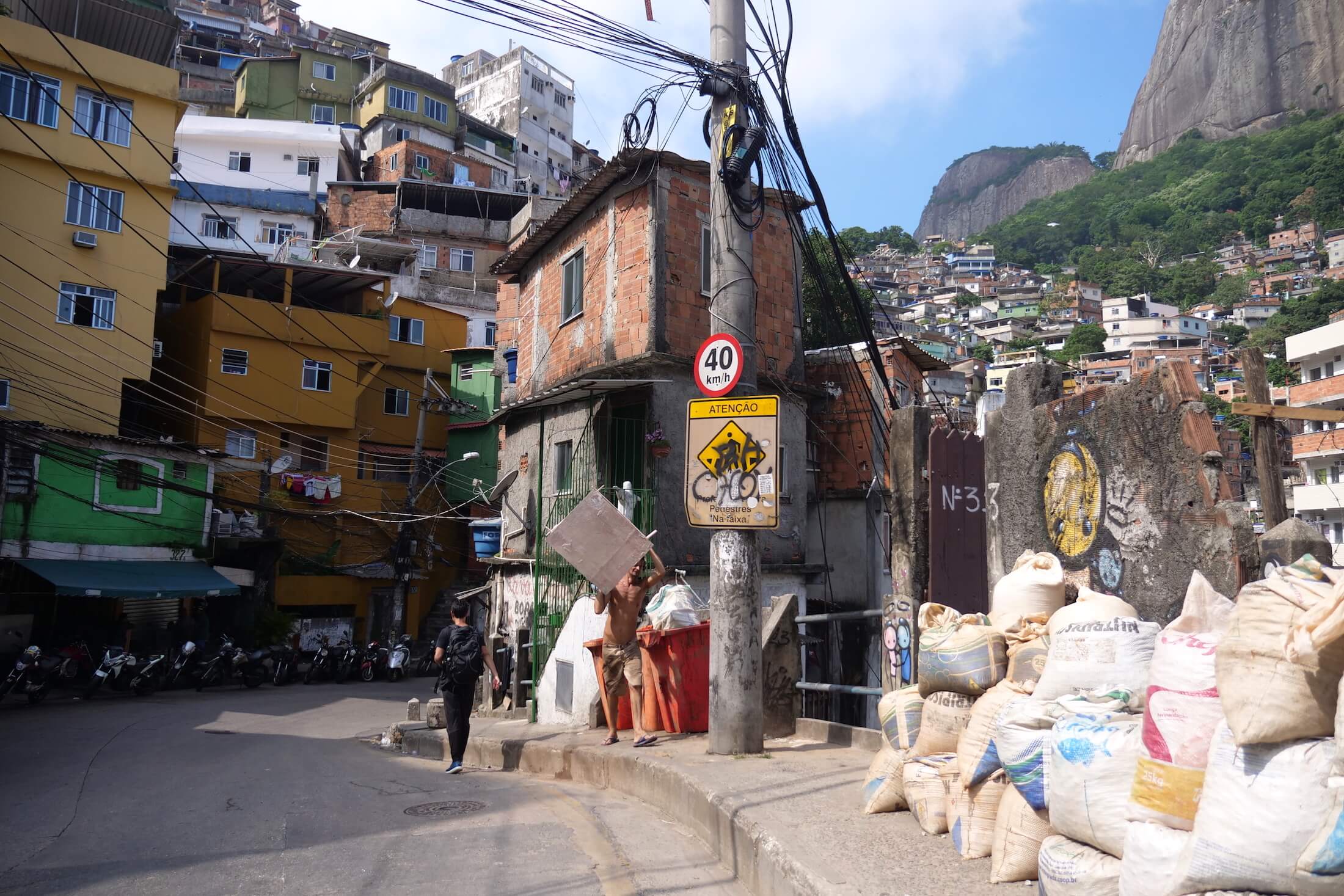
Walking through Rocinha is a sensory experience. The lanes can be narrow, the traffic unpredictable, and the movement of people constant. Motorbikes pass, voices echo between walls, and music floats from open windows. For a visitor, it can feel overwhelming at first, but that is also part of the appeal. The neighborhood is not arranged for convenient sightseeing. It is arranged for living. That means every corner offers another fragment of daily life: a mechanic at work, a child heading home, someone calling out to a neighbor, or a vendor arranging goods in a tiny storefront.
The best way to move through this environment is patiently. There is no need to rush. In fact, the slower you walk, the more you notice. Painted signs, improvised architecture, laundry hanging overhead, fruit stands, and impromptu conversations all build a portrait of the neighborhood that is far more compelling than any single viewpoint could offer. The architecture itself is worth noticing too. Homes fit tightly together, often climbing upward rather than outward, which gives the area a vertical feel uncommon in many cities. That verticality is one of the things that makes Rocinha visually unforgettable.
## Safety and Respect
Traveling in Brazil, as in any unfamiliar place, means staying aware of your surroundings and using good judgment. That advice matters in Rocinha as much as it would in any busy city district anywhere in the world. The key is not to treat the neighborhood as a place to fear, but as a place to respect. Avoid wandering aimlessly without context, be cautious with photography, and remember that you are entering a real community, not a theme park. A guided visit can be especially helpful because it adds local perspective and helps you understand what you are seeing rather than simply passing through it.
It also helps to arrive without assumptions. Many people outside Brazil hear the word favela and immediately think only of danger. The reality is more layered. Rocinha is a neighborhood full of working families, small businesses, children, elders, artists, and entrepreneurs. Like any urban area, it has challenges. But it also has routines, aspirations, and a social structure that is often invisible from the outside. Respecting that complexity is one of the most important parts of visiting well.
## Why the Visit Stays With You
What tends to remain in a traveler’s memory is not a single landmark, but the overall feeling of the place. Rocinha leaves an impression because it is so vivid. The sounds are richer, the streets busier, the food more fragrant, and the human presence more immediate than in many polished tourist zones. You do not just pass through Rocinha; you feel it. That emotional charge is what makes the visit meaningful. It interrupts the distance that travelers sometimes place between themselves and the places they explore.
There is also a bigger value in visiting communities like this with care. It encourages a more honest view of the city and of the people who make it function. It pushes back against simplistic narratives and opens room for real observation. Rather than reducing a neighborhood to a headline, you encounter the texture of life there. That is valuable not only for travel writing, but for the traveler’s own understanding of the world.
Rocinha is one of those places where food, art, geography, and humanity come together in a way that is difficult to forget. If you go, do so thoughtfully, stay alert, and allow the neighborhood to reveal itself at its own pace. The reward is not just a set of photos or a story to tell later, but a stronger sense of how much life can fit into one hillside, and how much beauty can exist in the middle of everyday routine.
By the time you leave, you may find that what stays with you most is not the scale of the neighborhood, but the warmth of the people, the flavor of the food, and the feeling that you have seen a part of Rio that still moves on its own powerful rhythm.
Traveling in Brazil means learning to read places with more patience and less assumption. Rocinha is one of the clearest reminders that a neighborhood can be busy, crowded, and imperfect while still being full of dignity, skill, and community. If you choose to visit, give yourself time to look, listen, and taste what daily life here really feels like.
The food alone can justify a visit for many travelers. Between coxinha, simple street snacks, and home-cooked plates built around rice, beans, and slow-cooked meats, Rocinha offers a version of Brazilian cuisine that is grounded, generous, and deeply local. It is the kind of eating that rewards curiosity rather than expectation.
Rocinha remains one of the most striking neighborhoods in Rio because it combines scale, movement, artistry, and everyday life in such a concentrated space. For travelers who want more than a surface impression of the city, it offers a rare chance to step into a place where the story is still unfolding, one street, one meal, and one conversation at a time.