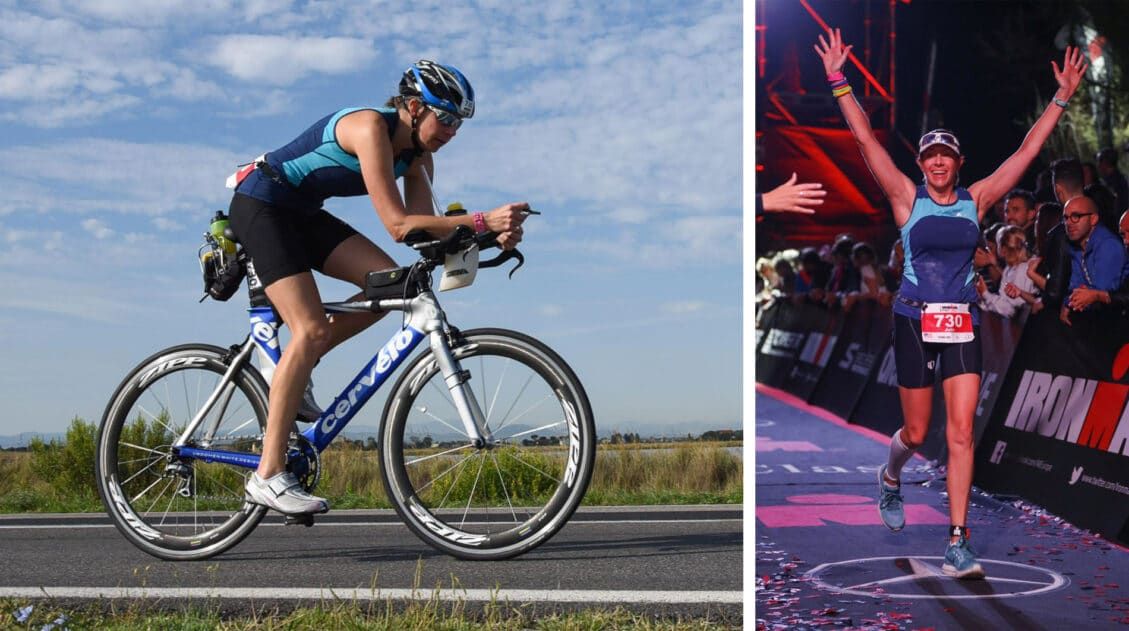
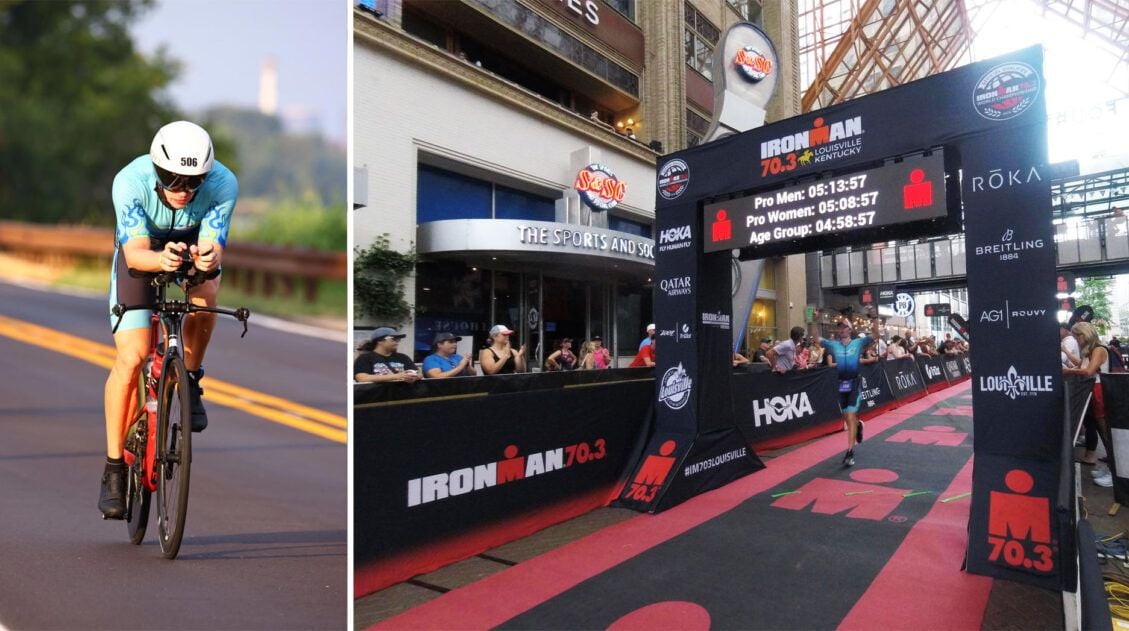
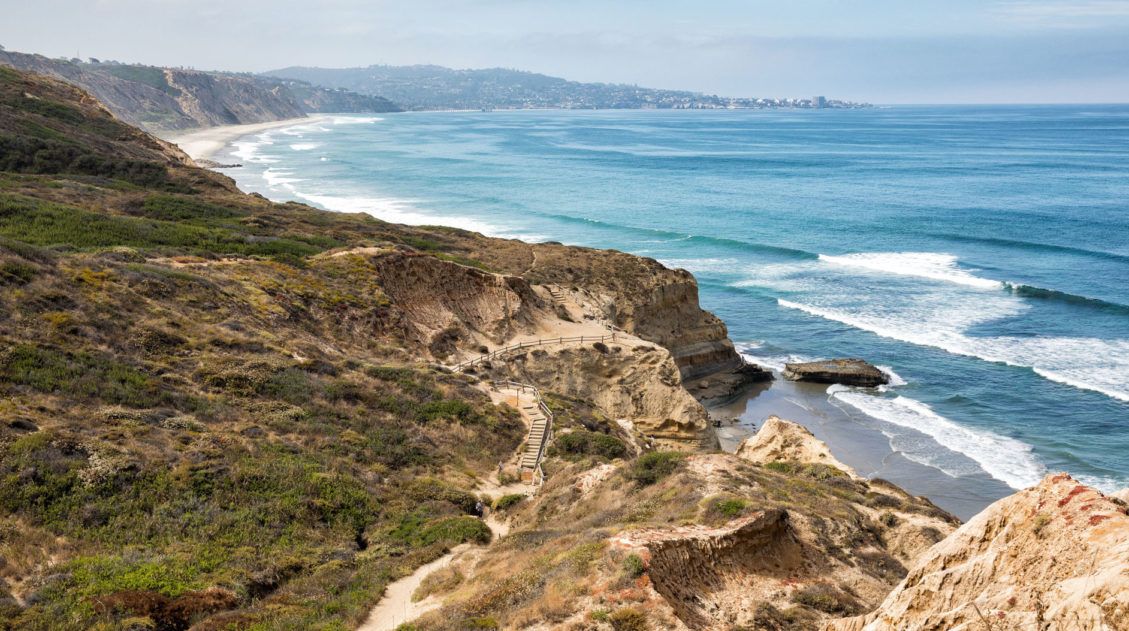
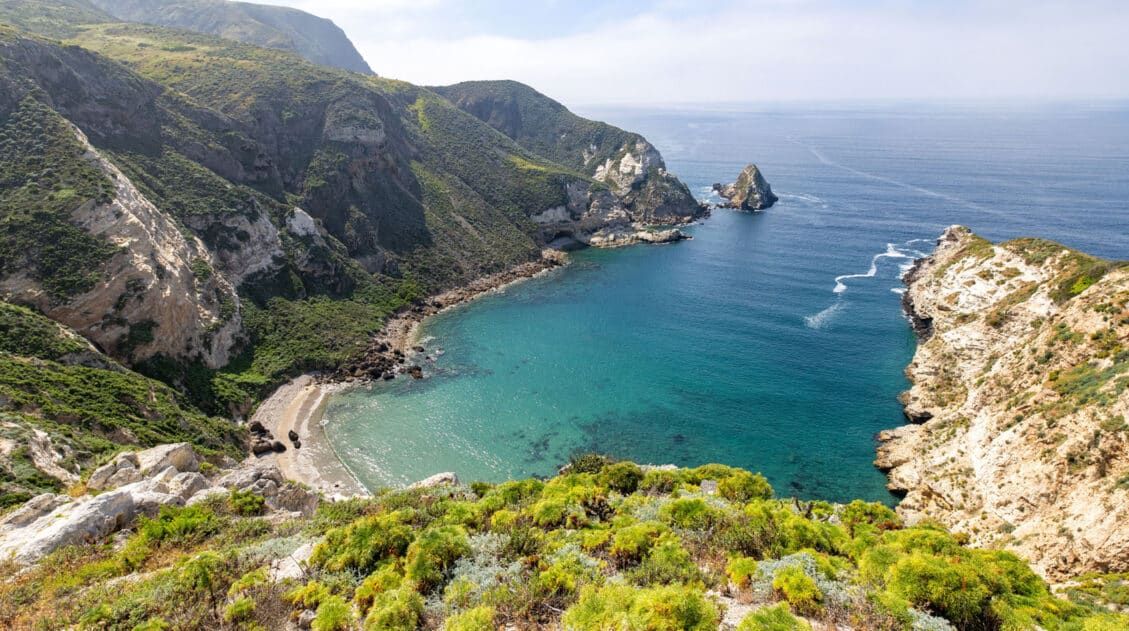
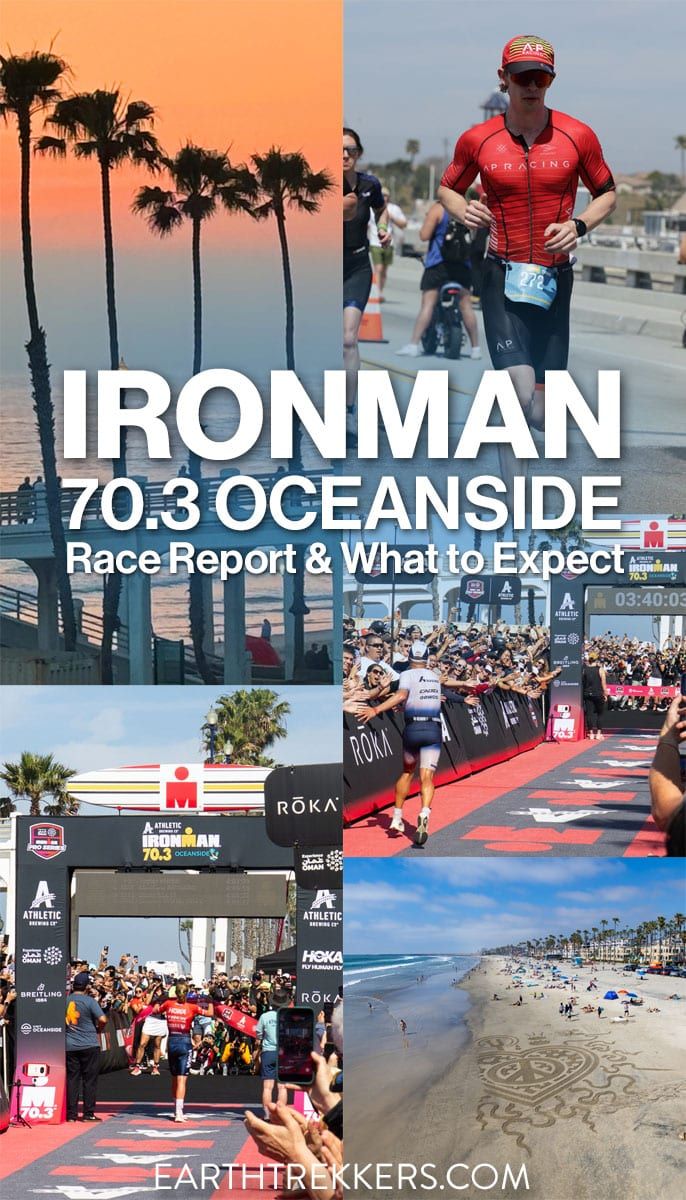
IRONMAN 70.3 Oceanside is one of those races that pulls you in long before race morning. Part of the appeal is obvious: a start in the harbor, miles of Southern California coastline, and a run course that repeatedly delivers ocean views and energetic crowds. But what makes Oceanside especially compelling is the way it blends high-level competition with a destination that feels relaxed, walkable, and genuinely enjoyable to spend time in. It is both a serious early-season test and a memorable coastal getaway, which is why so many triathletes return year after year.
For athletes chasing an early benchmark, Oceanside is a natural place to test fitness after winter training. The event sits in that narrow spring window where you can still feel some uncertainty about race form, yet the course immediately reveals where you stand. The swim can be cold, the bike is famously demanding, and the run rewards patience and composure rather than panic. It is a race that asks for fitness, but it also asks for judgment. That combination is exactly what makes it so respected.
Oceanside also stands out because of its atmosphere. This is not an isolated venue on the edge of a highway or a race town that empties out after dark. Instead, the event unfolds in a real beach community with a working harbor, a pier, restaurants, hotels, and a steady stream of spectators who understand how to create race-day energy. You feel the event all weekend long, whether you are in line for check-in, standing near transition, or walking back from dinner with a number belt still in your bag and the next morning on your mind.
In that sense, Oceanside is more than a race report. It is a useful travel guide for anyone planning a triathlon-focused visit to Southern California. If you are trying to decide where to stay, what to eat, how early to arrive, and how to handle the course, there is a lot to know. The details matter here because the race is not especially forgiving. A smart approach can make the difference between a smooth day and a stressful one.
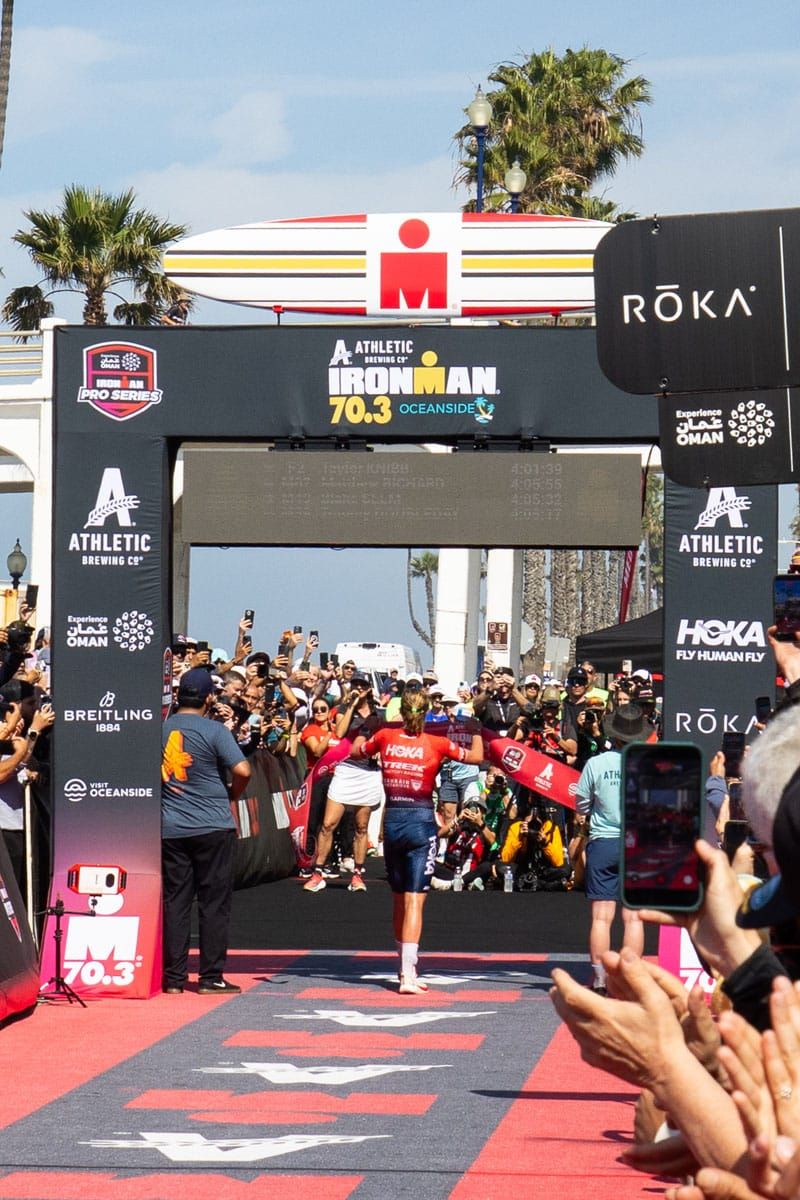
IRONMAN 70.3 Oceanside at a Glance
Oceanside is held in late March or early April in Oceanside, Southern California. The swim takes place in the marina, where water temperatures often hover in the high 50s. The bike course is rolling, exposed, and notoriously difficult in parts, while the run is flat in theory but includes enough small climbs and level changes to keep athletes honest. It is an ideal race for strong cyclists, athletes who can handle cool water, and anyone seeking a lively early-season event with a stacked field.
One of the biggest draws is the pro competition. Oceanside traditionally attracts some of the most recognizable names in the sport, which gives the race a championship feel without the travel demands of an international event. For age-group athletes, that means you are not just racing a course; you are sharing the venue with world-class athletes who make the whole weekend feel bigger.
What Makes IRONMAN 70.3 Oceanside Unique?
There are plenty of half-Ironman races with scenic views and decent organization, but Oceanside has a handful of traits that make it feel distinct from the moment you arrive.
The swim is cold, and you need to respect that
The water temperature is one of the defining features of the race. Even in years when conditions are a little kinder, it is still the kind of swim that can shock the body if you are not prepared. The harbor can be calm, which helps with nerves, but the temperature often demands a wetsuit and a deliberate warm-up plan. Athletes who rush into the water with a casual attitude tend to pay for it in the first few minutes.
The colder water also changes how you think about your morning routine. Your gear choices matter more. Your hands may be less cooperative in transition. And if the marine layer hangs over the harbor, you may have a slightly eerie, beautifully quiet start to the day, which can be calming if you let it be. The key is to expect discomfort and treat it as normal rather than as a sign that something is wrong.
The bike course is rough in spots and demands real attention
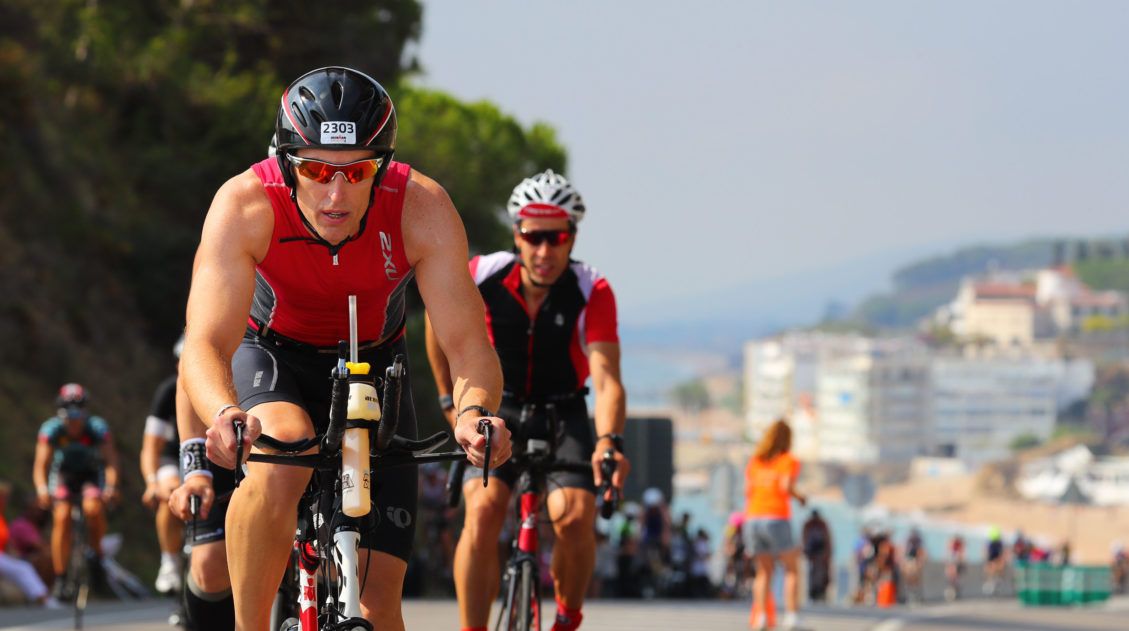
Oceanside’s bike course is one of the more talked-about parts of the race for a reason. Some sections are smooth enough to settle into rhythm, but large stretches are broken up by rough pavement, potholes, debris, and narrow lanes. Even strong, experienced riders need to stay alert. It is not a course for zoning out while chasing watts and hoping for the best.
That roughness also affects the day on a broader level. Flat tires are common enough that they become part of the race lore, and athletes should bring a proper flat kit, make sure their setup is race-ready, and avoid overinflating tires simply because the weather looks cool in the morning. If you have any concern about handling or tire choice, Oceanside is the place to err on the side of caution.
The climbing is real, even if the course profile looks manageable at first glance
Some athletes arrive expecting a mostly gentle ride and are surprised by how much the course asks of them. There are a couple of climbs that define the day, including the short, steep effort often known as Hell Hill and another longer climb that requires patience and pacing. Neither is absurdly long, but both can punish anyone who rides too aggressively in the early miles.
What makes the climbs harder than the profile suggests is the timing. They come after an often crowded start, on roads that may already feel choppy, and under conditions where your body is still settling into race mode. If you can crest those climbs with control, you’ll likely ride the second half with much more confidence.
Riding through Camp Pendleton makes the race feel unusual in the best way
One of Oceanside’s most memorable traits is the stretch through Camp Pendleton, an active military base that gives the course a distinctly Southern California character. Marines line parts of the route, cheering athletes on, and the atmosphere is unlike anything you get in a generic suburban race loop. It is equal parts surreal and motivating, especially when you are deep into the bike and trying to stay mentally locked in.
The military setting also adds a layer of texture to the ride. The road signs, the open landscape, and the occasional sense of distance from the bustle of downtown Oceanside create a course that feels more expansive than its miles might suggest. It is one of the reasons the bike is so memorable, even when the road surface is trying to shake your confidence.
The run course is the highlight
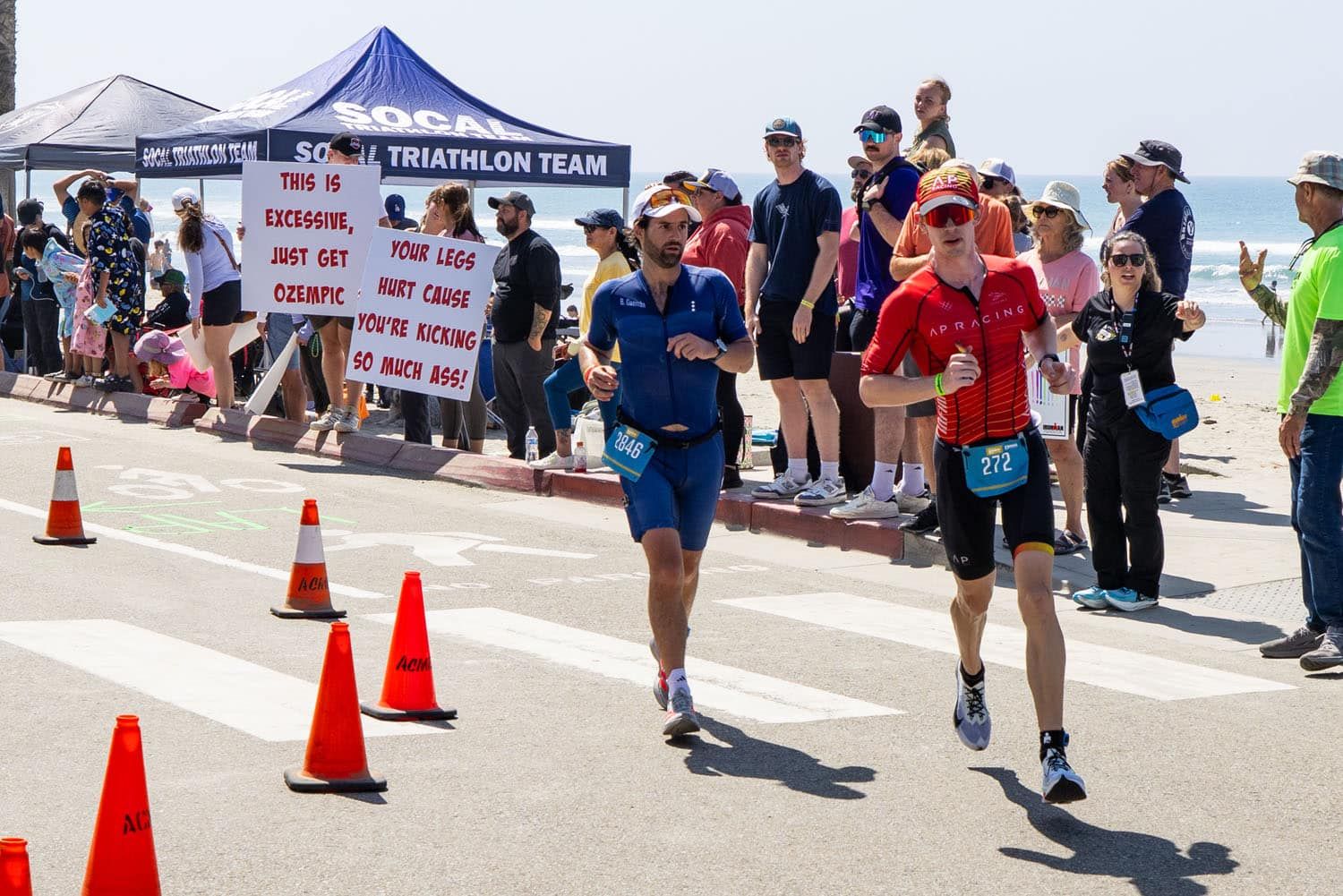
If the bike course is the part that asks for grit, the run course is where Oceanside really wins people over. The route is two loops, mostly flat, with sections along the beach and others on wider roads through town. The course is more nuanced than it appears on paper because there are short connector climbs and descents between levels, but it rewards athletes who can settle into rhythm and stay mentally steady.
The setting is what makes the run special. You get the ocean beside you, the pier as a visual anchor, and spectators spread along the course in a way that keeps the energy alive. This is not a lonely, exposed run; it is a race through a beach town that understands how to support athletes. For many competitors, that turns a hard final leg into the most enjoyable part of the day.

Pre-Race Logistics and Travel in Oceanside
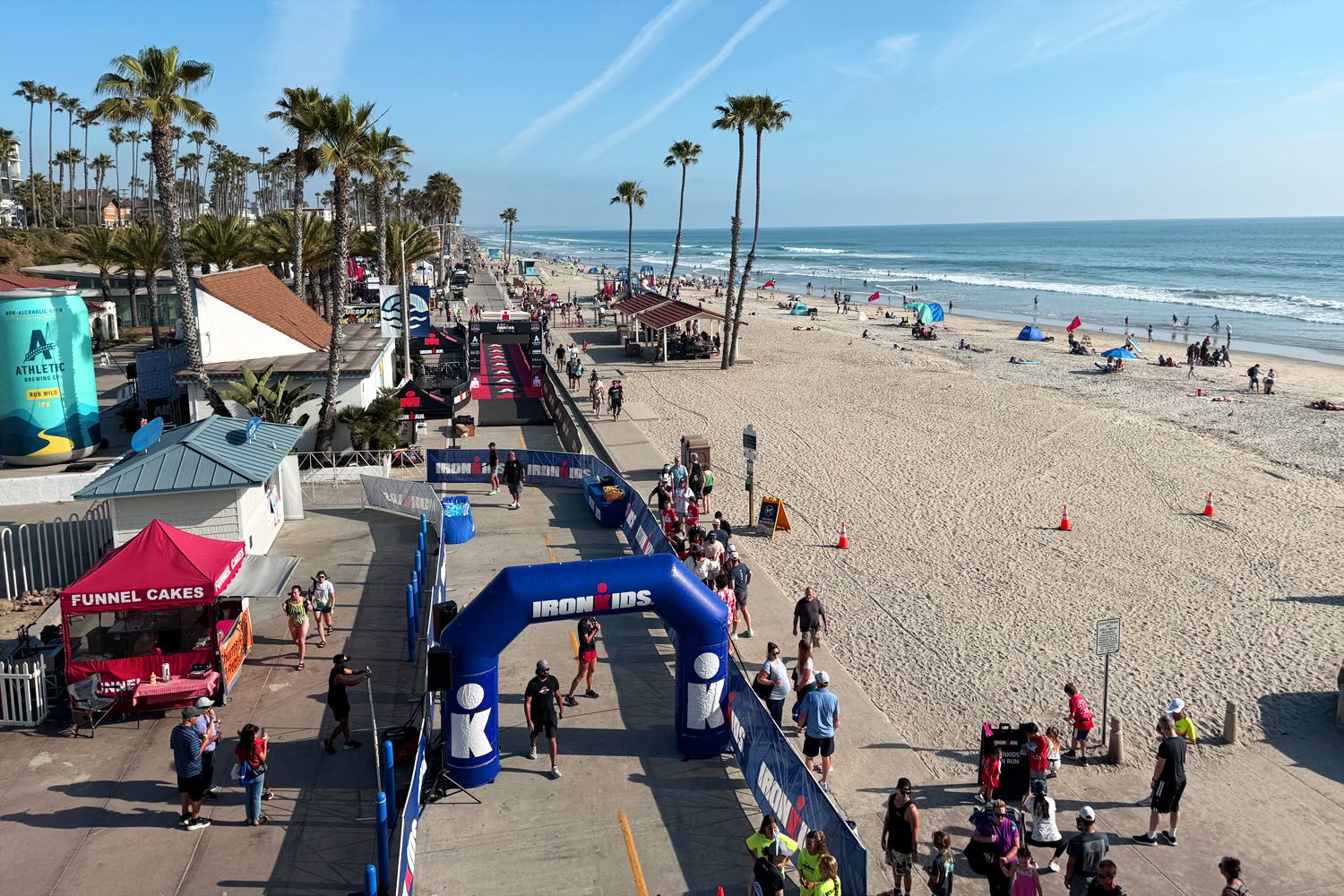
Getting to Oceanside early is one of the smartest choices you can make. The extra days give you room to settle in, test the water, sort out bike check-in, and adapt to the rhythm of the town. That matters more here than at some races because the venue is split between different points of activity. Transition sits near the harbor, while the main race finish and expo are closer to the pier. If you do not plan ahead, those short distances can become annoying on race week.
Accommodation choices usually come down to convenience versus atmosphere. Staying near the harbor can simplify race morning, especially if you want to avoid shuttle lines and traffic near transition. Staying near the pier places you closer to restaurants, the finish line, the expo, and the best parts of downtown Oceanside. For many athletes, the pier area is the sweet spot because it offers the most complete race-cation experience. You can walk to breakfast, stroll the beach, and still be close enough to manage pre-race errands without needing a car for every move.
When choosing a hotel, consider your tolerance for race-day logistics. If you value calm, a harbor hotel may be the right answer. If you value walkability, ocean views, and a little more life around you during the weekend, the pier area is more rewarding. The best strategy is to book early, because Oceanside is popular and the most convenient properties fill quickly once the race calendar opens.
Training in the days before the race should be light and purposeful. Oceanside is not the place to cram in extra miles or squeeze in a heroic last workout. Instead, use the coastal setting to your advantage. A short ocean swim, a gentle bike spin, and a relaxed run near the water are enough to keep the body awake without draining the legs. The weather often makes that easy; even on cooler days, the setting is pleasant enough to keep stress levels down.
Race Morning: What to Expect
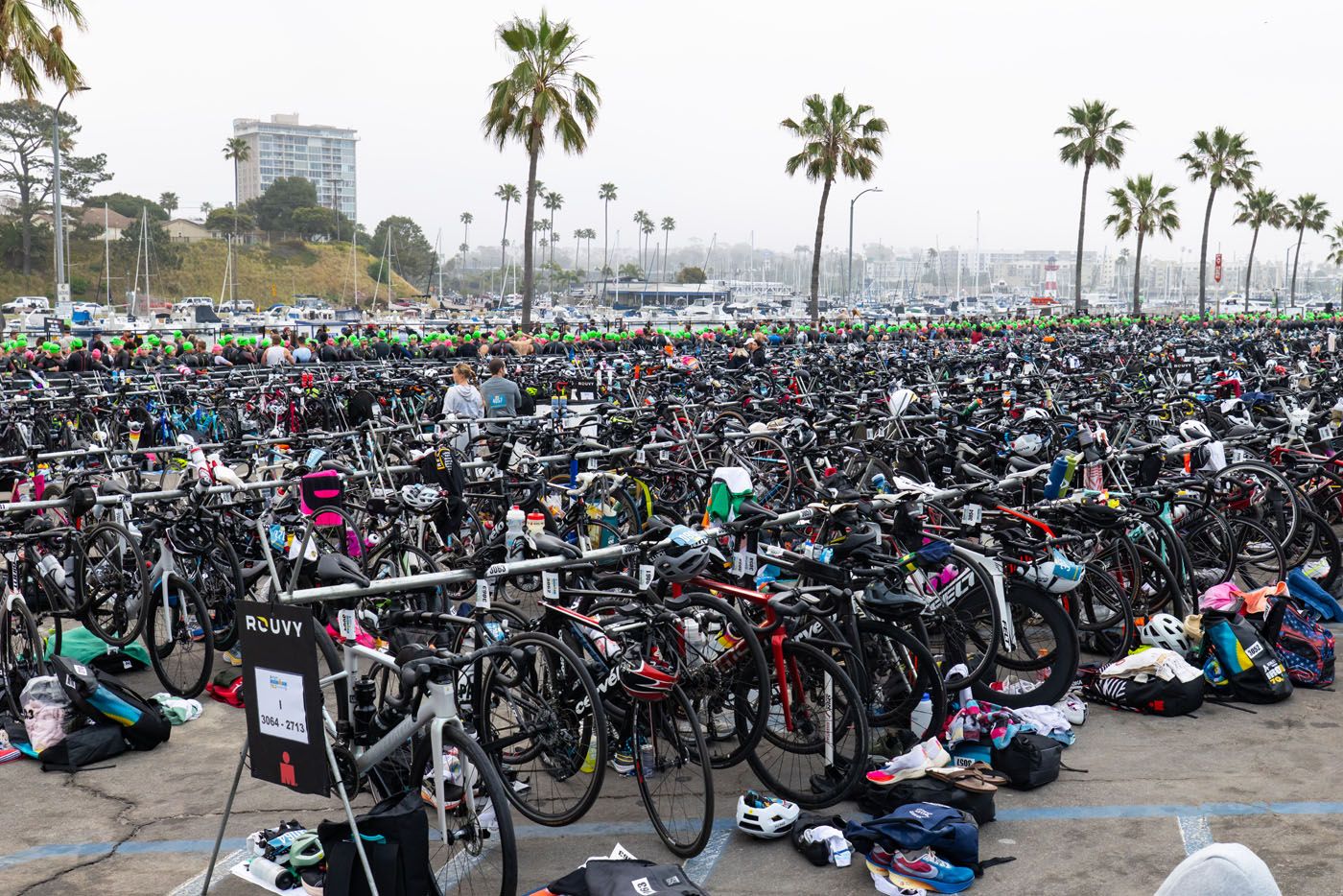
Race morning starts early, and the first challenge is not the swim or the climb on the bike. It is staying calm and organized. Athletes tend to arrive with a mix of adrenaline and nerves, and the race setup can feel busy because the start area is narrow and lines can build fast. The best thing you can do is give yourself more time than you think you need. That is especially true if you are aiming for a good position in the swim corral.
Because the swim start chute narrows and fills quickly, line placement matters. If you arrive too late, you may find yourself trapped behind slower swimmers, which adds unnecessary stress right from the beginning. Getting there early gives you time to settle, adjust your wetsuit, and mentally step into the day instead of rushing into it.
One of the most useful race-morning lessons is simple: walk if your hotel is close enough. Shuttle systems can be convenient in theory, but on a crowded race morning they often create more friction than they solve. A calm, direct walk can be faster and less stressful than waiting for buses and sitting in traffic. The first few steps of the day should feel controlled, not chaotic.
The Swim: 1.2 Miles of Cold Water and Crowded Buoys
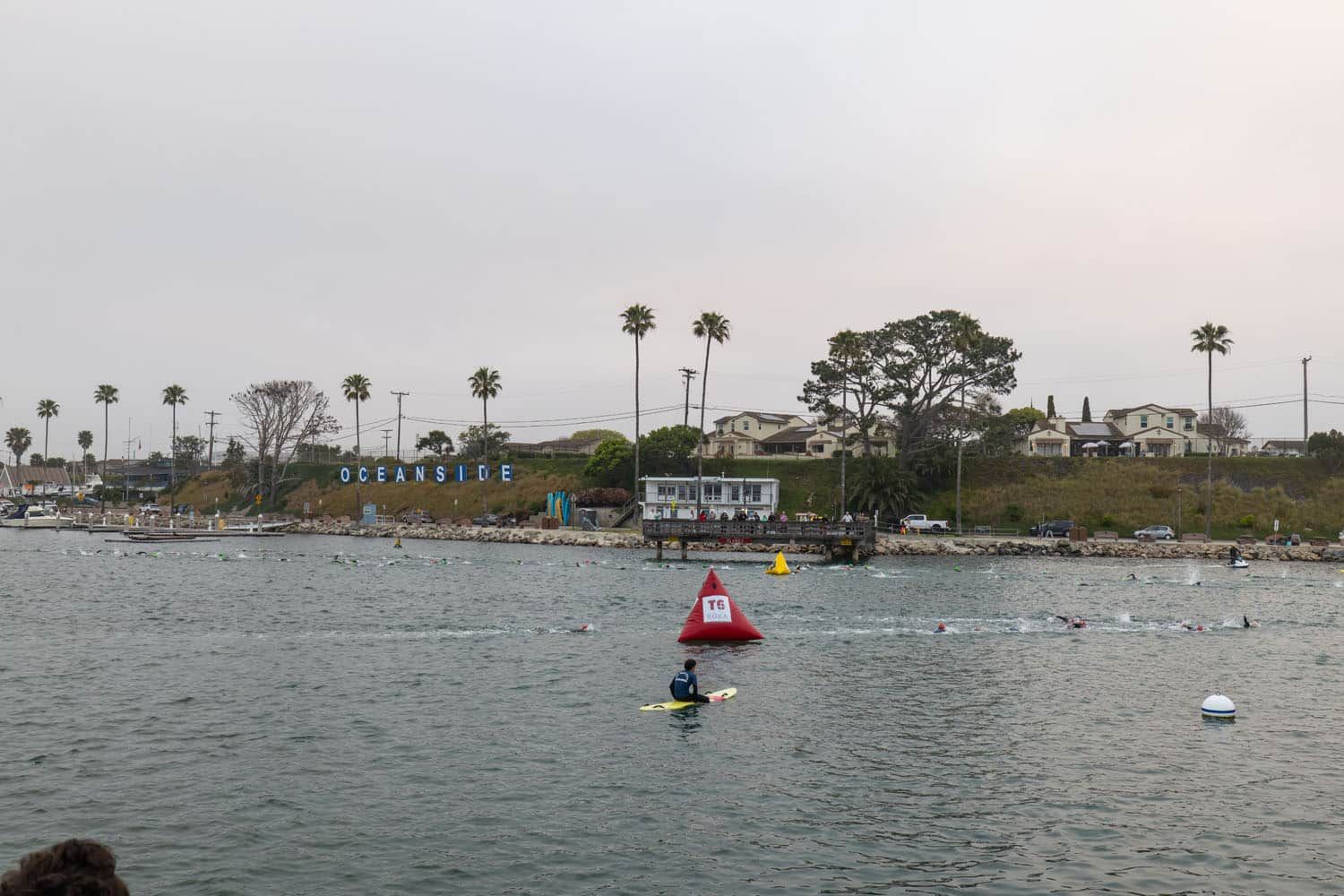
Oceanside’s swim begins in the harbor, which provides a relatively protected environment compared with a fully open-water start. That calm setting can help with nerves, but it does not necessarily make the swim easy. In fact, the combination of cold water, tightly packed athletes, and a long, narrow start can make the first few minutes feel crowded and unsettled.
The most important thing on the swim is patience. You will likely encounter plenty of physical traffic, especially around buoys where swimmers compress and visibility becomes chaotic. The goal is not to win the first 200 meters. The goal is to find clean water, settle your breathing, and avoid wasting energy in pointless contact. Once the field stretches out, the swim tends to feel more manageable, but the early moments require discipline.
There is also a subtle transition in the course when you move from the harbor toward the ocean and then back again. Even if the visual change seems small, many athletes notice a shift in water texture and temperature. It is a good reminder that Oceanside is a hybrid swim experience: part protected marina, part open-water challenge. If the marine layer lingers, it can actually help with sighting by muting the sun, though conditions can change quickly. The lesson is to prepare for variation rather than assume the day will be identical from start to finish.
T1: From the Water to the Bike
Transition one at Oceanside is long enough that it becomes its own little event. After the swim, athletes move through a lengthy run before reaching the bike, and that alone can affect how you feel when you finally mount. By the time you arrive at your rack, your body has already shifted from cold-water mode to race-day urgency, so efficiency is everything.
Cold-hand handling is one of the biggest challenges here. If you plan to use gloves, arm warmers, or any extra layers, think through exactly how you will put them on when your fingers are wet and a little sluggish. Gear that is easy to manage in a garage on a calm afternoon can become oddly difficult when you are breathing hard and trying not to lose momentum. Simple preparation can save real time.
The Bike: 56 Miles of Patience, Power, and Road Awareness
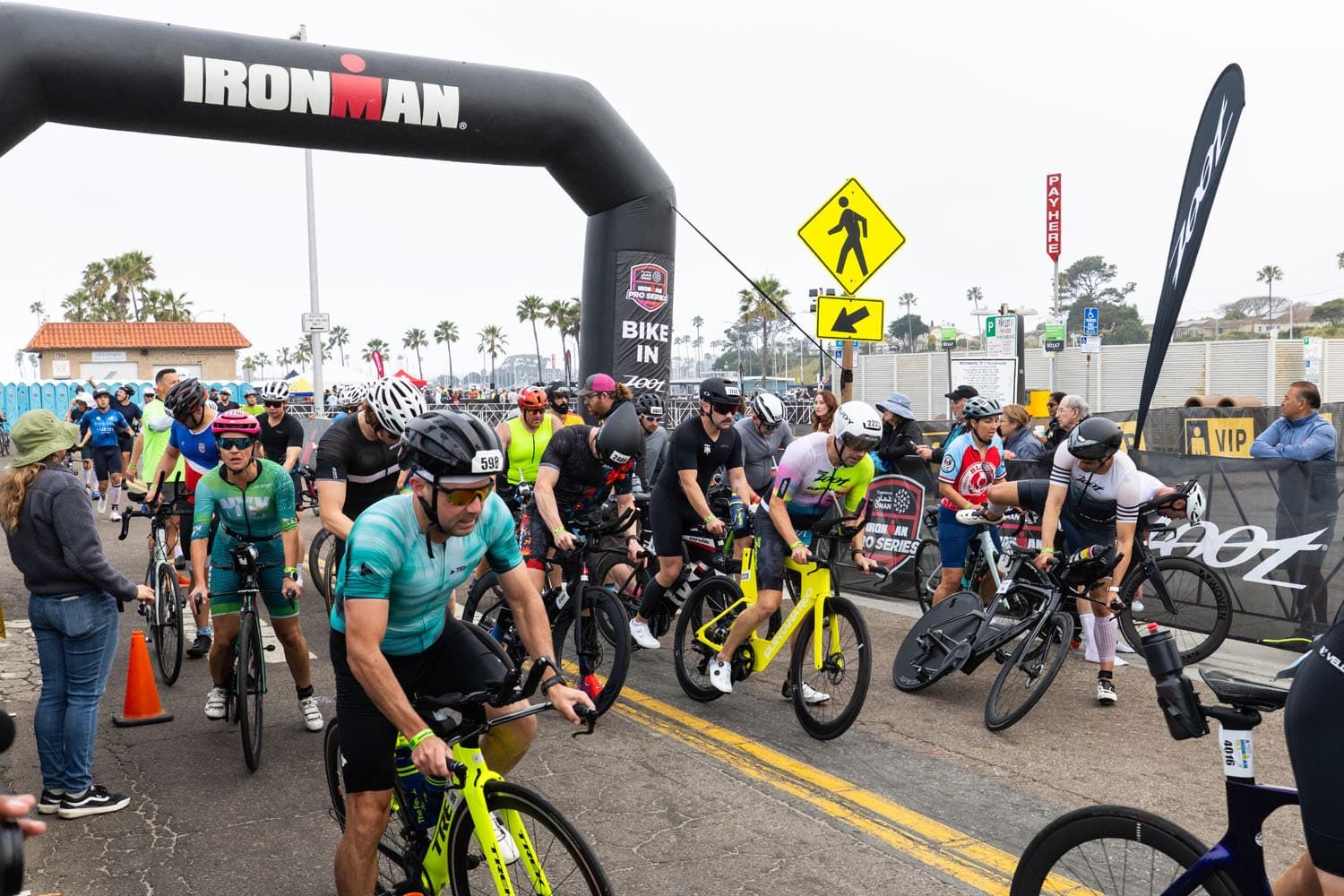
The bike is where Oceanside starts to reveal its character as a serious test. The first few miles are often slower than athletes expect, partly because the roads are narrow and partly because the field has not yet sorted itself out. That is not necessarily a bad thing. It gives you a chance to settle into the race and avoid overcommitting too early. But it can also lull you into a false sense of security before the real challenges arrive.
Once the course opens up, the focus shifts to steady pacing and road management. The rough pavement means you should keep your eyes up, remain ready for sudden changes in surface quality, and stay aware of other athletes around you. It is a course where being technically smooth matters almost as much as pure fitness. A strong cyclist who stays composed will almost always have a better day than a more powerful rider who overbikes the first half and gets punished later.
The climbs break the course into distinct sections. Hell Hill is short enough to attack but steep enough to hurt, and the longer climb rewards athletes who can keep their ego in check and ride by effort rather than emotion. If you try to smash every rise, you will likely pay for it on the back half. If you stay measured, the descents become your reward and the final miles feel much more controllable.
Camp Pendleton is a memorable piece of the bike not only because of the military setting but because it changes how the day feels. The route becomes more open, more exposed, and more mentally demanding. If the wind picks up, it can test your patience. If the conditions are kind, it can feel like a gift. Either way, it is a section where focus matters. This is the part of the race where good athletes make smart decisions and average athletes start improvising.
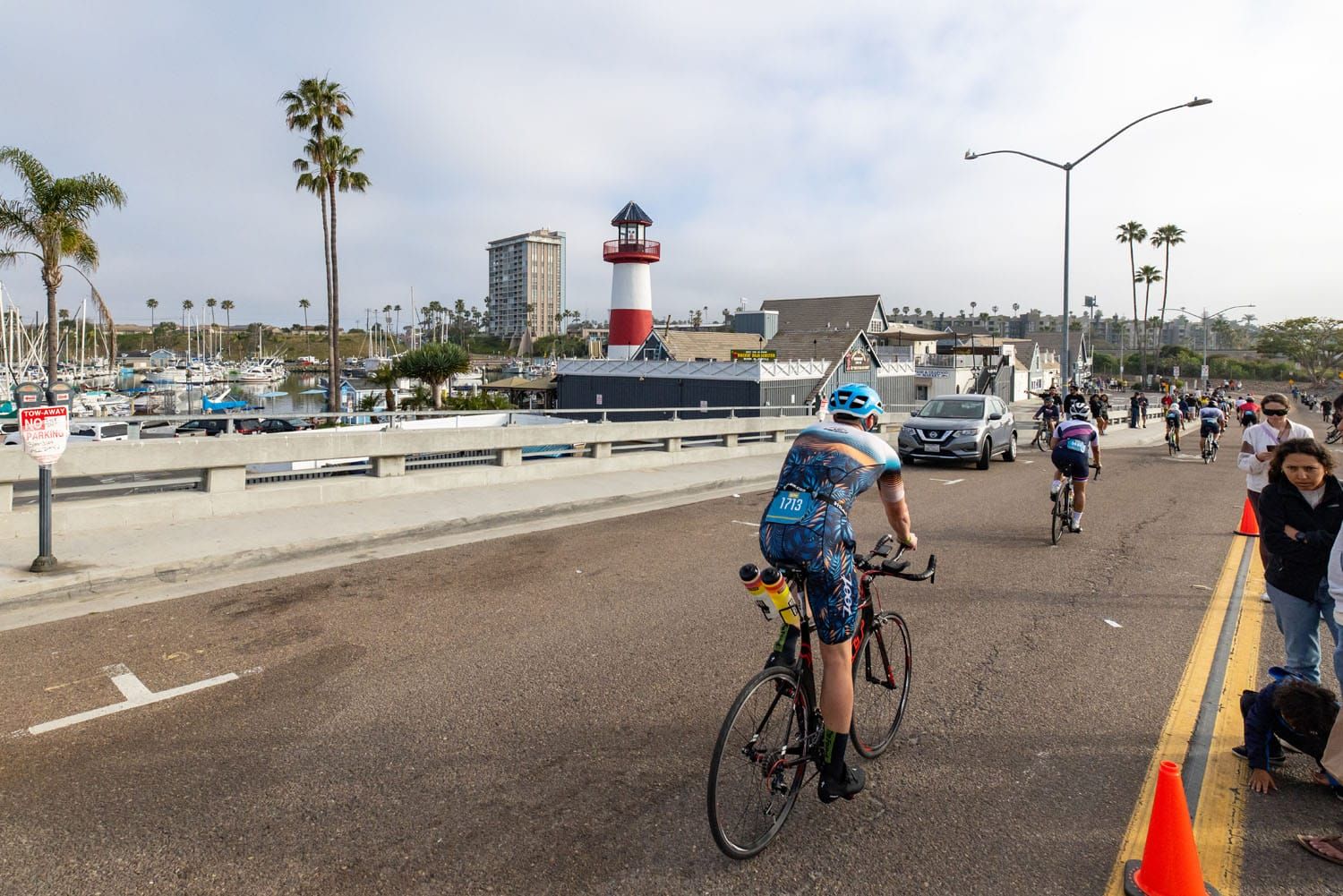
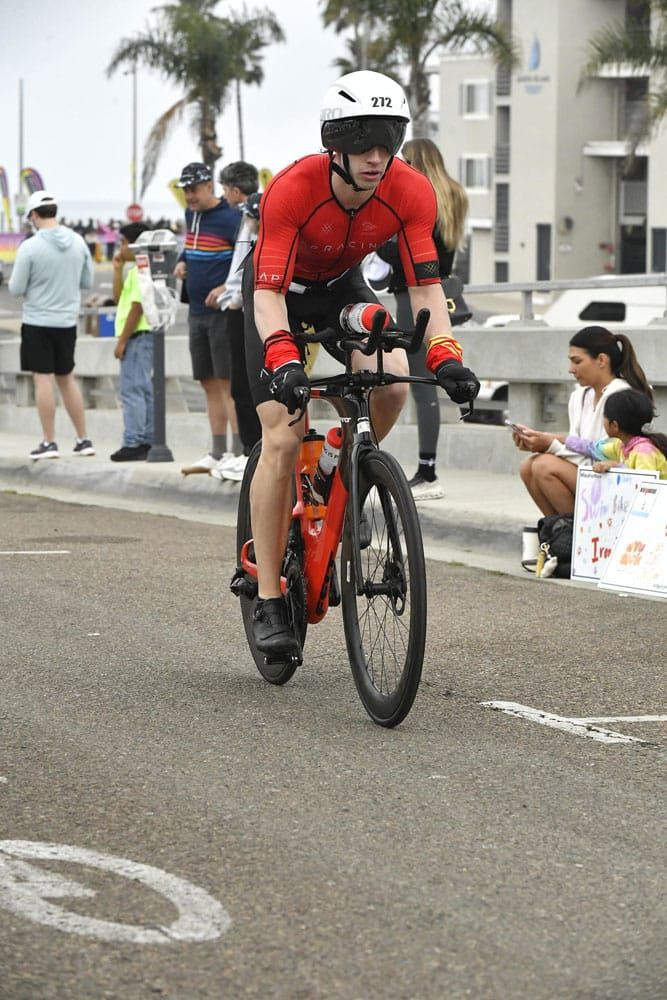
By the time you leave the base and head toward the final miles, you are not just riding toward transition. You are preparing mentally for the run. That is a crucial shift. Oceanside is not a course where you can rely on a heroic last 10 miles of the bike and still expect to run well. You need to arrive at T2 with enough left in the legs to immediately reset.
T2 and the Mindset Shift Into the Run
Transition two at Oceanside can feel deceptively simple, but after a demanding bike it becomes a make-or-break moment. The ride back into town requires attention, and by the time you dismount, your body is ready for change. This is where nutrition, mental control, and efficient movement all matter. If you have fuel planned, this is a good place to take it in; if your pacing has been sloppy, this is where you start paying for it.
The best athletes use T2 as a reset rather than a panic point. They keep the motions clean, adjust quickly, and hit the run with a clear plan. In a race like Oceanside, that plan should be simple: get moving, find your rhythm, and do not let the first mile trick you into overreaching. The run course may look fast, but it rewards athletes who stay composed long enough to let the speed come to them.
The Run: 13.1 Miles of Coastal Energy
The run is where Oceanside earns much of its reputation. It is a two-loop course that moves between the waterfront and nearby neighborhood streets, with just enough rise and fall to keep you honest. On paper, it looks like a straightforward half-marathon. In practice, it is a race of rhythm, pacing, and small decisions made over and over again.
The first miles feel deceptively smooth. If you are coming off a well-executed bike, it is tempting to get carried away by the feeling that everything is under control. The smarter move is to hold back a touch and let your stride settle naturally. The course gives you chances to speed up later, but it is much harder to recover from early enthusiasm than to build into the day gradually.
As the race unfolds, the crowd support becomes one of the defining features. Families line the course, spectators gather near the pier, and the whole beachfront area creates a sense that you are running through a real event rather than a closed-off circuit. Aid stations are frequent and well run, which matters when the sun is out and your body starts asking for help. Volunteers, music, and casual encouragement add up to a course that feels alive even when your legs are not.
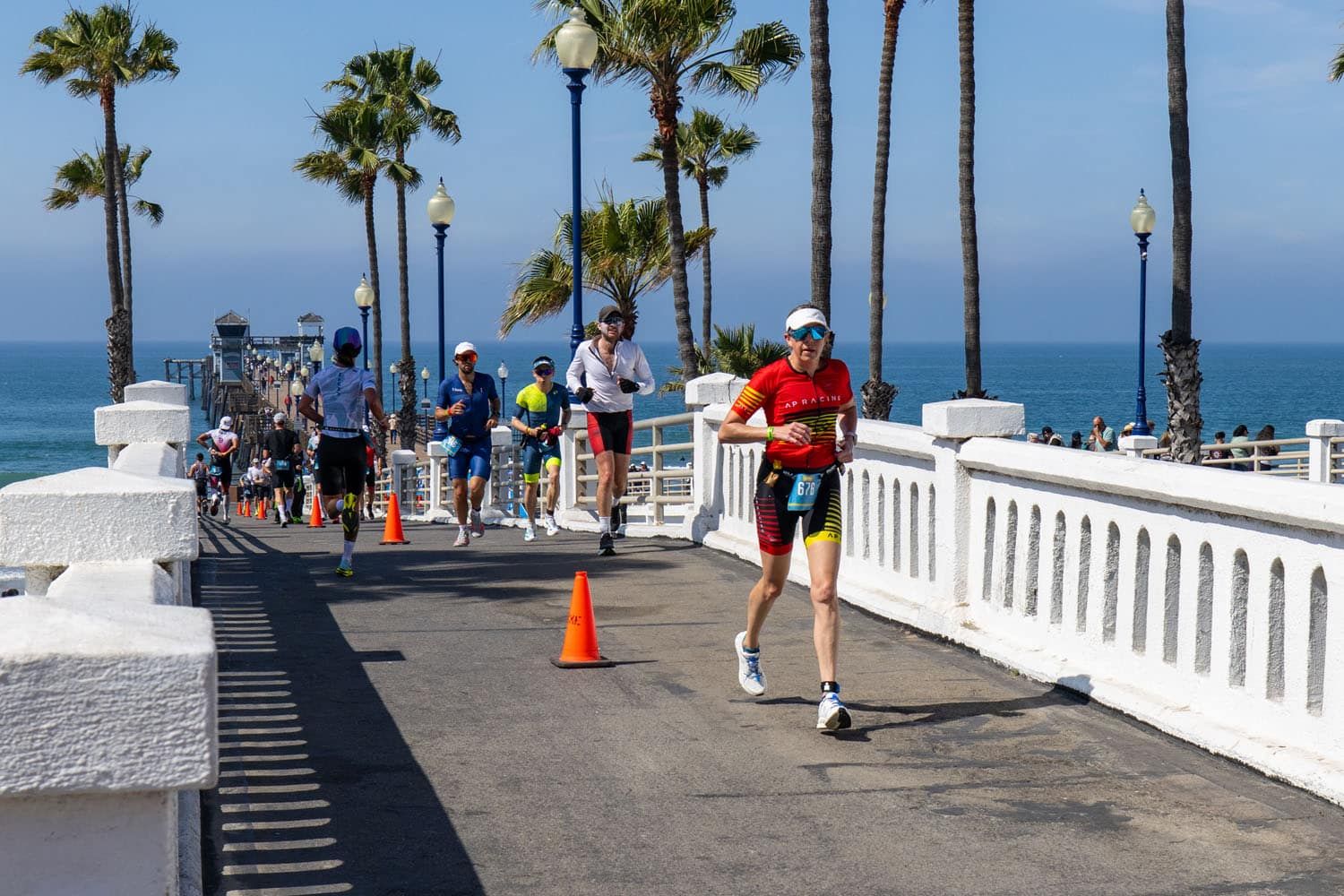
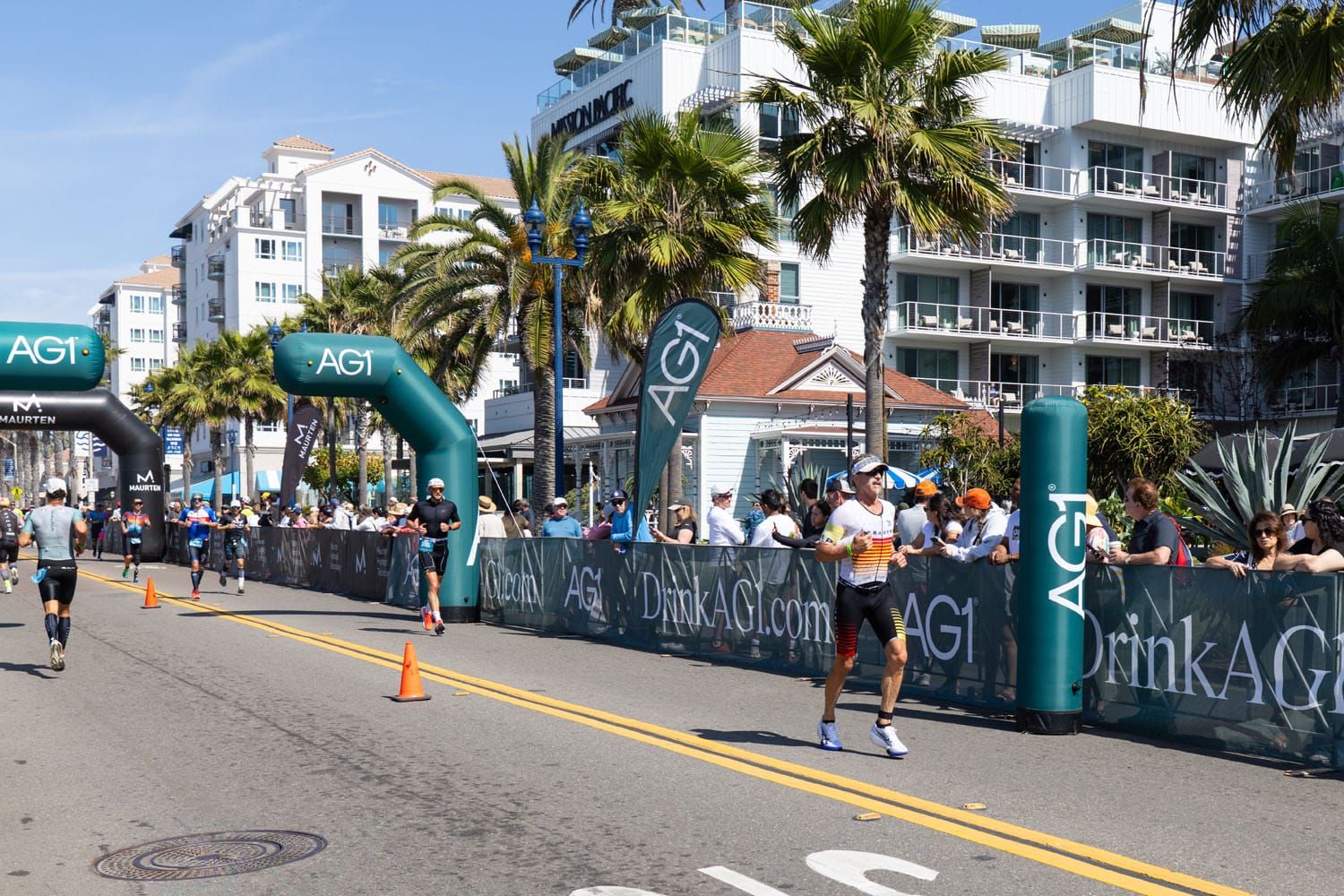
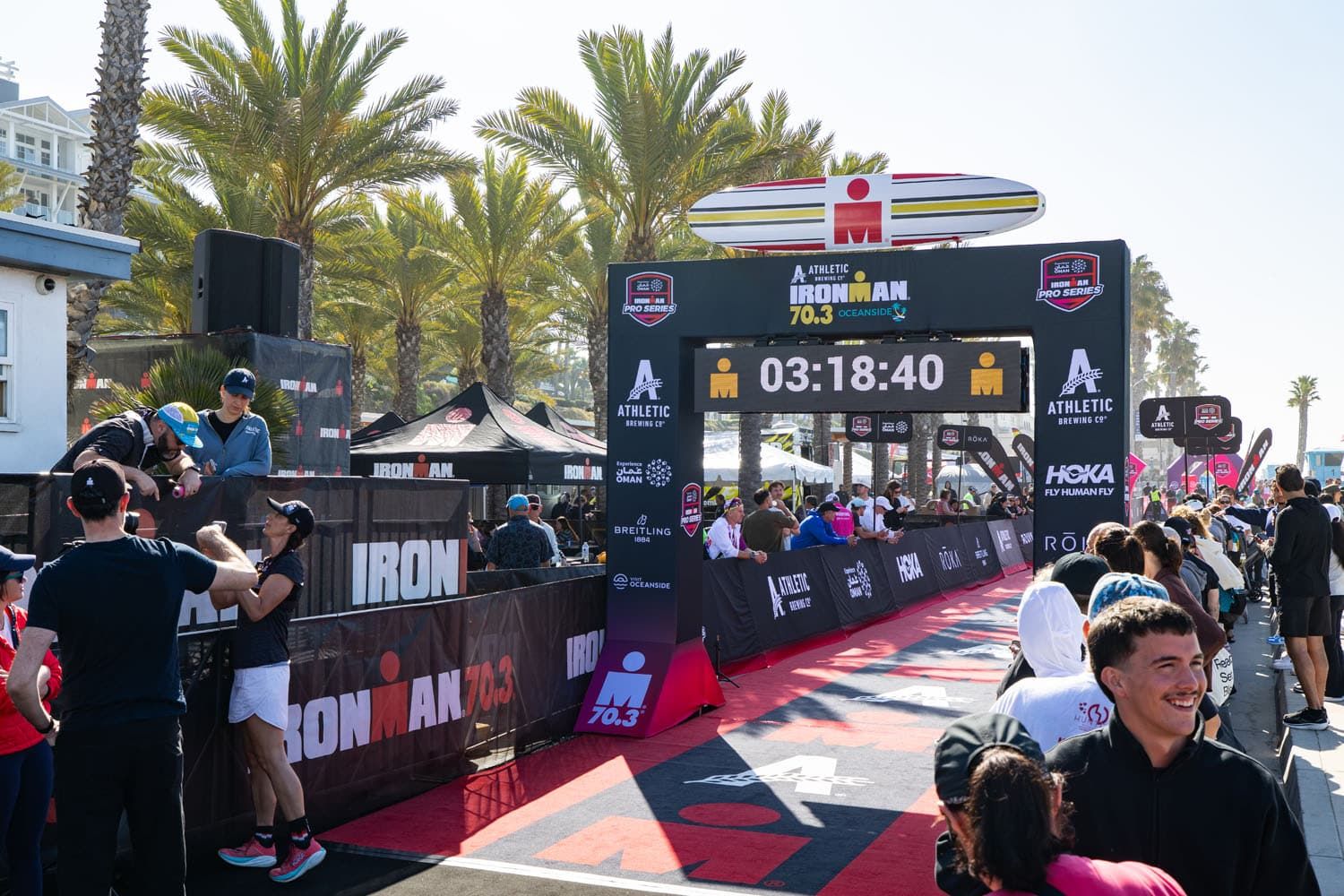
The final miles ask for more discipline than speed. Fatigue creeps in, the little climbs start feeling larger, and the finish line begins to occupy your thoughts. That is when Oceanside becomes a mental race. If you have conserved enough energy, you can push harder in the closing stretch and make the final hill feel like a launch point rather than a wall. The last turn toward the finish offers that valuable visual cue that tells you exactly how much is left, and the crowd tends to rise with you.
Professional Field and Race Energy
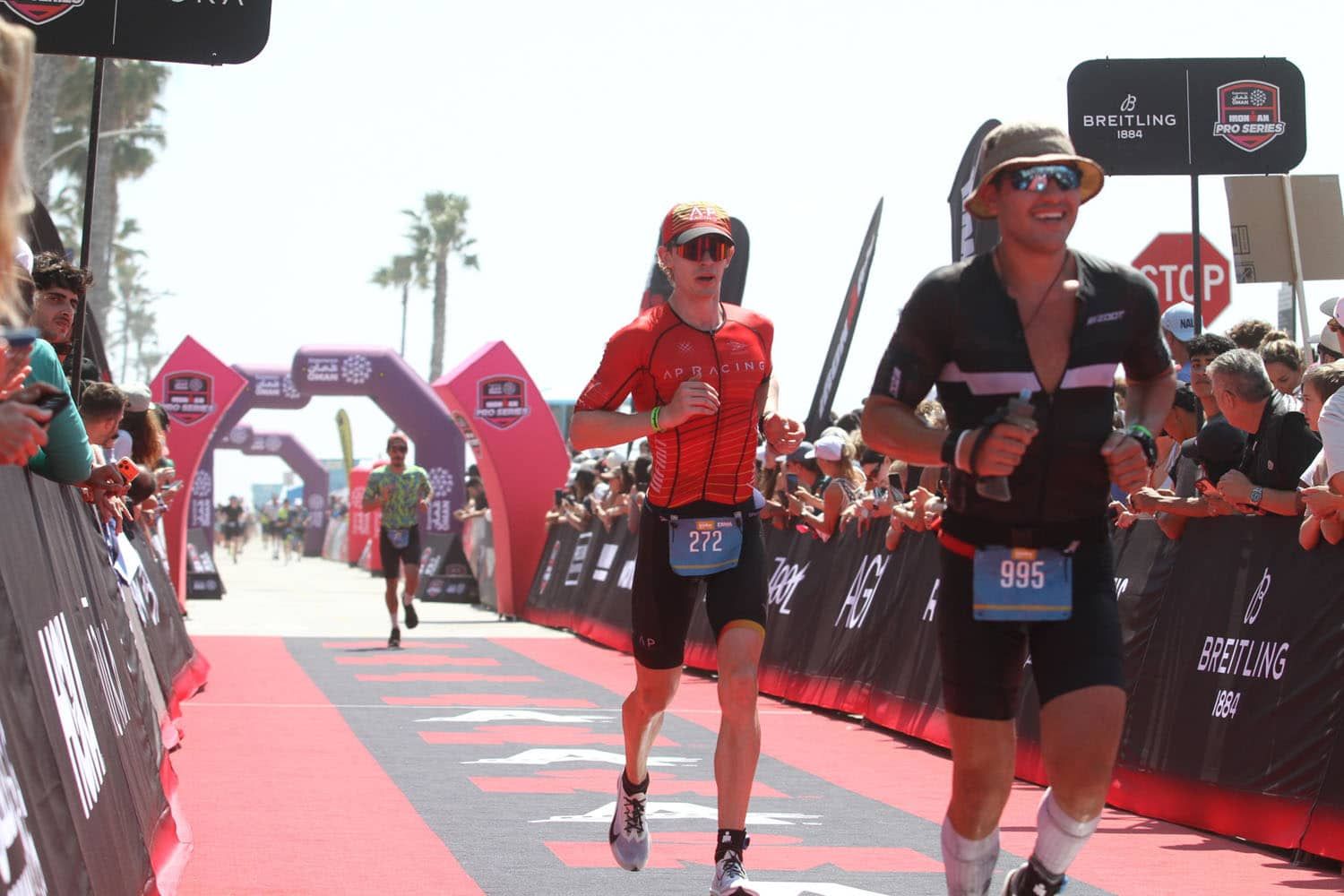
Part of the excitement at Oceanside comes from the professional field. The presence of top athletes gives the weekend a sharper edge and makes the finish area feel like a real championship venue. For age-group racers, seeing familiar names in the hotel, near the expo, or on the course adds a layer of inspiration that is hard to replicate elsewhere.
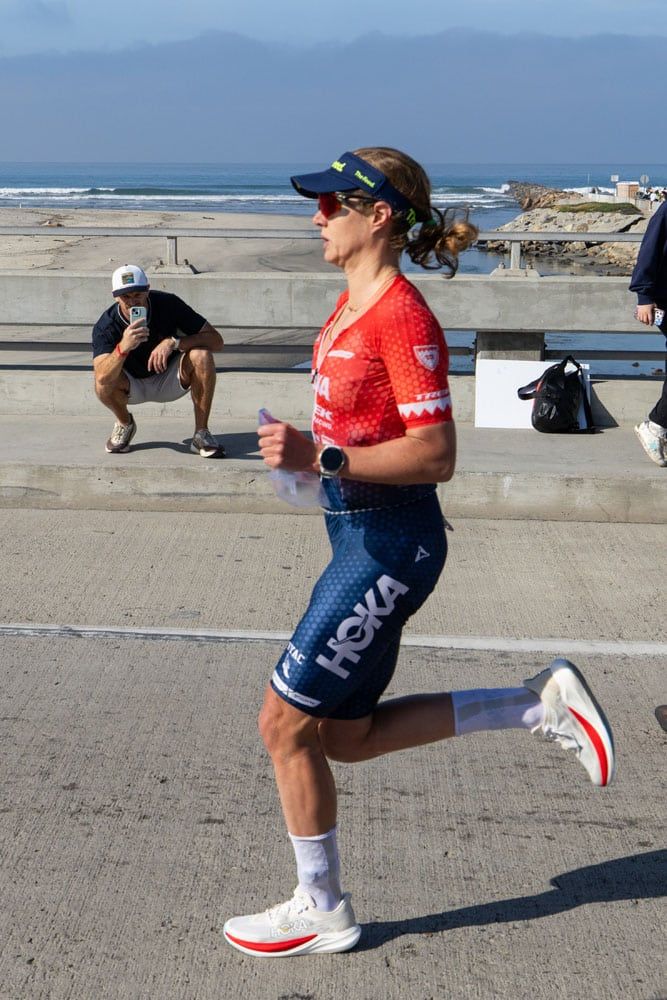
and
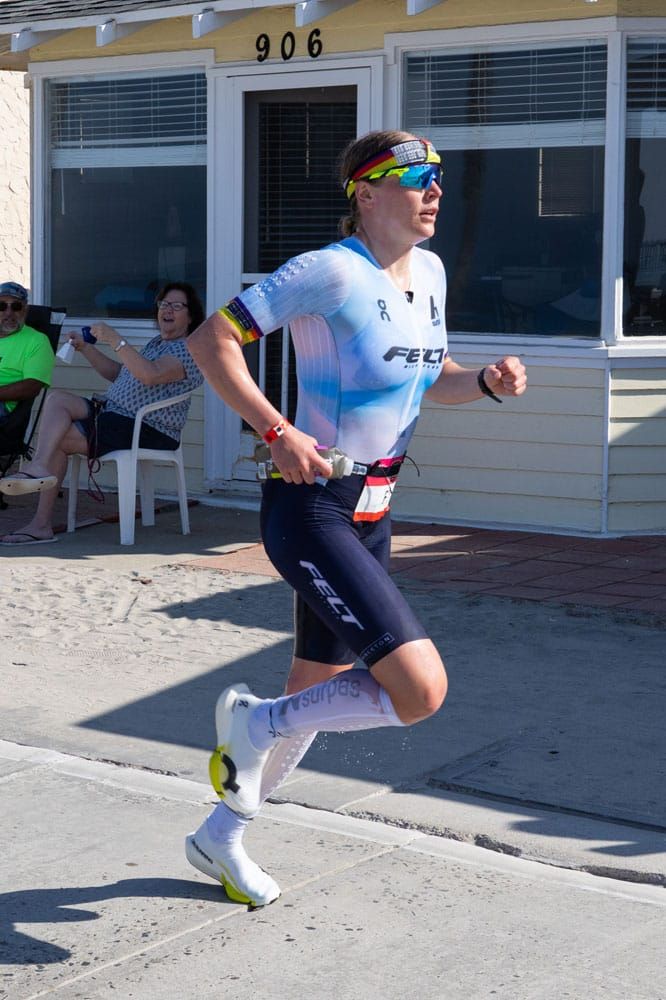
are among the athletes who help define that atmosphere, but the broader point is that Oceanside regularly attracts a deep, competitive field. That changes how spectators engage and how athletes think about their own race. It is motivating to be in the mix with athletes who push the sport forward, even if your own goal is simply to execute your best possible day.
What the Course Really Demands
The biggest mistake athletes make with Oceanside is assuming the course will be easy because it is beautiful. It is beautiful, yes, but it is also demanding. The conditions can vary from year to year, and the race often combines cold water, rough roads, climbing, wind exposure, and a run that looks flatter than it feels. That is why good preparation matters more here than at many other half-Ironmans.
If you are racing Oceanside, think of the day in layers. The swim rewards calmness. The bike rewards technical awareness, patience, and resilience. The run rewards confidence and restraint. If you respect the course’s personality, you can have a very good race. If you try to force your way through it, Oceanside has a way of making you earn every mile.
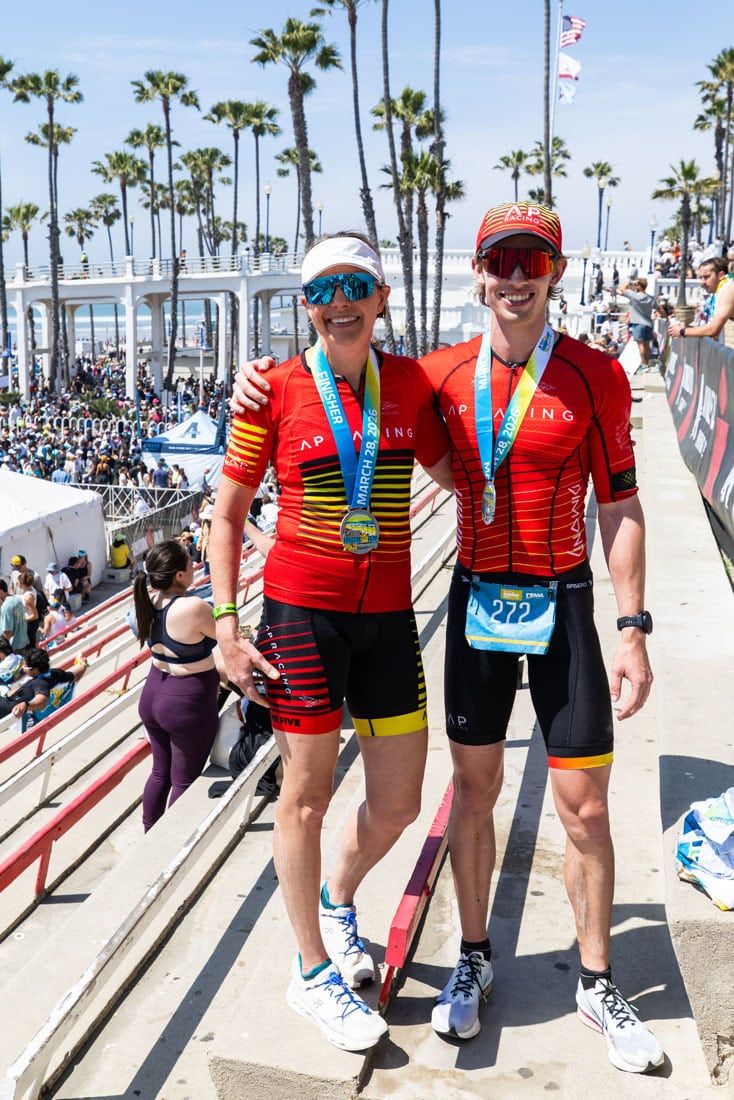
Things to Do in Oceanside Before or After the Race
Oceanside works well as a race destination because it offers enough to do without overwhelming your schedule. The town is laid-back, scenic, and easy to navigate on foot, especially if you stay near the beach. That makes it ideal for a pre-race weekend where you want a little movement, but not a full tourist itinerary.
The Oceanside Pier is one of the simplest and most rewarding places to spend an hour. A sunset walk out onto the pier gives you long views of the coast and a feeling of being exactly where you should be before a race. It is a good way to loosen up without tiring yourself out, and it naturally fits the slower pace athletes need before a big event.
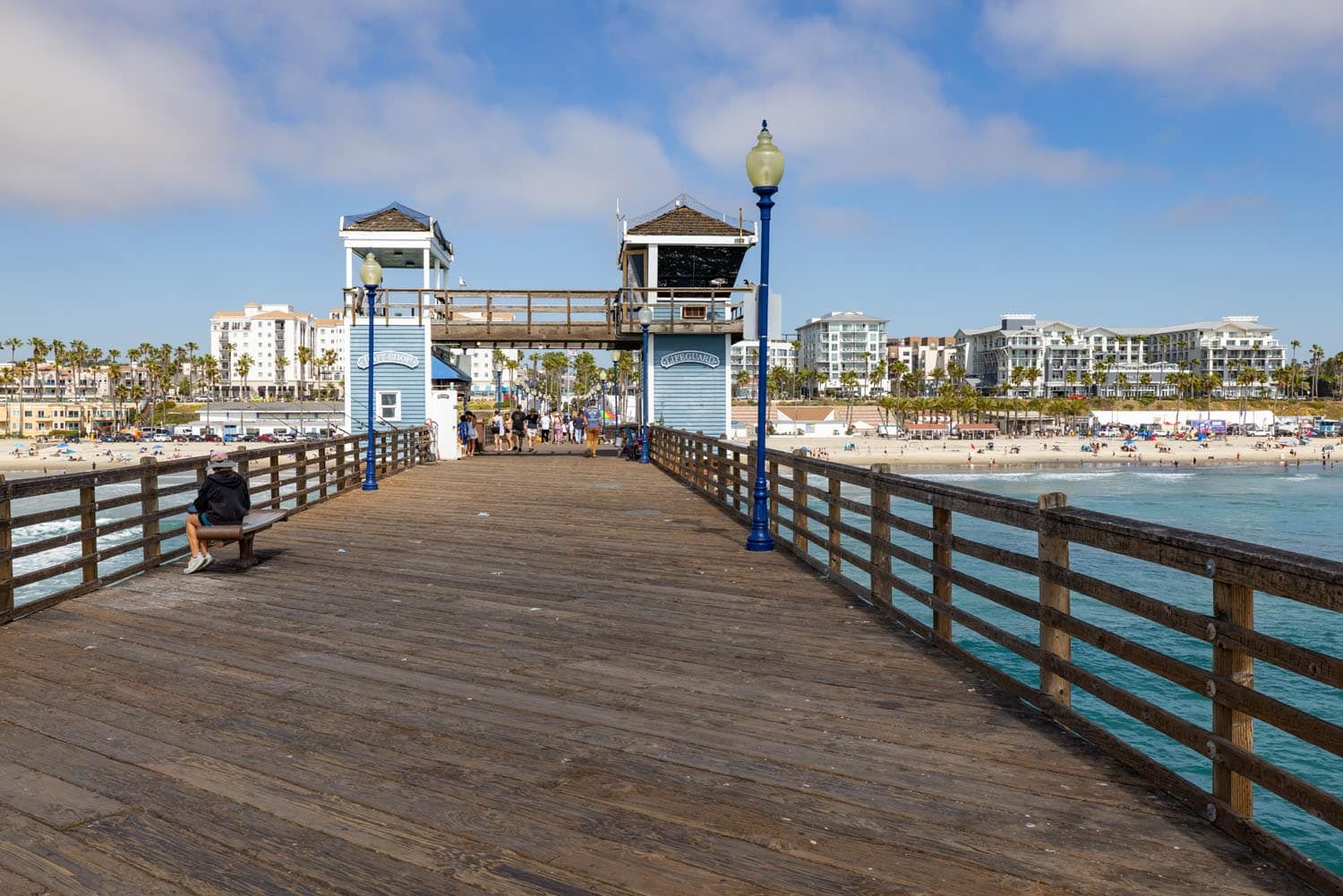
The California Surf Museum offers a compact but interesting stop if you want a bit of local culture. It is not an all-day attraction, but it adds context to Oceanside’s identity as a surf town and gives you a quieter activity that does not interfere with race prep. If you enjoy small museums and coastal history, it is worth the detour.
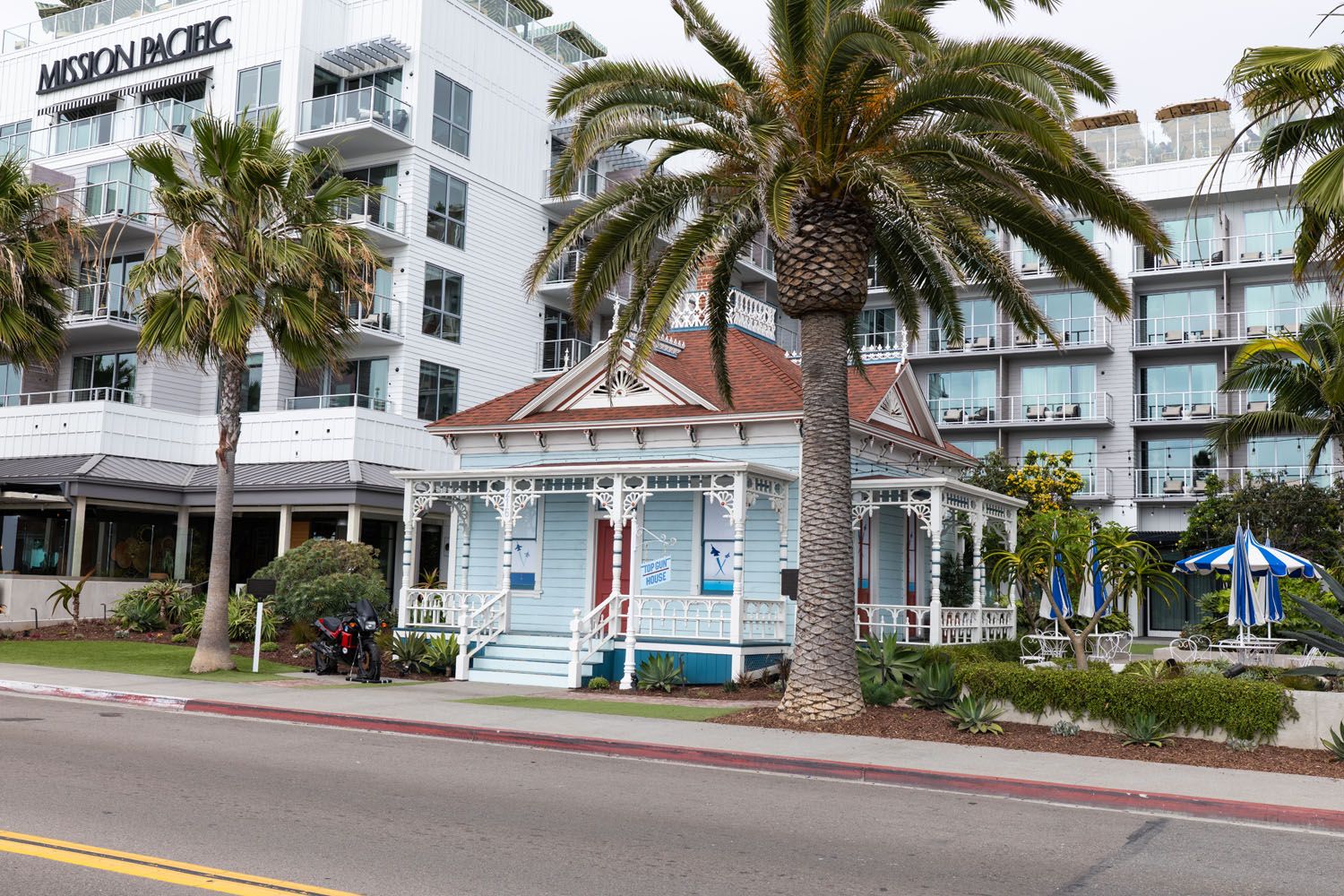
The Top Gun House is another classic Oceanside stop, especially for movie fans. It is one of those landmarks that becomes more fun because of its pop-culture context. Even if you are not deeply into the film, it is a quick, photogenic stop with a bit of Hollywood nostalgia and a strong sense of place.
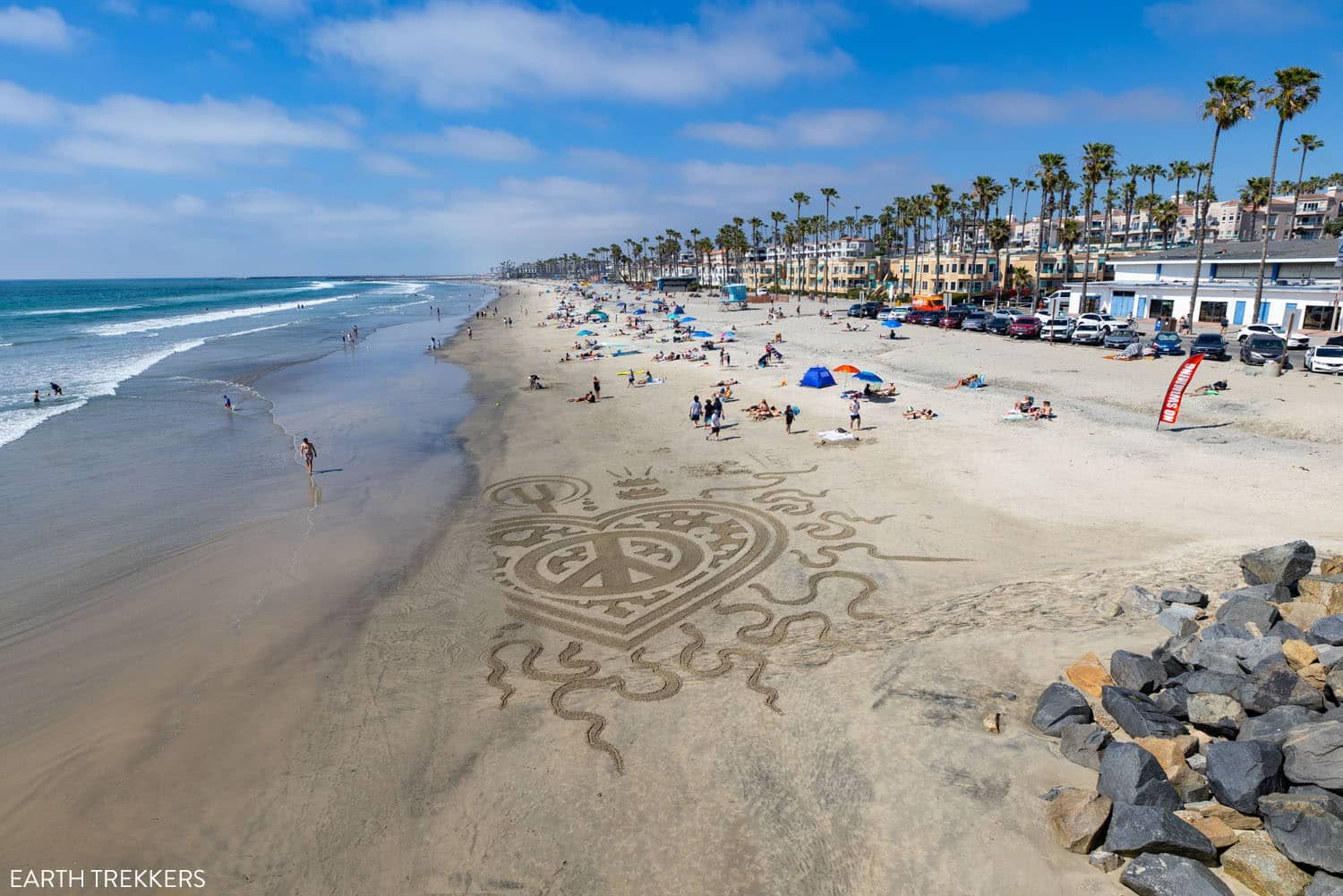
If your visit overlaps with Thursday evening, the Sunset Market adds a lively local feel to your trip. Food vendors, live music, and a relaxed downtown atmosphere make it a good option for athletes who want to keep things easy but still get a taste of local life. Just remember to keep your choices sensible if you are racing the following morning.
Where to Eat in Oceanside
Race weekend food matters more than most people admit. Oceanside has a surprisingly strong lineup of casual and pre-race-friendly restaurants, which makes it easy to eat well without turning every meal into a logistical problem. The best options are the ones that offer reliable carbs, simple service, and enough atmosphere to make the weekend feel special.
For breakfast and morning fuel, a relaxed café near the beach can be a great choice as long as you keep the menu uncomplicated. Pancakes, coffee, oatmeal, and familiar breakfast staples tend to work best. Pre-race dining is all about predictability, so choose places that are used to serving visitors and can handle the athlete rush without fuss.
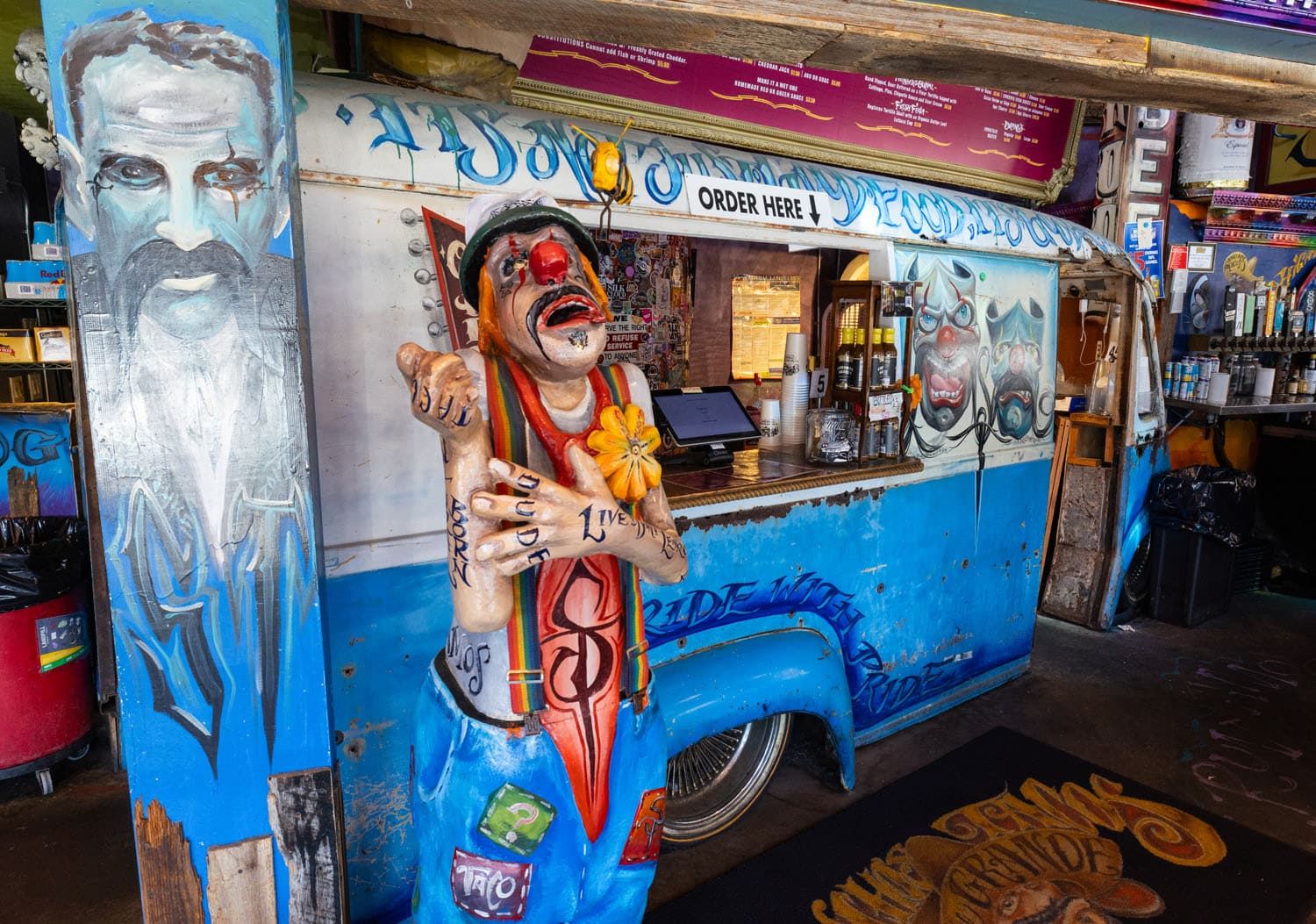
For lunch or a casual dinner, Sancho’s Tacos is hard to beat if you want something fun and memorable. The atmosphere is colorful and energetic, and the food is exactly the kind of unfussy, satisfying meal that works well in a race town. It is not a place for overthinking.
Stone Brewing Tap Room is a better post-race choice when you finally want to relax and celebrate. With indoor and outdoor seating, it gives you a comfortable place to decompress and enjoy a proper end-of-race beer or meal. If your legs are cooked, this is the kind of spot that makes recovery feel like part of the trip rather than a chore.

Where to Stay for IRONMAN 70.3 Oceanside
Hotel choice in Oceanside comes down to your priorities. Staying near the pier puts you close to the finish line, expo, and restaurant scene, while staying near the harbor simplifies access to transition and the swim start. Both options work, but they create different race-week experiences.
For athletes who enjoy walkability, beach access, and a lively but not overwhelming environment, the pier area is a strong choice. You can move between breakfast, the expo, and the waterfront without relying heavily on a car. For athletes who are especially concerned about race morning logistics, the harbor area may reduce stress, though it is less appealing as a destination base outside the race itself.
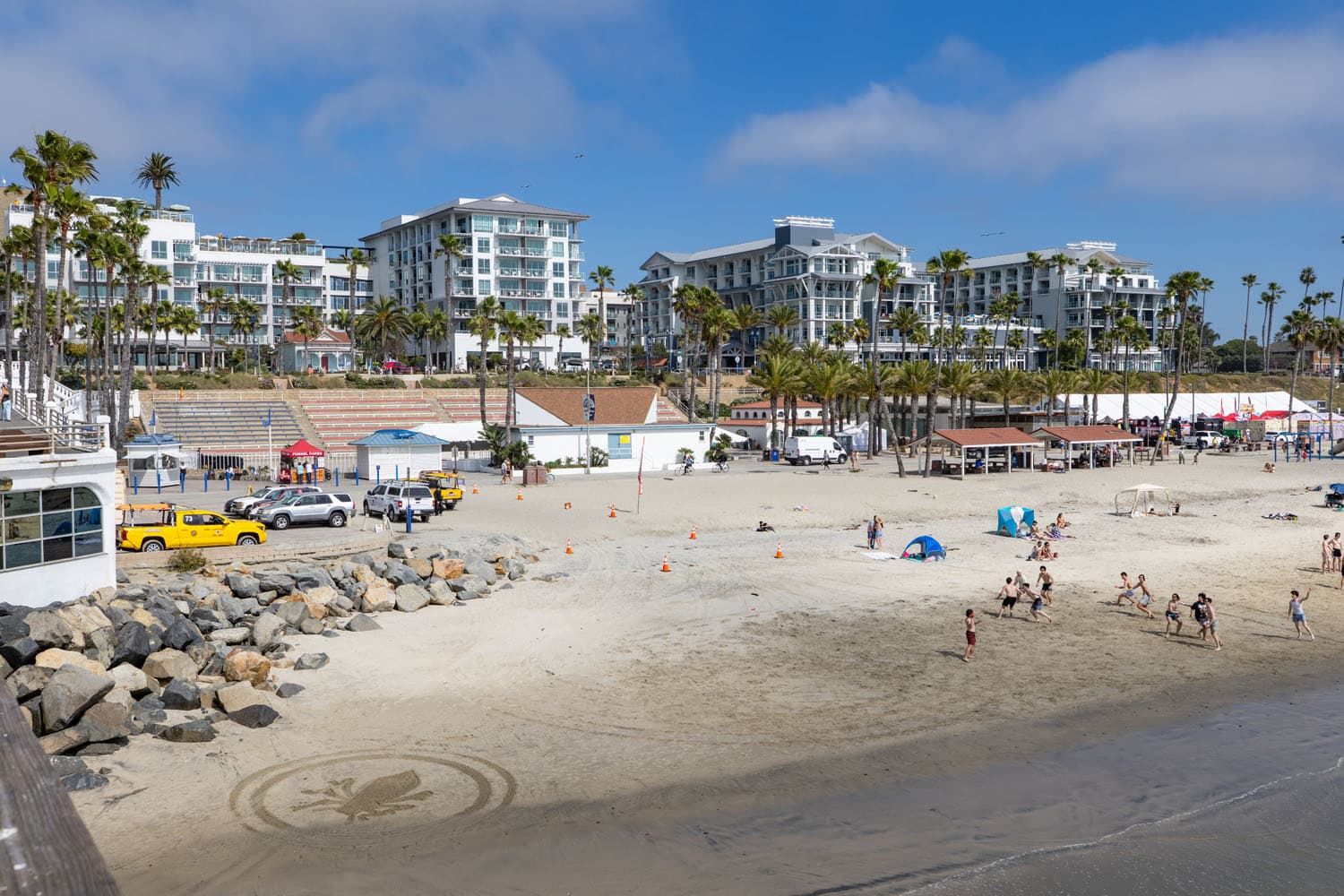
Mission Pacific and the Seabird sit in particularly appealing positions near the heart of race activity. If you can book one of those properties or another hotel in that immediate area, you will likely appreciate the convenience. Just be aware that premium location often comes with premium pricing, especially once race demand increases. If you are traveling with family or staying multiple nights, the extra expense may be worth it for the comfort and access alone.
Practical Tips for a Better Oceanside Race
The best race-day strategy is to arrive early, keep your setup simple, and do not underestimate the course. Oceanside rewards athletes who think ahead. Bring a proper flat kit. Check your tires carefully. Prepare for cold water even if the forecast looks manageable. And if possible, walk from your hotel instead of relying on race shuttles unless you have no other choice.
It also helps to arrive with a flexible mindset. Weather can change the character of the course. A calm morning does not guarantee smooth roads or a personal best. Likewise, a difficult swim does not mean the rest of the day is lost. Oceanside is an event where one problem can be recovered from if you stay emotionally level and keep making good decisions.
Most importantly, treat the race as both competition and experience. The setting is too good to rush through mentally. The harbor start, the military base, the oceanfront run, and the downtown finish all create a weekend that feels bigger than the stopwatch. If you are only focused on numbers, you may miss why so many athletes love this event in the first place.
Official Registration and Race Information
To register for the race, review the latest course details, and check current event updates, visit the official IRONMAN website before making travel decisions. Course details, start times, road conditions, and logistics can change from year to year, so it is always worth confirming the latest information as race week approaches.
More Triathlon Travel Ideas
If Oceanside inspires you to build more destination races into your calendar, Southern California and beyond offer plenty of excellent options. Coastal races, desert road trips, and city-based triathlons can all make for memorable race vacations if you are willing to pair training with a little exploration. The best triathlon trips tend to balance focused preparation with enough downtime to actually enjoy where you are.
And that is part of what makes Oceanside so appealing: it gives you both a challenge and a setting worth lingering in, whether you are there to chase a result, support a partner, or simply enjoy a weekend on the coast.