Most travel, at least the kind that fills social feeds and guidebook checklists, can be surprisingly passive. You arrive, photograph the famous square, eat where everyone else eats, take a bus tour, and leave with a camera roll full of the same scenes thousands of other visitors have captured. There is nothing wrong with that kind of trip. In fact, for many people, it is the perfect vacation. It is easy, familiar, and often exactly what a short break should be.
But there is another way to travel, one that goes beyond checking off sights and collecting souvenirs. It is slower, more rooted, and far more memorable. It is the kind of travel that asks you to stay long enough to understand the rhythm of a place, not just its surface. You begin to recognize the morning rush at the local bakery, the subtle etiquette of a neighborhood café, the bus routes that actually get used by residents, and the difference between a place being interesting and a place feeling lived in.
That deeper style of travel is not always easy to access on your own. It often requires a visa, a job, a program, or some kind of structured entry point that helps you move from visitor to participant. That is where working holidays, teach-abroad placements, internships, and volunteer opportunities become so valuable. They create a bridge between travel and real life, letting you contribute, learn, and stay long enough for a destination to become more than a backdrop.
Why Deeper Travel Changes the Way You See a Place
The most transformative journeys are rarely the ones where everything is polished and prearranged. They are the ones where you have to adapt, contribute, and engage. When you live somewhere for weeks or months, you start to see the texture of daily life: how people commute, where they buy groceries, what local routines shape the day, and how communities interact outside of the tourism economy. This changes your understanding of travel entirely. Instead of asking, “What can I see here?” you begin to ask, “How does life actually work here?”
That shift matters because it creates space for genuine connection. Rather than depending on brief encounters with guides or service workers, you begin building relationships through repeated interaction. Coworkers, neighbors, host families, local friends, and project coordinators become part of your story. The destination becomes tied to people, not just places. Years later, those are the relationships and experiences that remain vivid.
For many travelers, the challenge is not desire but logistics. It is easy to want a meaningful experience and harder to figure out how to get one without wasting time, money, or energy on unreliable opportunities. That is why structured programs have become such an important part of modern travel. They help you avoid the guesswork and give you a real path into a country, community, or career experience abroad.
What Global Work & Travel Does
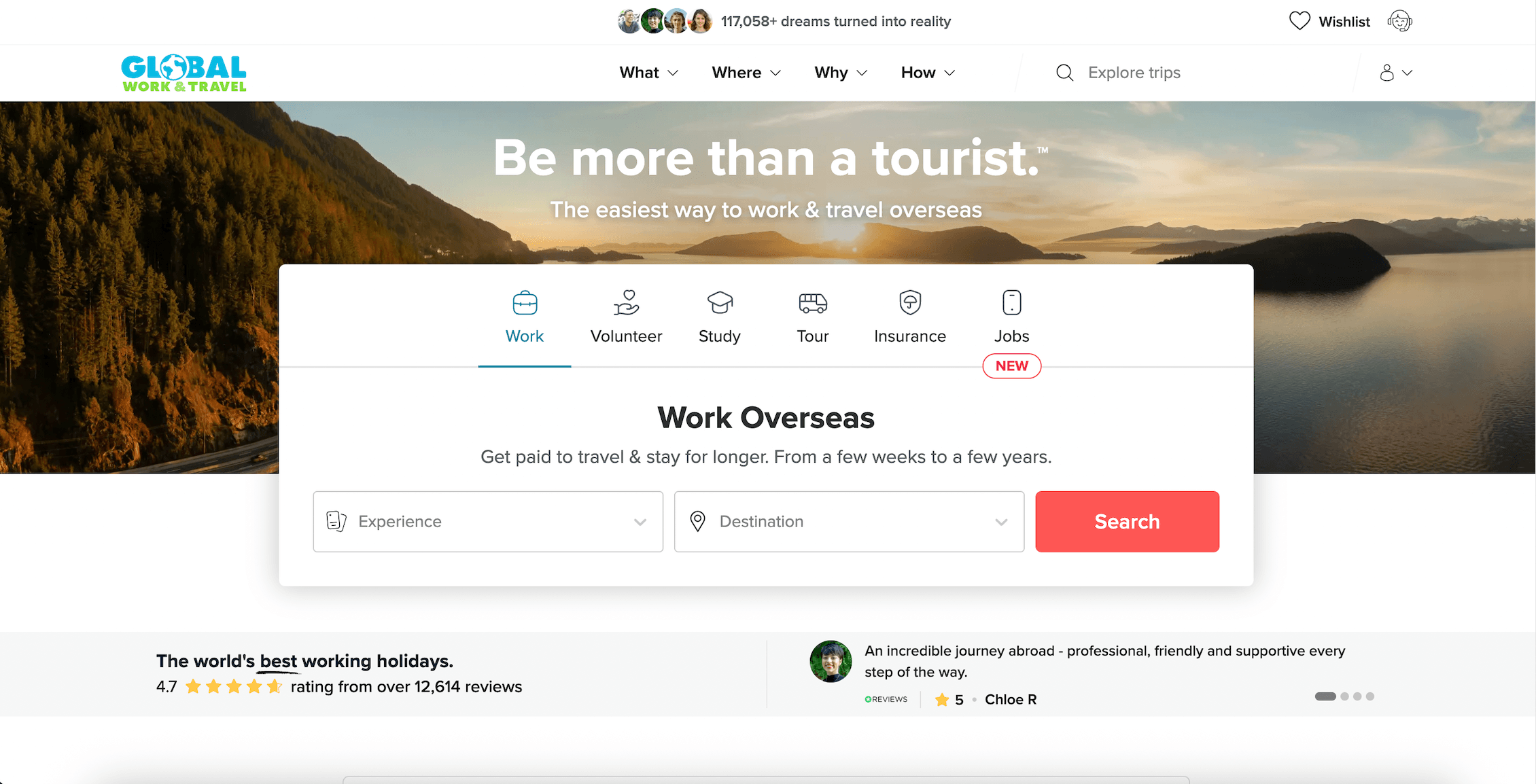
Global Work & Travel is one of the largest gap year and long-term travel companies in the world, and it has spent nearly two decades helping people find working holidays, volunteer placements, teaching jobs, internships, au pair roles, and seasonal work abroad. Its reach spans destinations across the UK and Europe, the Americas, Asia, Africa, and the Pacific, giving travelers a wide range of options depending on their goals, budget, and timeline.
What makes a service like this useful is not only the range of programs, but the amount of friction it removes. Moving to another country, even temporarily, involves a long list of decisions and practical hurdles. You have to think about visas, bank accounts, tax numbers, housing, transportation, interviews, language barriers, and what to do if something goes wrong after arrival. For someone new to long-term travel, that can be overwhelming. Global Work & Travel provides a support structure that simplifies the process through placement assistance, pre-departure guidance, visa support, and ongoing help via its gWorld trip management platform.
That kind of scaffolding can make the difference between a dream that stays vague and a trip that actually happens. It is especially helpful for first-time travelers, younger travelers, solo travelers, and anyone who wants a meaningful overseas experience without having to build everything from scratch.
Types of Programs Available
The company offers several pathways into long-term travel, each suited to different interests and levels of experience. Working holidays are ideal for travelers who want to earn money while living abroad in destinations such as Australia, Canada, the UK, New Zealand, South Korea, and Japan. These programs can help with job matching, accommodation guidance, and the practical steps needed to settle in quickly. For anyone who wants to fund a longer stay without relying on savings alone, this is one of the most practical travel models available.
Volunteer abroad programs are designed for people who want to contribute to wildlife conservation, community development, education, construction, or care work. These trips can be short or extended, making them accessible to a broader age range and a wider variety of schedules. Teaching programs add another layer by offering TEFL training, job placement support, and help with the administrative details that often determine whether a trip succeeds or stalls. For those interested in education and cultural exchange, teaching abroad can be one of the most rewarding ways to stay immersed in a destination.
Au pair placements, summer camp jobs, and internships round out the offering. Au pair experiences allow you to live with a host family, which can be one of the most intimate ways to understand day-to-day life in a new country. Summer camp jobs provide a seasonal, social, and highly structured way to work abroad, often with accommodation and meals included. Internships can help students and early-career professionals build international experience that strengthens a resume while exposing them to a different business culture.
Why Working Holidays Appeal to a New Generation of Travelers
For years, the idealized version of extended travel was the digital nomad lifestyle: work remotely, earn in a strong currency, and live somewhere more affordable. It is an appealing model, but it is also limited. Not everyone has a remote job. Not everyone can work independently from anywhere. Not everyone wants to build a life around cafes, laptops, and unstable Wi-Fi.
Working holidays offer a different and arguably more grounded model. Instead of arriving with your income already secured, you arrive knowing that work opportunities are part of the experience. You are not floating above local life; you are participating in it. You have coworkers, shifts, routines, and reasons to stay. That can make a huge difference, not only financially but socially. Work is one of the fastest ways to become part of a place because it naturally creates repeated contact and shared responsibility.
This approach also makes long-term travel more accessible. You do not need to be a freelancer, entrepreneur, or highly paid remote employee to live abroad for an extended period. What you need is the willingness to adapt and the ability to take the next practical step. For many younger travelers, that is a far more realistic entry point than building an entire digital business model before ever leaving home.
Why Volunteering Abroad Can Be Worth It
Volunteering abroad deserves a careful, honest conversation. There are plenty of programs that are poorly designed, lightly supervised, or more focused on the traveler’s emotional experience than the community’s actual needs. That is a real problem, and anyone considering volunteer travel should be selective. The best opportunities are the ones that are locally informed, ethically structured, and built around genuine need rather than spectacle.
When done well, though, volunteering can be powerful. Working alongside local communities on projects they have identified as important creates a very different experience from conventional tourism. You begin to understand a destination through the challenges people face and the work they are doing to respond to them. That could mean conservation work in South Africa, wildlife support in Thailand, education initiatives in Zanzibar, or community development elsewhere. The learning goes both ways: you contribute your time and energy, and in return you gain perspective, context, and humility.
Some programs also support conservation and welfare initiatives beyond the placement itself. That broader structure matters because it helps ensure your participation contributes to something ongoing rather than a one-off experience that looks meaningful but leaves little behind. For travelers who care about ethical impact, that distinction is essential.
The Practical Advantages of a Structured Program
One of the biggest advantages of working with a company like Global Work & Travel is that it reduces uncertainty. Planning a move abroad independently can mean weeks of reading visa pages, comparing housing options, trying to understand local job markets, and worrying about what happens if you land and nothing is lined up. A structured program turns that chaos into a sequence of manageable steps.
Another major advantage is accountability. It is easy to talk yourself out of a big trip when the planning feels endless. Programs create a deadline, a process, and a support system. They also help with the less glamorous parts of travel that often determine whether your trip feels smooth or stressful: opening bank accounts, understanding local paperwork, connecting with other participants, and organizing pre-departure tasks in one place.
The gWorld portal is particularly useful because it centralizes much of that planning. Having a single place to review documents, access support, connect with others, and prepare before you leave can make the entire process feel less intimidating. For solo travelers in particular, that kind of structure can be reassuring.
Hidden Gems
One of the best parts of staying longer in a destination is that you begin to discover places most short-term visitors never reach. These are not always “secret” in the dramatic sense, but they are often overlooked simply because they are not built into standard itineraries. A neighborhood market that comes alive before sunrise. A family-run bakery where the same regulars stop every morning. A small beach, forest trail, community garden, or local museum that never makes the front page of travel blogs. These places matter because they reveal the everyday character of a destination.
Working travelers and long-stay visitors are in a better position to find these hidden gems because they have time to wander, ask questions, and return more than once. A café you first visited because it was near your accommodation might become your favorite study spot. A weekend market might lead to an introduction that changes the rest of your trip. A local bus route might take you to a nearby town you would never have thought to visit on a standard vacation. Longer stays reward curiosity, and curiosity is often the difference between a good trip and a deeply remembered one.
What Makes These Experiences More Memorable Than Standard Tourism
The strongest travel memories are often tied to responsibility, repetition, and participation. A famous landmark is worth seeing, but it is not always what you remember most. What stays with you is the moment you were late to work because you misread a bus route, the evening your coworker invited you to dinner, the day you helped with a project that taught you something new, or the week you finally learned how to move through a city like someone who belongs there.
This is the real appeal of long-term travel. It is not about rejecting tourism entirely. It is about adding depth to it. By staying longer and involving yourself more fully, you turn a trip into a lived experience. You begin to notice social patterns, economic realities, and cultural nuances that would be invisible on a short visit. That understanding can be more valuable than any checklist of attractions.
It also tends to be more affordable over time. Working abroad can offset your expenses, while volunteer placements and hosted programs can reduce accommodation and logistics costs. Even when upfront fees exist, the long-term structure often helps travelers avoid the hidden expenses that come with improvising everything on the fly. In that sense, this style of travel is not only richer but often more sustainable.
What to Consider Before You Commit
Before choosing any working holiday or volunteer program, it is worth thinking carefully about your goals. Do you want to earn money, build experience, improve language skills, support a project, or simply spend more time in a specific country? Different programs serve different purposes, and knowing your priorities helps you choose wisely. You should also think about timing, visa eligibility, age limits, and how much flexibility you have in your schedule.
It is also smart to research the destination itself. Cost of living, housing availability, seasonal demand, climate, and local work culture can all affect your experience. A program can be well organized and still be wrong for your expectations if you have not thought through the realities of life on the ground. Taking the time to prepare is part of what makes the experience more rewarding once you arrive.
Most importantly, go in with realistic expectations. Extended travel is enriching, but it is not frictionless. There will be paperwork, awkward moments, slow days, and logistical challenges. That is part of the experience. The payoff is that you come home with more than stories. You come home with perspective, confidence, and a better understanding of how the world works beyond your own routine.
Frequently Asked Questions
Do you need prior experience to work abroad through a structured program? In most cases, no. Many working holiday roles require basic work experience at most, while teaching and volunteer options often include training or support that makes them accessible to beginners. Some placements are better suited to certain backgrounds, but you do not need to be an expert to start.
What is the minimum age? Most programs begin at 18, while working holiday visas often have upper age limits depending on the country. Volunteer, au pair, and teaching options can sometimes be open to a much wider age range, making them suitable for travelers at different life stages.
How far in advance should you plan? Ideally, several months ahead, especially if visas, job matching, or seasonal placements are involved. Many travelers start planning six to twelve months in advance so they have enough time to prepare properly and avoid last-minute stress.
Can solo travelers do this? Yes, and solo travel is one of the most common ways people begin. Structured programs can make solo travel much easier by connecting participants before departure and creating social networks once you arrive.
If you want travel to feel more substantial, more social, and more connected to real life on the ground, it helps to stop thinking only in terms of tourism and start thinking in terms of participation. That is where the most memorable journeys begin, and it is often where the road opens up in unexpected ways.
Book Your Trip: Practical Planning Tips
Flight search tools like Skyscanner can help you compare routes and find the best deals across multiple airlines and booking platforms. For accommodation, Hostelworld is useful for hostels, while Booking.com can work well for guesthouses, hotels, and private rooms. If you want extra protection, travel insurance is essential because it covers illness, injury, theft, and cancellations, and it is one of the few purchases that can save you from major stress later.
If you are trying to stretch your budget, travel credit cards can help you earn points for flights and hotels without extra spending, as long as you use them responsibly. For road trips, car rental platforms like Discover Cars can simplify comparison shopping across countries. And if you want to add activities to your itinerary, GetYourGuide makes it easier to find tours, excursions, skip-the-line tickets, and local experiences in one place.
What matters most, though, is not the tool itself. It is the decision to travel in a way that gives you time, context, and a reason to return home with a richer story. That is the kind of journey worth planning carefully, and it is often the kind that begins with one brave step forward.