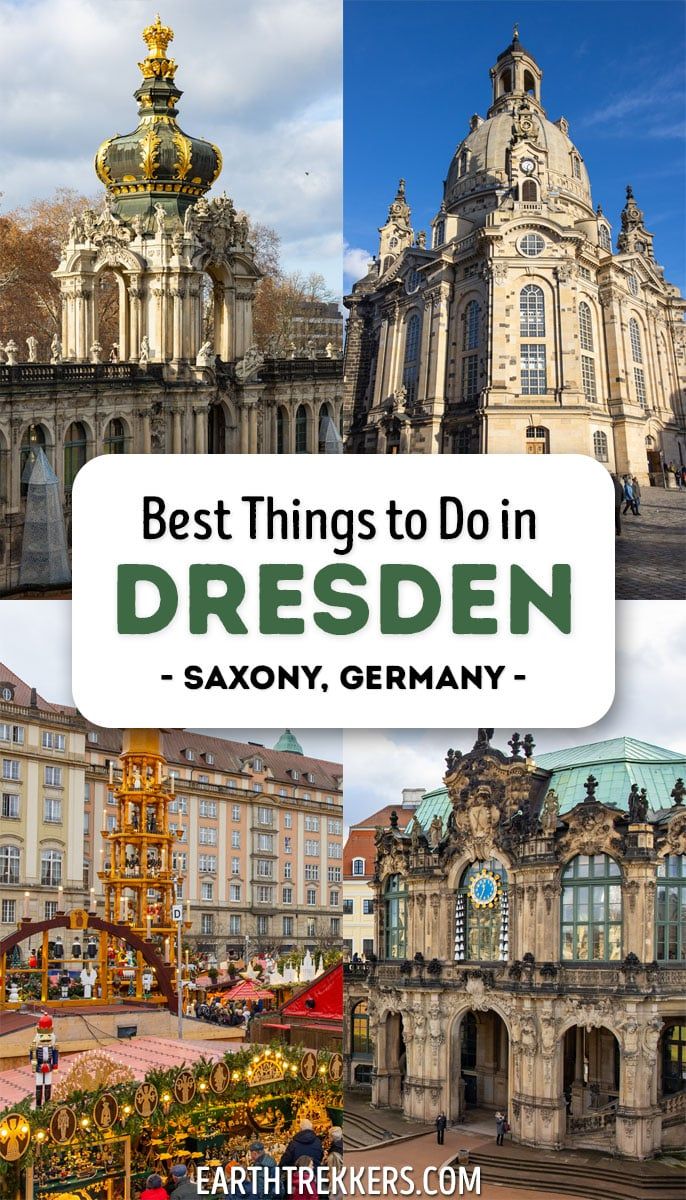
Dresden is one of those cities that rewards both careful planning and simple wandering. Its Old Town is compact enough to explore on foot, but layered enough to keep unfolding as you move from one square to the next. Baroque facades, rebuilt churches, museum-rich palaces, and long riverside promenades give the city a sense of grandeur that is immediately apparent, yet Dresden never feels like a place that exists only for sightseeing. It is lived in, walked through, and enjoyed at an easy pace. That balance is part of what makes it such a strong choice for a weekend city break, a winter escape, or a memorable stop on a longer Central Europe itinerary.
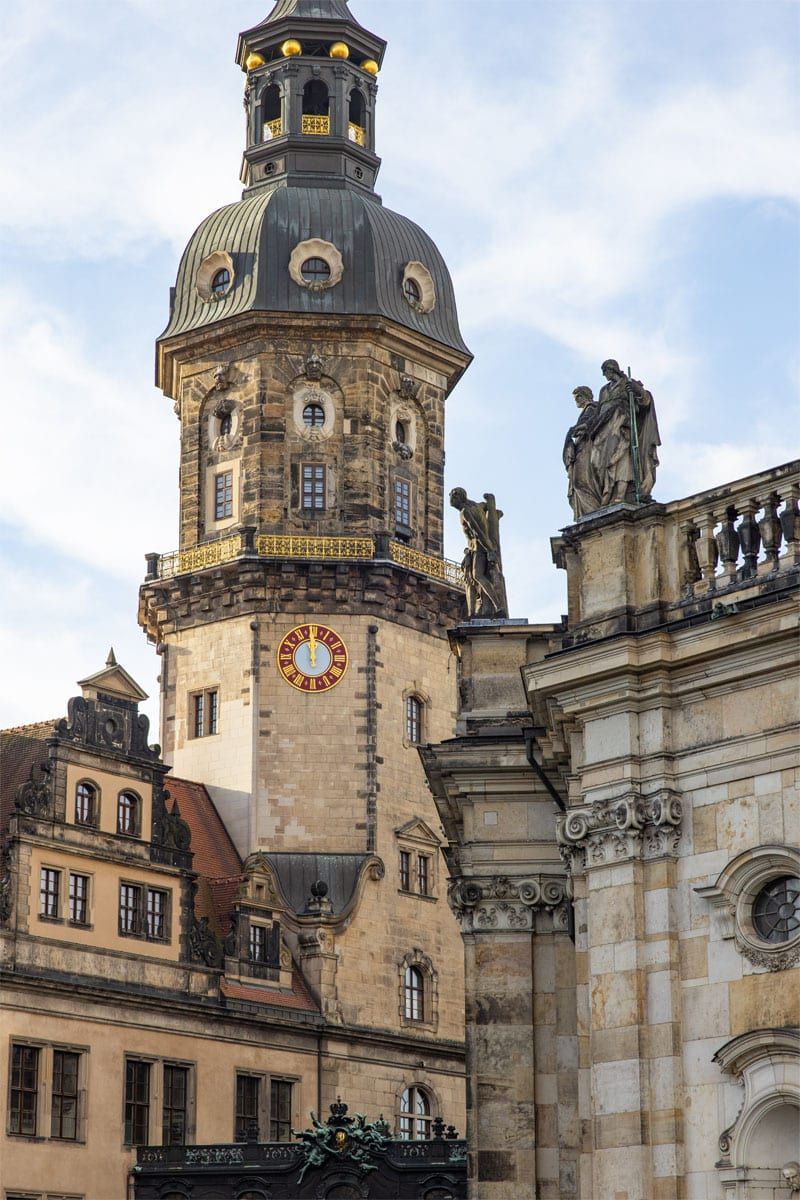
The city’s story is inseparable from Augustus the Strong and the cultural ambition of eighteenth-century Saxony. His influence still shapes the visual identity of the center, from the Royal Palace to the Zwinger and the elegant squares clustered around the Frauenkirche. Dresden also carries the weight of wartime destruction and painstaking reconstruction, which adds depth to the experience of walking its streets. In many places, you are not simply seeing monuments; you are seeing the deliberate rebuilding of a city’s identity. That gives the Old Town a polished beauty, but also a meaningful one.
December adds another layer entirely. Dresden’s Christmas markets are among the most atmospheric in Germany, and the city becomes especially photogenic when the lights come on and the squares fill with the scent of roasted nuts, pastries, and mulled wine. Even so, Dresden is not a destination limited to winter. Spring brings softer weather and quieter streets, summer opens up the riverfront and gardens, and autumn delivers comfortable walking conditions with fewer crowds. No matter when you go, the city offers a satisfying mix of major sights, small discoveries, and places worth lingering over.
How to Experience Dresden Well
If you only have one day, focus on the historic core. Start in the squares around Altmarkt and Neumarkt, then move through the Royal Palace, the courtyard of the Zwinger, and the Brühl Terrace before crossing the Augustus Bridge to appreciate how the city opens out across the Elbe. With two days, you can add museums, a slower lunch, and a few of Dresden’s more distinctive spots outside the very center. That extra time makes a noticeable difference because the city is at its best when you can pause rather than rush.
Dresden is especially rewarding for travelers who enjoy architecture, art, and historic urban landscapes. It is also practical: public spaces are walkable, the transit network is easy to use if needed, and the main attractions are concentrated enough that you can build a full trip without a car. At the same time, a few places sit beyond the central cluster, and those can be worth the effort if you want to see a different side of the city. The Panometer, the Kunsthof Passage, and the Grand Garden all expand the picture of Dresden beyond its most famous postcard views.
Altmarkt Square and the City’s Market Tradition
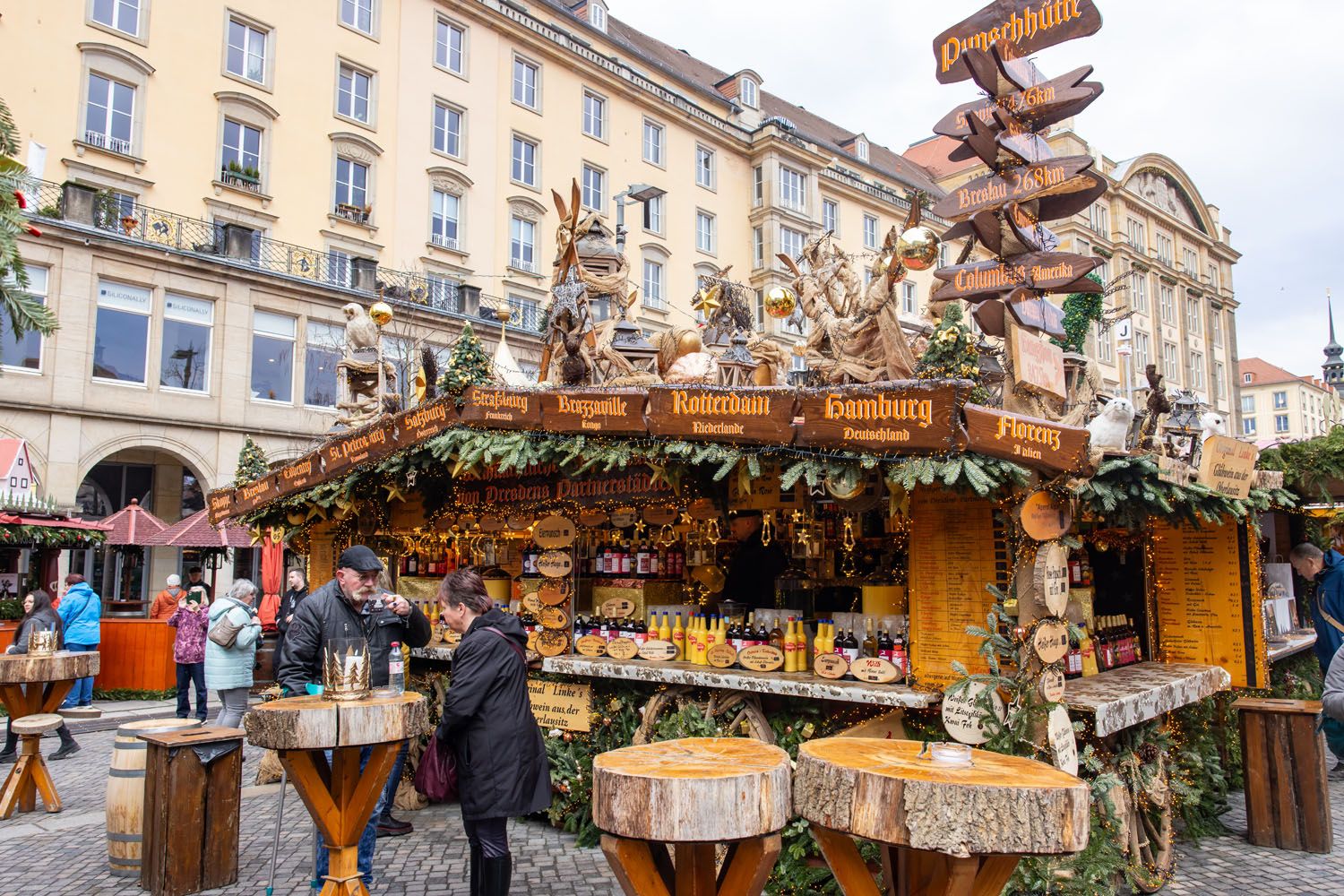
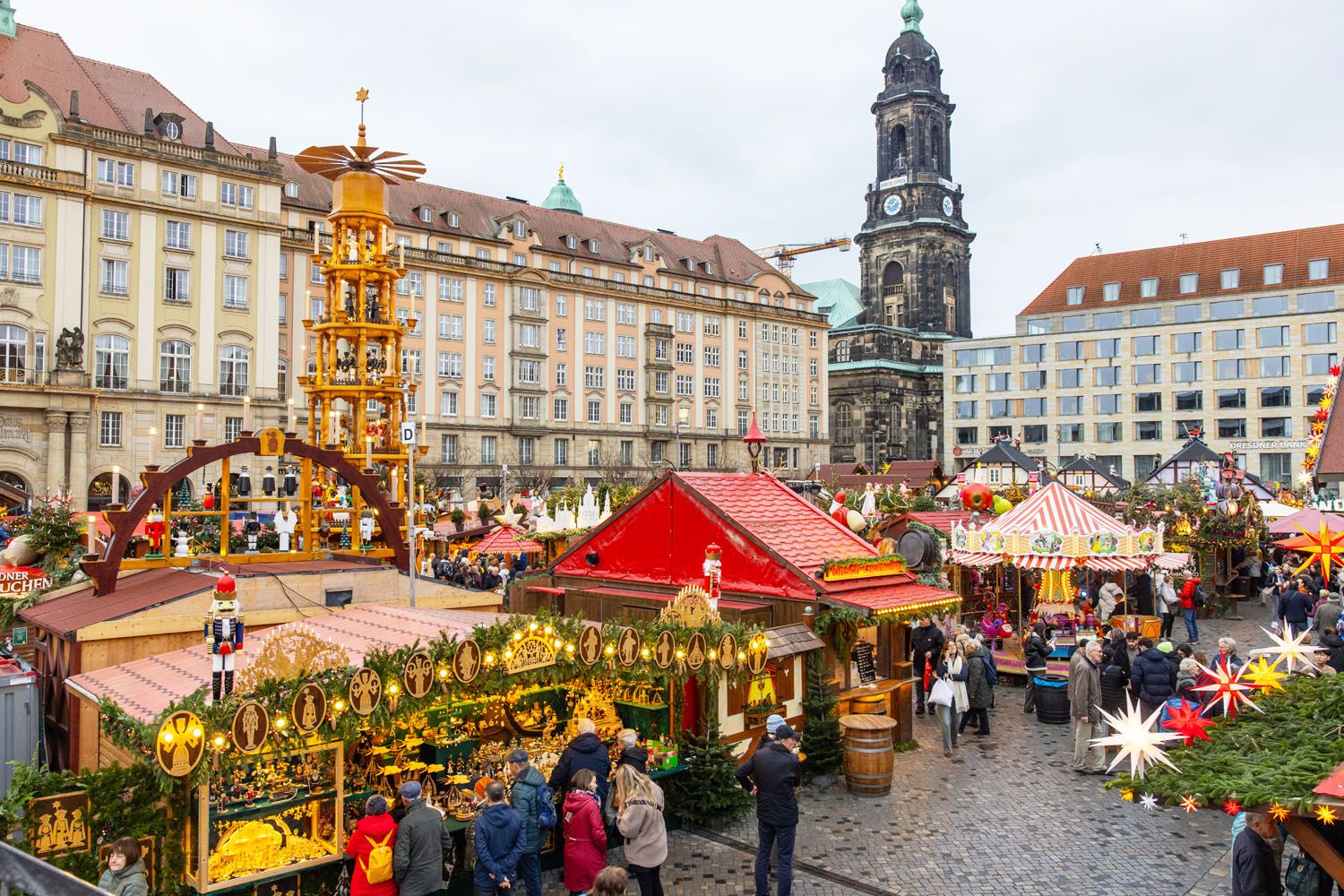
Altmarkt Square is one of the best places to begin because it reveals how long Dresden has functioned as a civic and commercial center. The square has hosted markets and public events for centuries, and even though much of the surrounding area was rebuilt after World War II, it still feels like an anchor point in the city. The scale is generous, the architecture is orderly, and the atmosphere changes depending on the season. In warm weather it works as a broad urban square for people passing through; in December it becomes one of the most festive places in Germany.
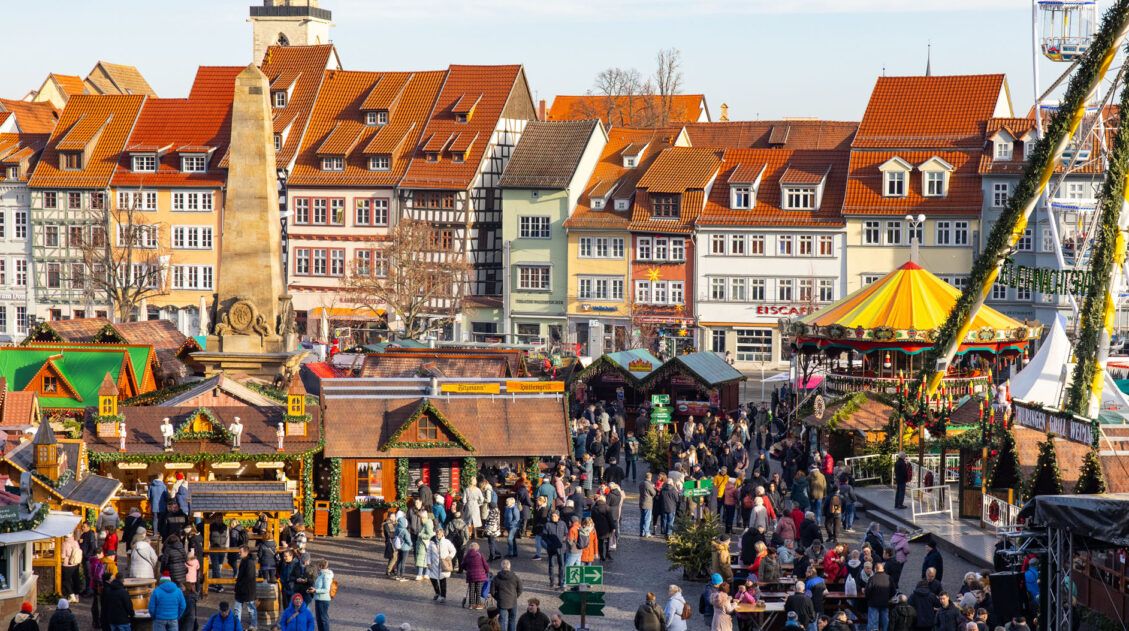
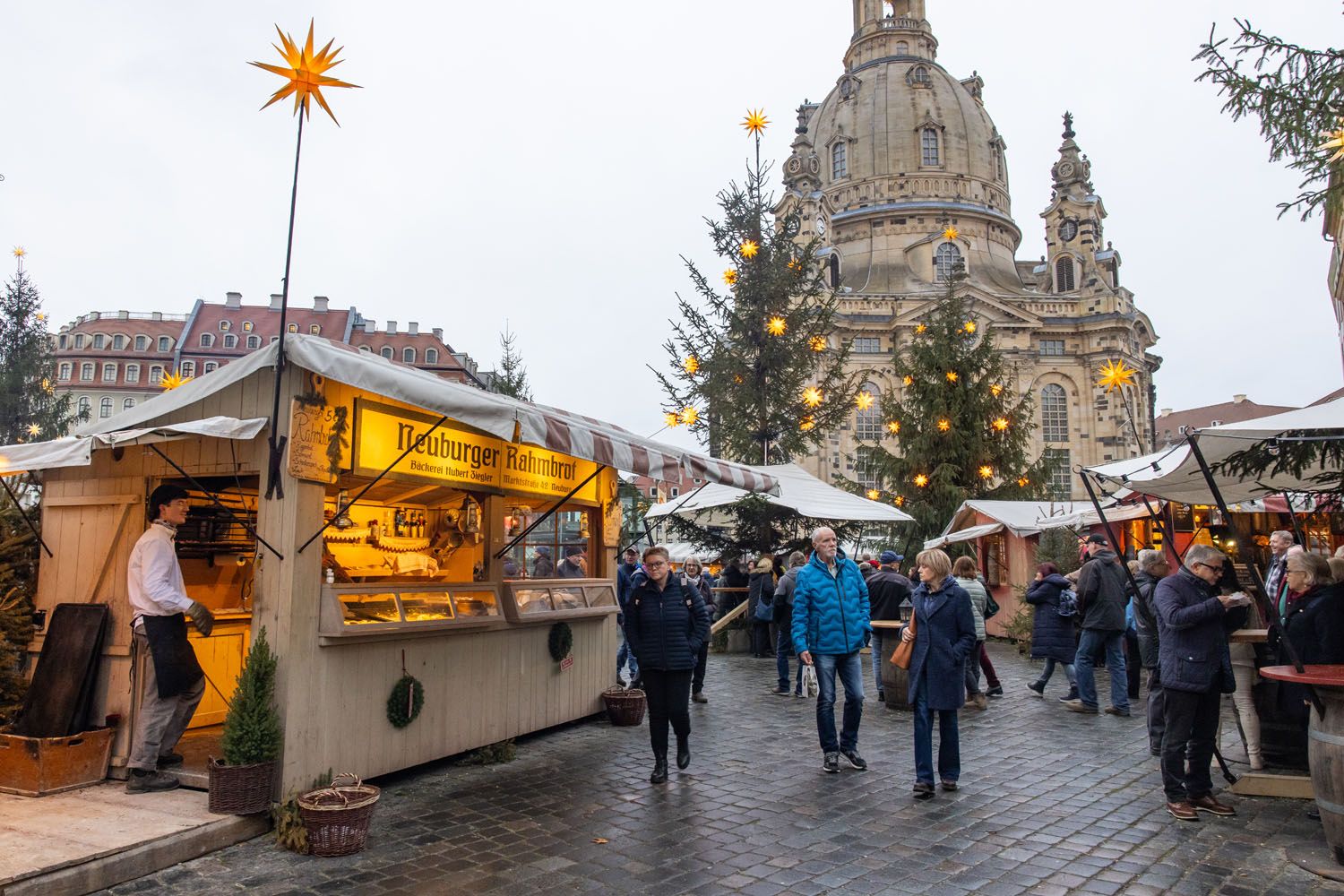
The Striezelmarkt, held here during the Christmas season, is one of Dresden’s signature experiences and one of the oldest Christmas markets in the country. It has the kind of scale and detail that rewards a slow visit: decorated stalls, handmade gifts, traditional food, and a steady stream of visitors moving between the center and the surrounding streets. Even if you are not especially interested in markets, Altmarkt is worth a pause because it helps set the rhythm of a visit to Dresden. The square also makes a good orientation point for the rest of the Old Town, since many of the city’s highlights are within a short walk.
Kreuzkirche and Views Over the Old Town
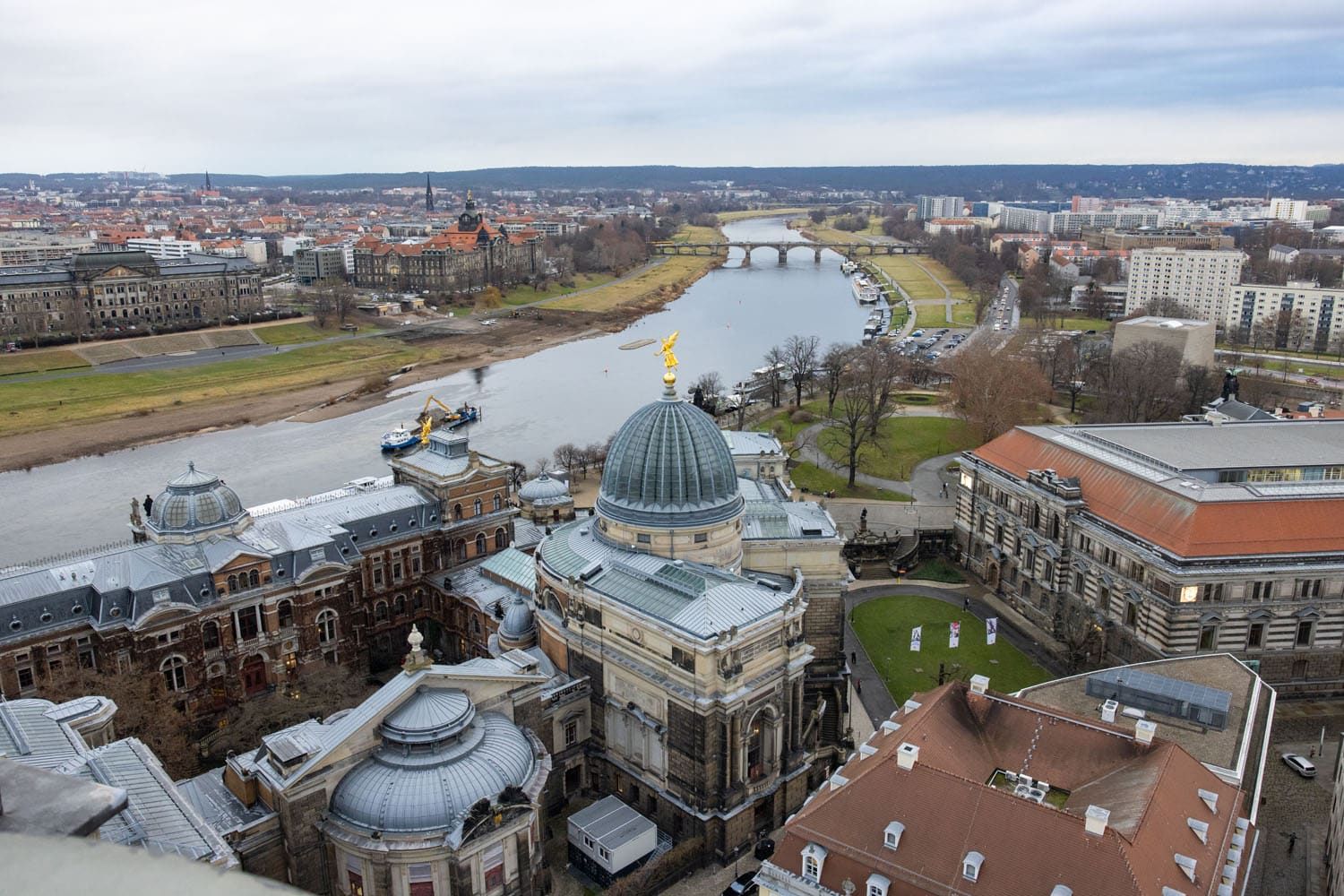
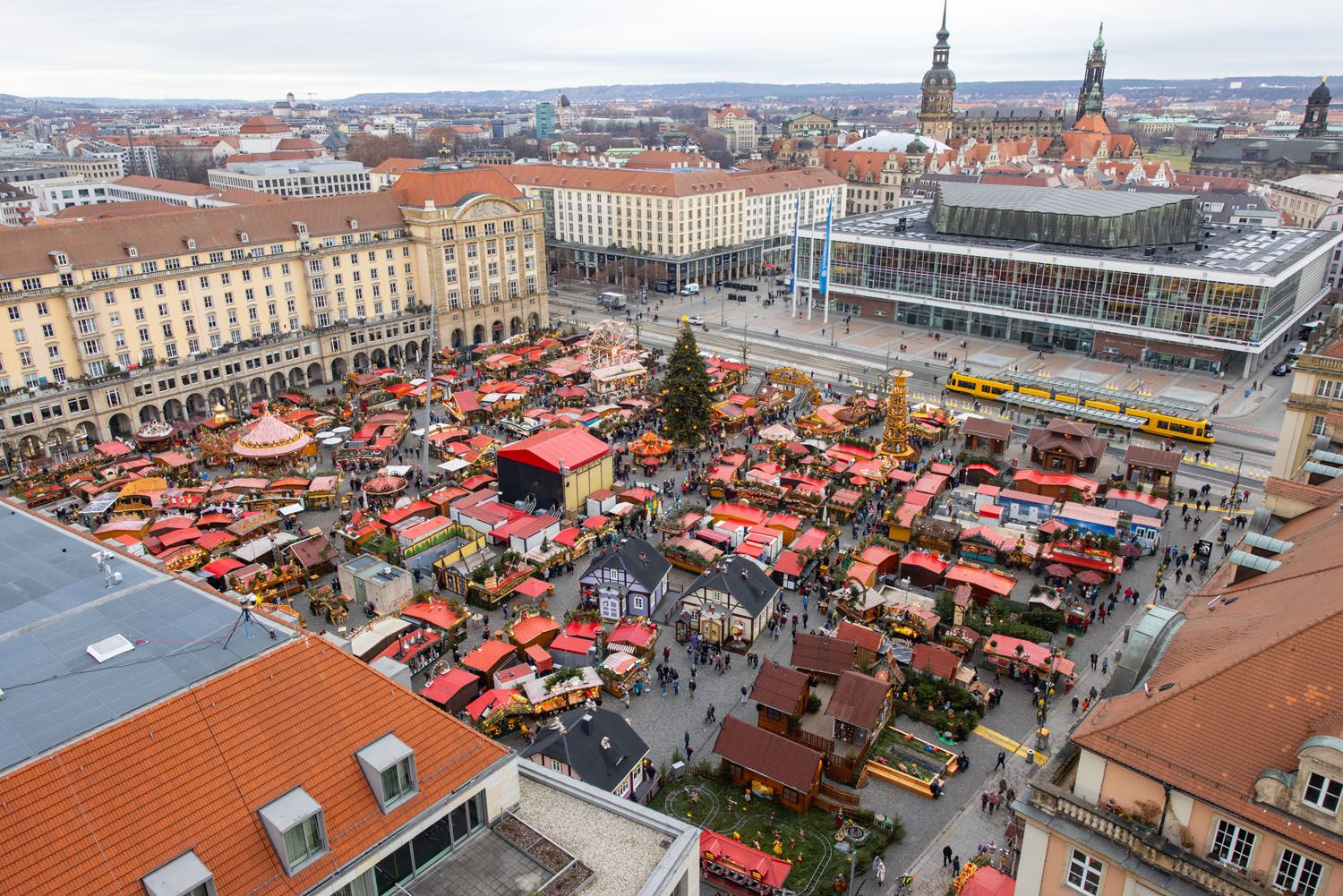
The Kreuzkirche offers one of the easiest ways to add a viewpoint to a Dresden itinerary without committing to a major hike or detour. The church itself has long roots in the city’s religious history, and the tower gives a useful elevated perspective over the square below and the broader historic center. When the weather is clear, the view helps connect the landmarks you have been seeing at street level. It also gives you a stronger sense of how compact the center really is, with major churches, markets, and palace complexes packed into a relatively small area.
For travelers who like climbing towers, Dresden offers several options, but the Kreuzkirche is a practical one because it is close to Altmarkt and easy to fit into a half-day sightseeing loop. It is especially appealing in winter, when the rooftops and market lights create a layered cityscape. The climb is straightforward, and the payoff is a clean, balanced overview of the city rather than a single landmark-focused view. It is one of those small experiences that quietly improves the trip.
The Royal Palace and Its Treasury of Collections
The Royal Palace is one of the essential stops in Dresden because it condenses so much of the city’s history into a single complex. It is not just a palace in the ordinary sense; it is a museum cluster that includes some of the city’s most significant collections. That makes it especially appealing for travelers who want depth rather than a quick photo stop. The building itself is part of the story, but so are the objects inside: precious metals, courtly treasures, historical weapons, and finely worked pieces that reflect the tastes and power of Saxon rulers.
The Historic Green Vault is the standout for many visitors. It is a highly curated treasury experience with timed entry, and it is best approached with advance planning. The rooms are lavish in a way that feels almost theatrical, and the objects are displayed to emphasize craftsmanship as much as wealth. The experience is immersive, but it also requires a certain attention to detail because the exhibitions reward careful looking. Photography restrictions add to the sense that you are entering a special, controlled environment rather than a casual museum hall.
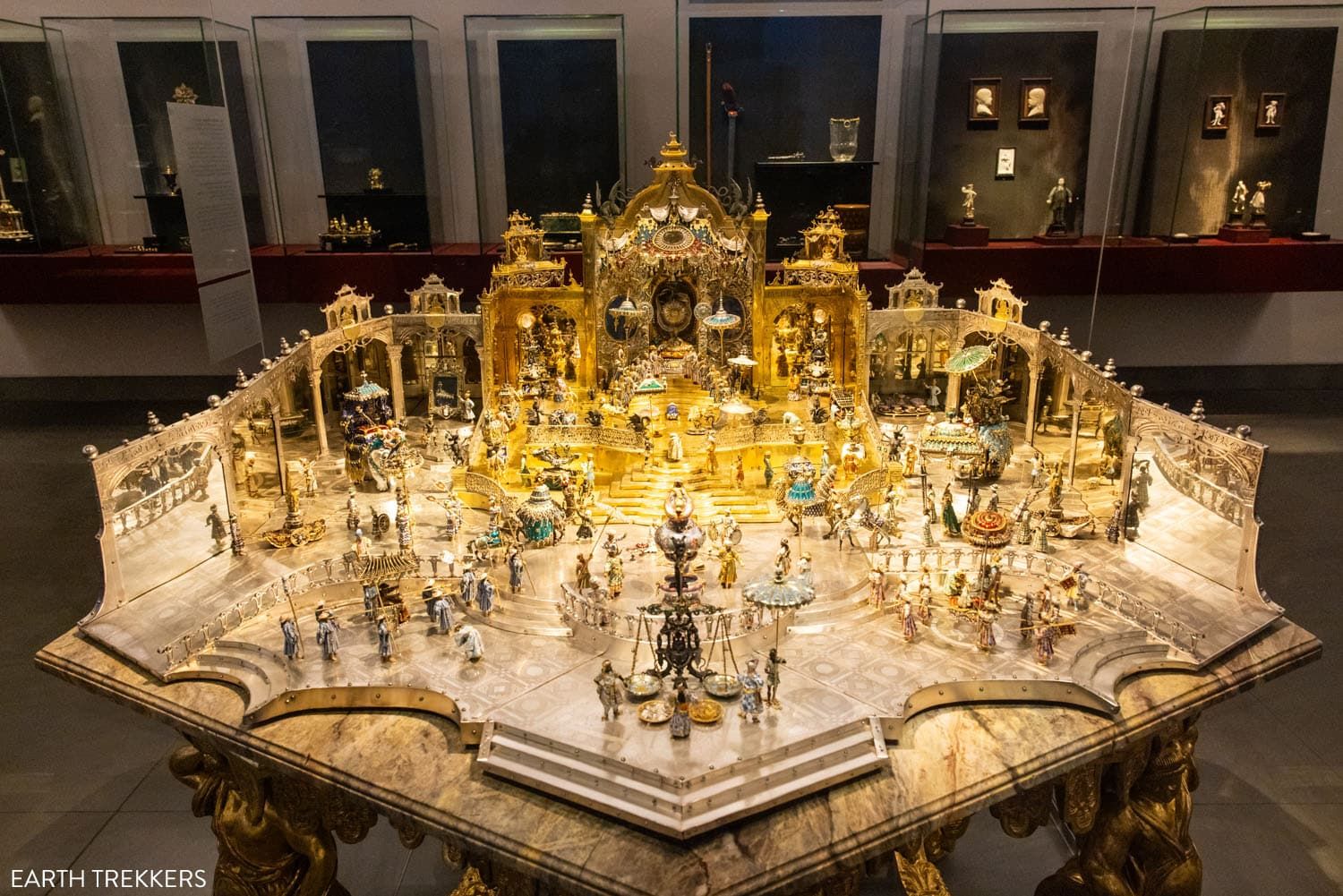
The New Green Vault offers a slightly different mood. Instead of the fully theatrical presentation of the Historic Green Vault, it presents the collection in a more object-focused way, which makes it easier to appreciate the technical brilliance behind the pieces. Even if you are not normally drawn to treasure rooms, the precision and artistry here are striking. The collection is a reminder that courts in this period were not merely interested in displaying wealth, but in turning wealth into a language of power and taste.
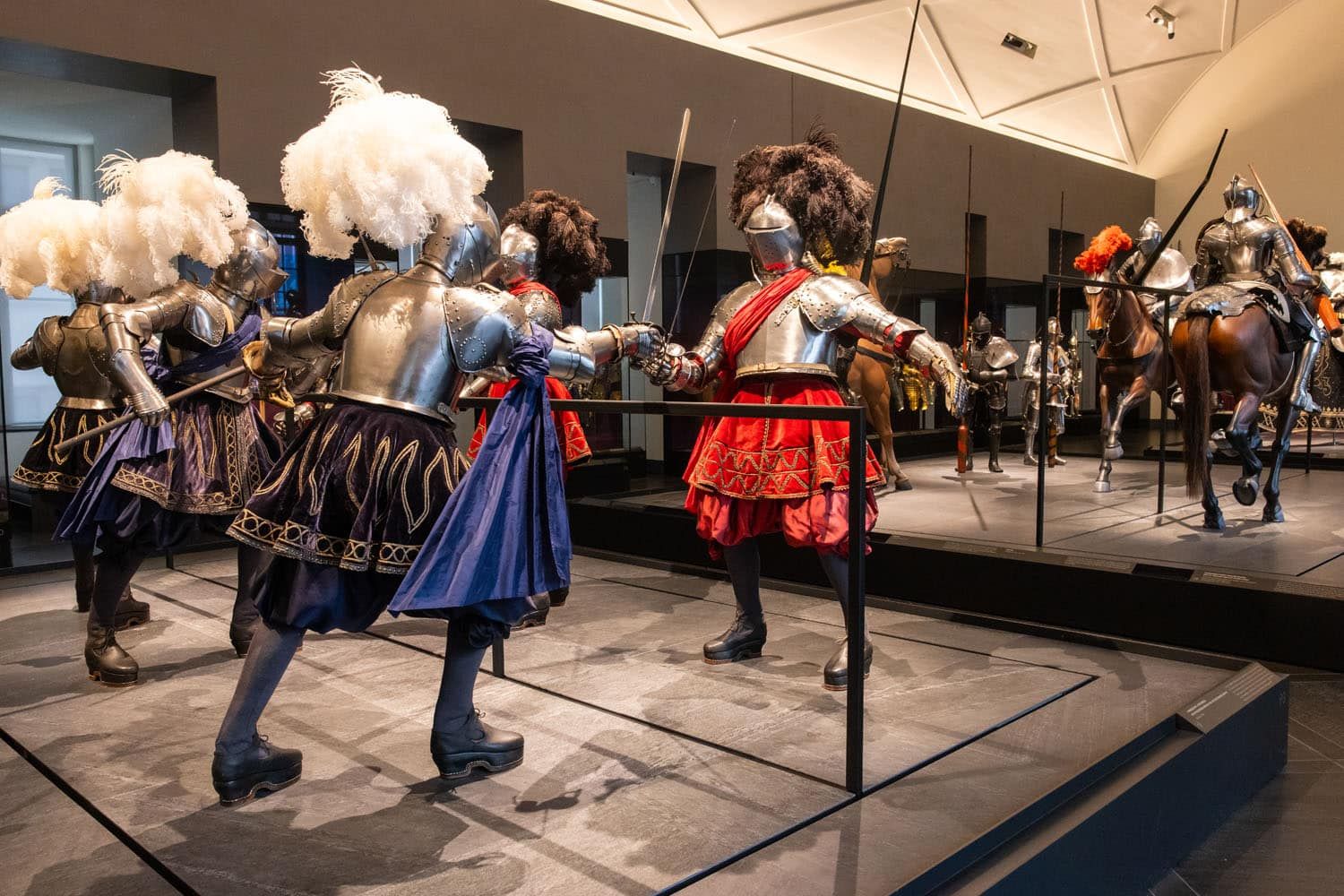
Because the Royal Palace contains multiple sections, it can occupy a large chunk of your day if you allow it to. That is not necessarily a problem, since it is one of the most rewarding places in Dresden. It is especially important to book the timed-entry Green Vault in advance, since availability can be limited and the museum is popular for good reason. If your schedule is tight, the palace still deserves a place near the top of the list because it combines artistic quality, historical significance, and strong visual impact.
Stallhof and the Procession of Princes
Stallhof has a different character from the grand museum spaces of the Royal Palace. It feels enclosed, historic, and intimate, with the sort of atmosphere that makes you slow your pace without being told. The courtyard once hosted tournaments, and that medieval association is easy to imagine when you stand in the middle of the space and look at the surrounding arcades. During the Christmas season, the setting becomes even more evocative because the market stalls fit naturally into the old architecture. It is one of the best places in the city to get a sense of how Dresden layers history into everyday public space.
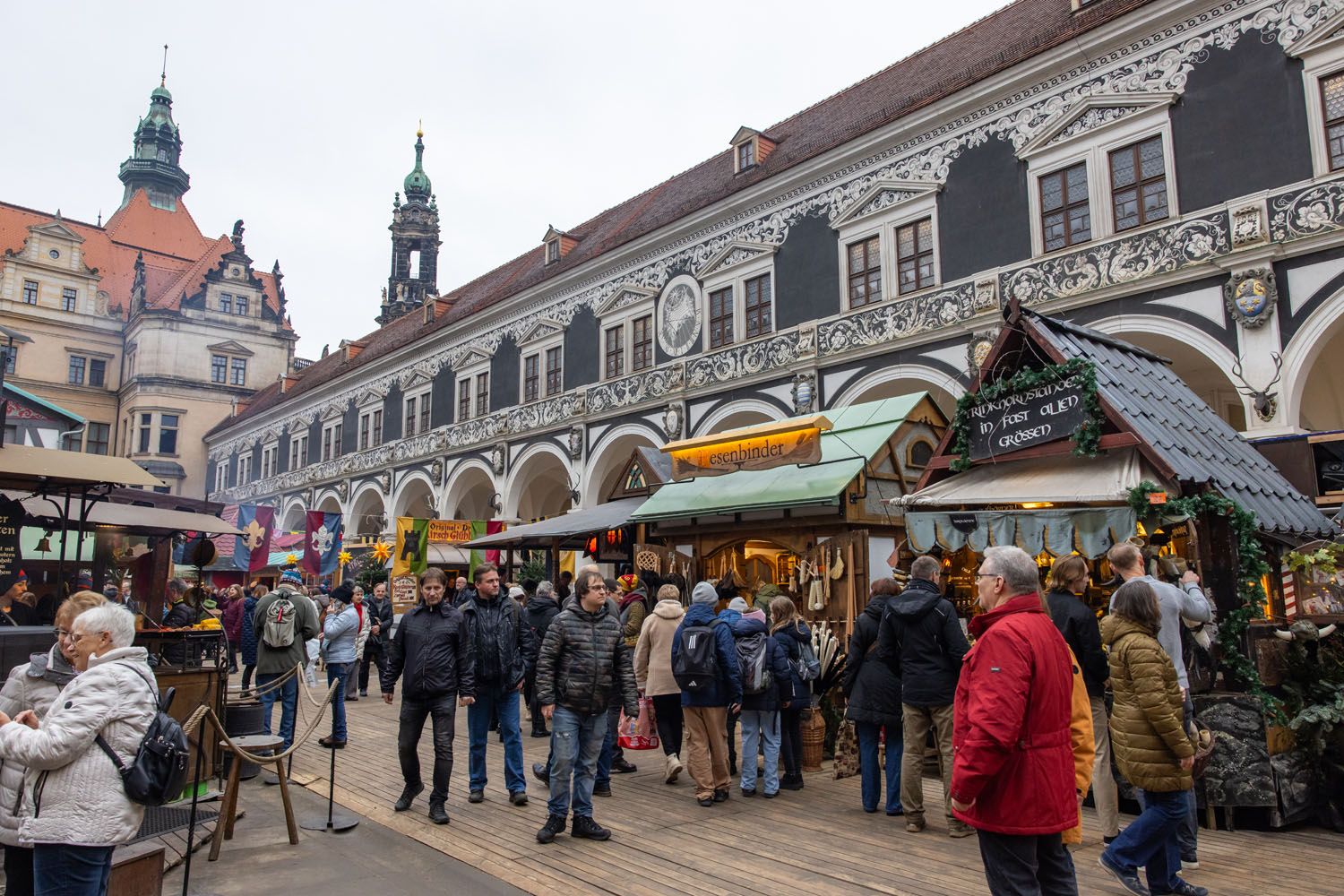
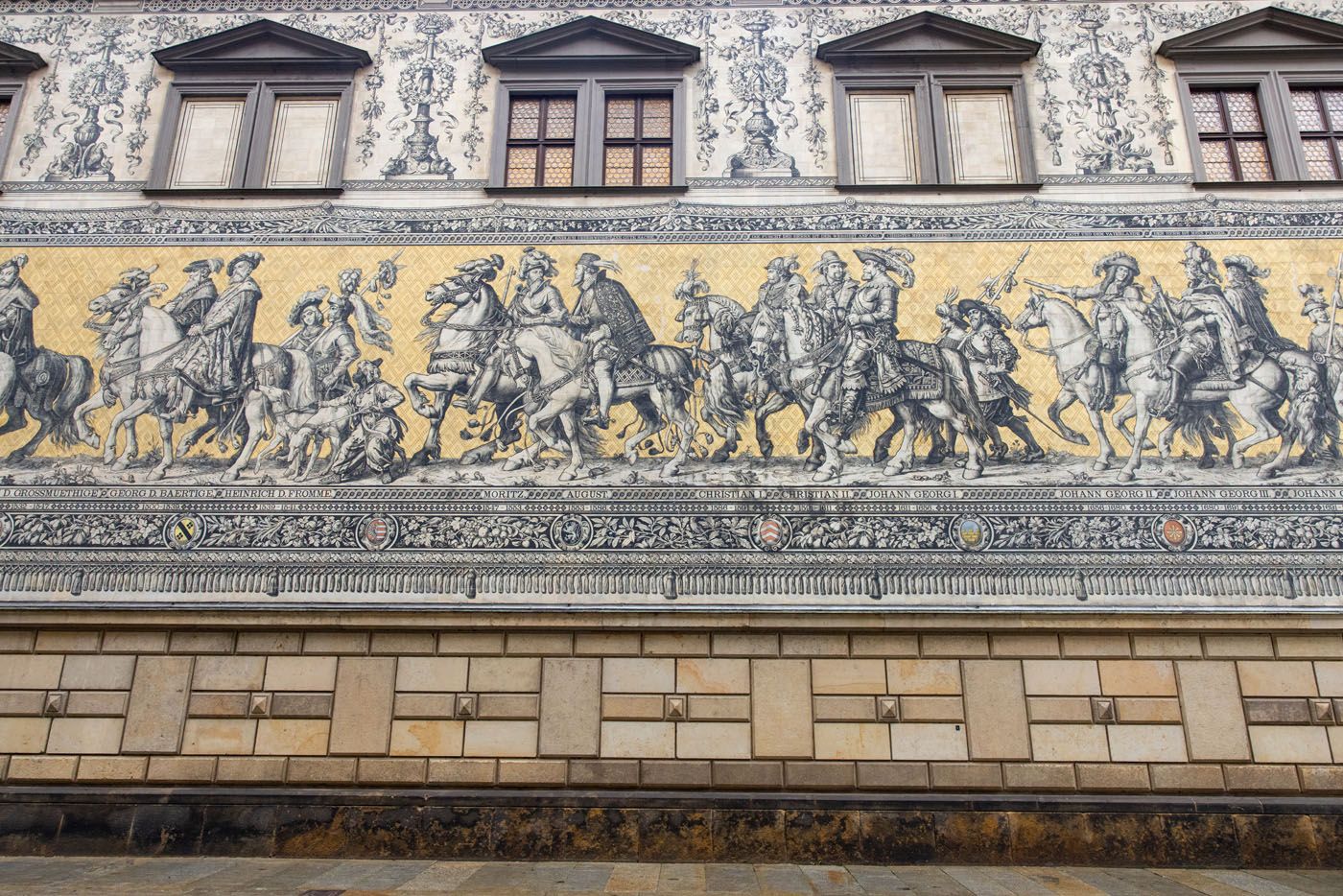
Just outside the Royal Palace, the Procession of Princes is impossible to miss once you know to look for it. The mural stretches across a long exterior wall and turns a simple walk between landmarks into a moment of discovery. Its survival through wartime damage gives it additional significance, but even without that backstory it would be memorable for its scale and craftsmanship. The use of porcelain tiles makes it particularly distinctive, and the procession of rulers, scholars, artisans, and workers offers a compact visual history of Saxon identity. Because it is free and outdoors, it is one of the most efficient worthwhile stops in Dresden.
Brühl Terrace, the Elbe, and the City’s Riverside Character
One of the pleasures of Dresden is that so many of its main sights are linked by pleasant walking routes rather than complicated logistics. The Brühl Terrace is a good example. It opens the city toward the Elbe and gives you a place to pause between museum visits and church interiors. The terrace is both scenic and practical, functioning as a route, a viewpoint, and a place to understand how Dresden is arranged relative to the river.
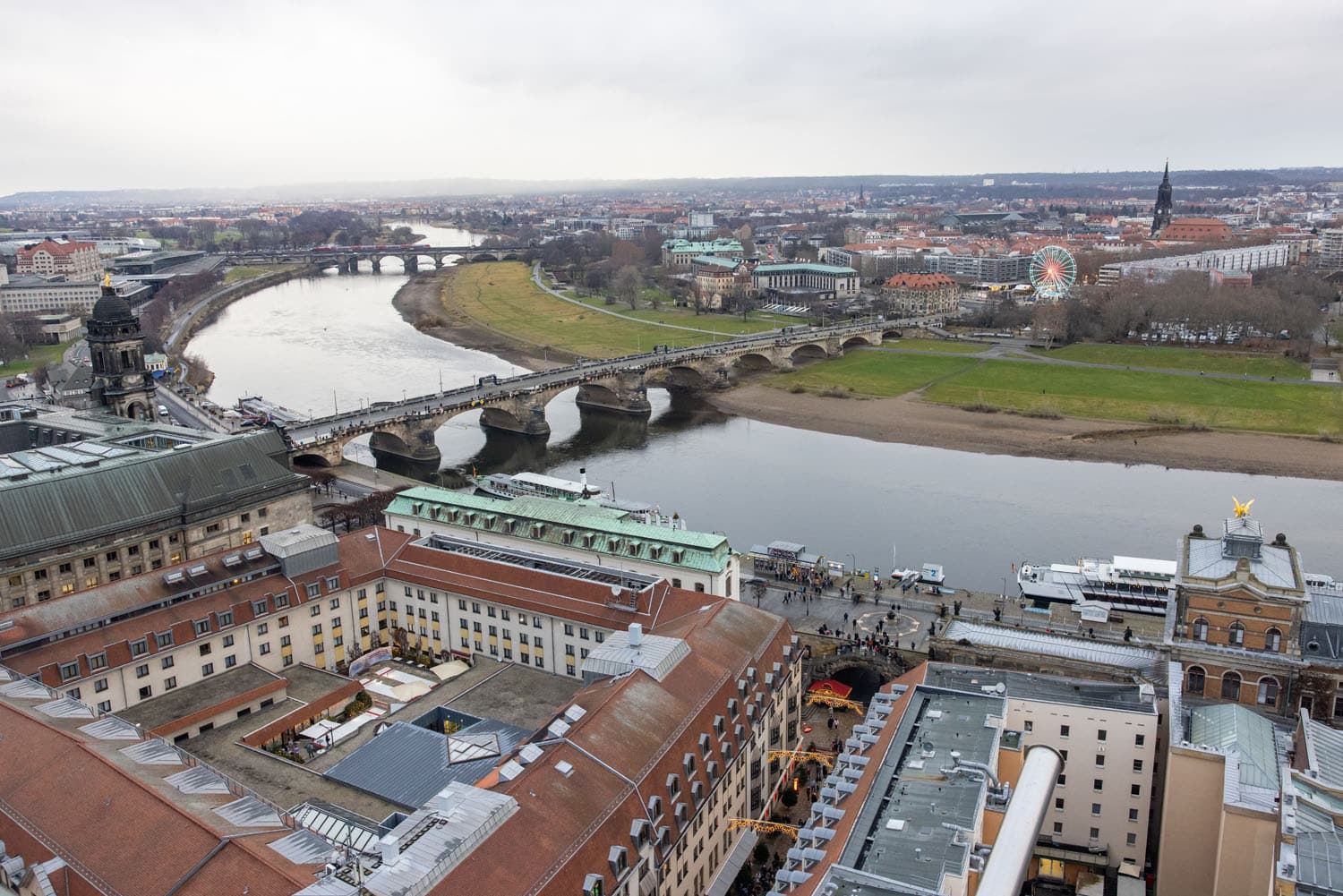
The Elbe is not just a backdrop here; it shapes the feeling of the city. Walking near the river, especially around the Augustus Bridge, brings together the Old Town and the more open views beyond it. The architecture feels more expansive when seen from across the water, and the skyline has a very different character when you look back toward the Frauenkirche and palace towers. Dresden is at its most elegant when the river is part of the frame.
Frauenkirche and Neumarkt
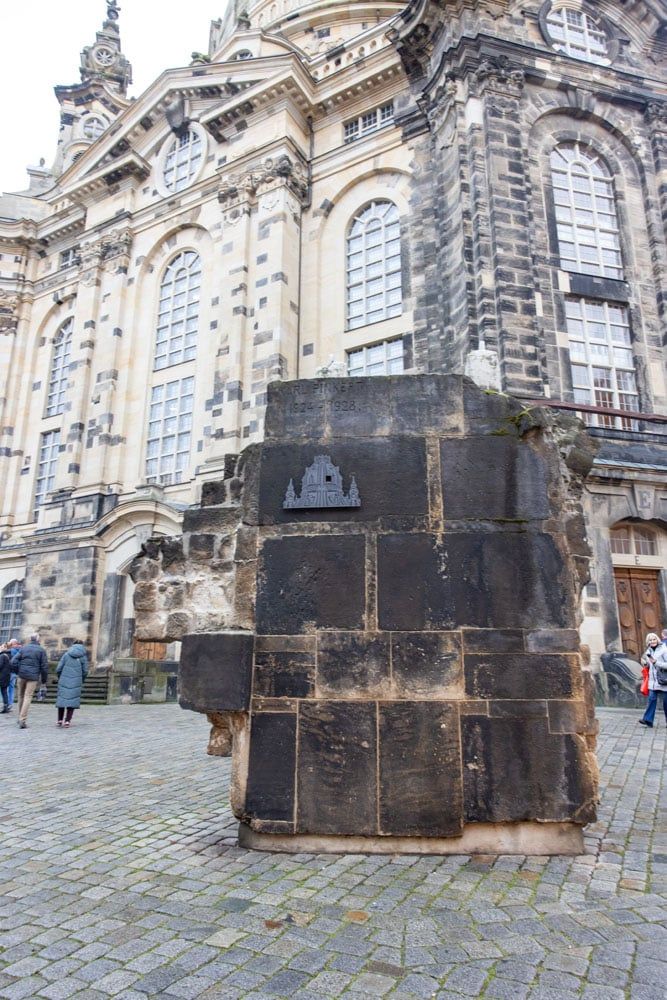
The Frauenkirche is one of the most moving and important sites in Dresden because it represents both destruction and renewal. Its reconstruction was not a symbolic afterthought; it became one of the defining projects of the city’s postwar identity. The result is a church that feels central not just geographically, but emotionally. The shape of the dome is instantly recognizable, and the interior and exterior together make it one of the most impressive landmarks in Germany.
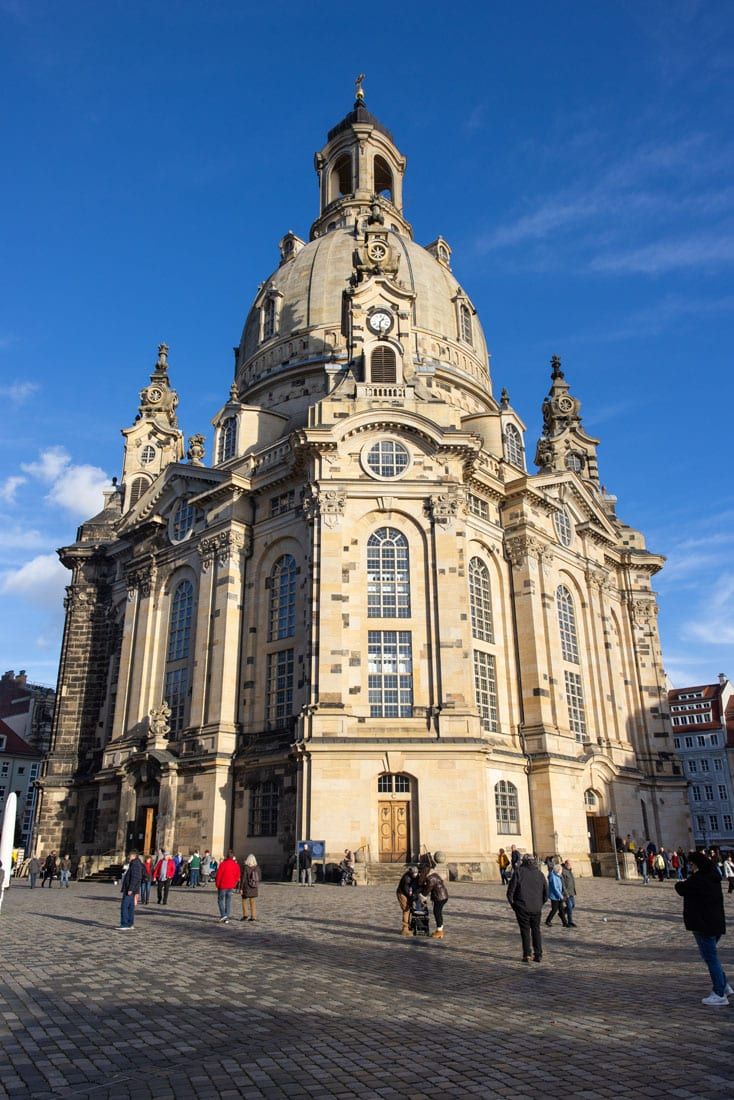
Visitors who climb the dome are rewarded with a view that helps connect all the major parts of the Old Town. The route upward is part stairway, part spiral ascent, and the mix of enclosed and open sections makes the experience feel distinct from a simple tower climb. The view at the top is broad enough to include the river, palace roofs, and surrounding squares, which makes it an excellent choice if you want a single panorama that captures the city’s structure. The church also has the advantage of being easy to include in a route through Neumarkt, one of Dresden’s most beautifully reconstructed public spaces.
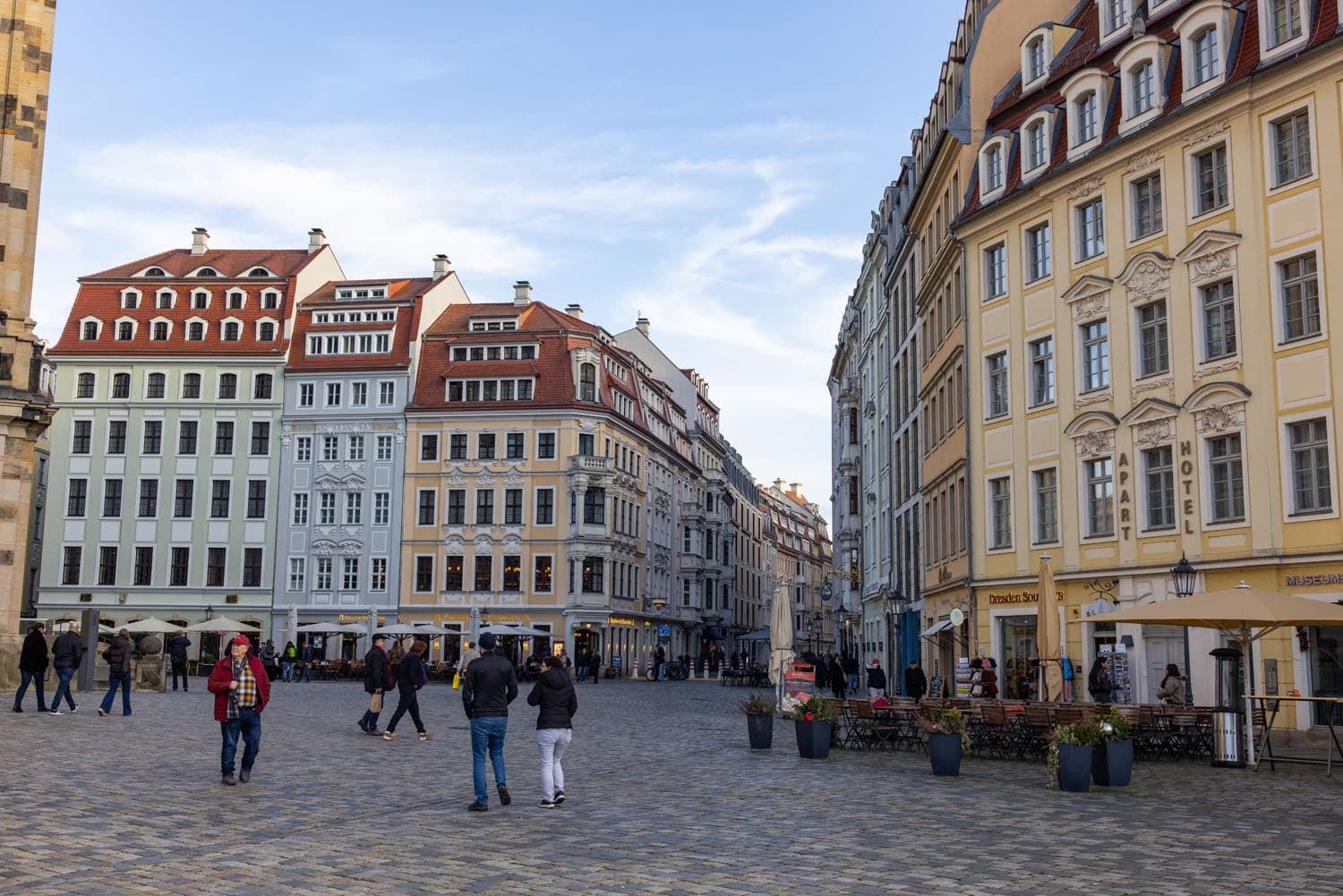
Neumarkt is where Dresden’s rebuilding is most visibly successful. The square is carefully composed, with restored facades and a strong sense of order surrounding the Frauenkirche. It feels polished without becoming sterile, which is no small achievement in a rebuilt historic district. In practical terms, it is also one of the best places to stay, because the location is central and walkable. In December, the square takes on a festive atmosphere that complements the nearby markets without duplicating them.
Cathedrals, Theaters, and Dresden’s Baroque Core
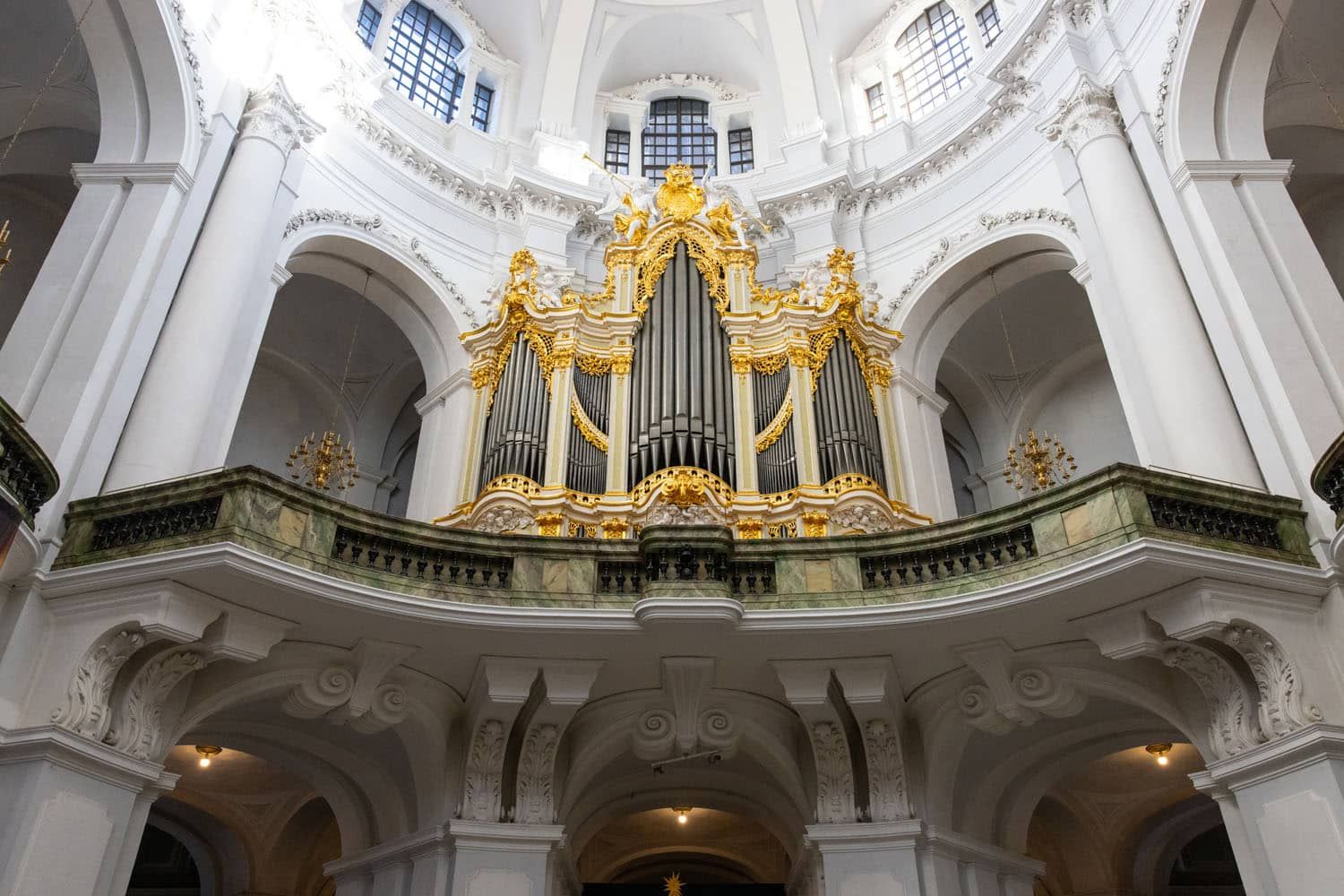
The Cathedral of the Holy Trinity is another landmark that adds historical depth to the Old Town. Its Baroque style matches the surrounding architecture well, but the interior gives it a quieter, more reflective character. The golden organ is especially notable, and the cathedral’s role as a burial place for Saxon rulers connects it directly to the dynastic history that shaped Dresden’s appearance. Even if you do not go inside for long, it is worth entering to appreciate how the city’s religious and political histories overlap.
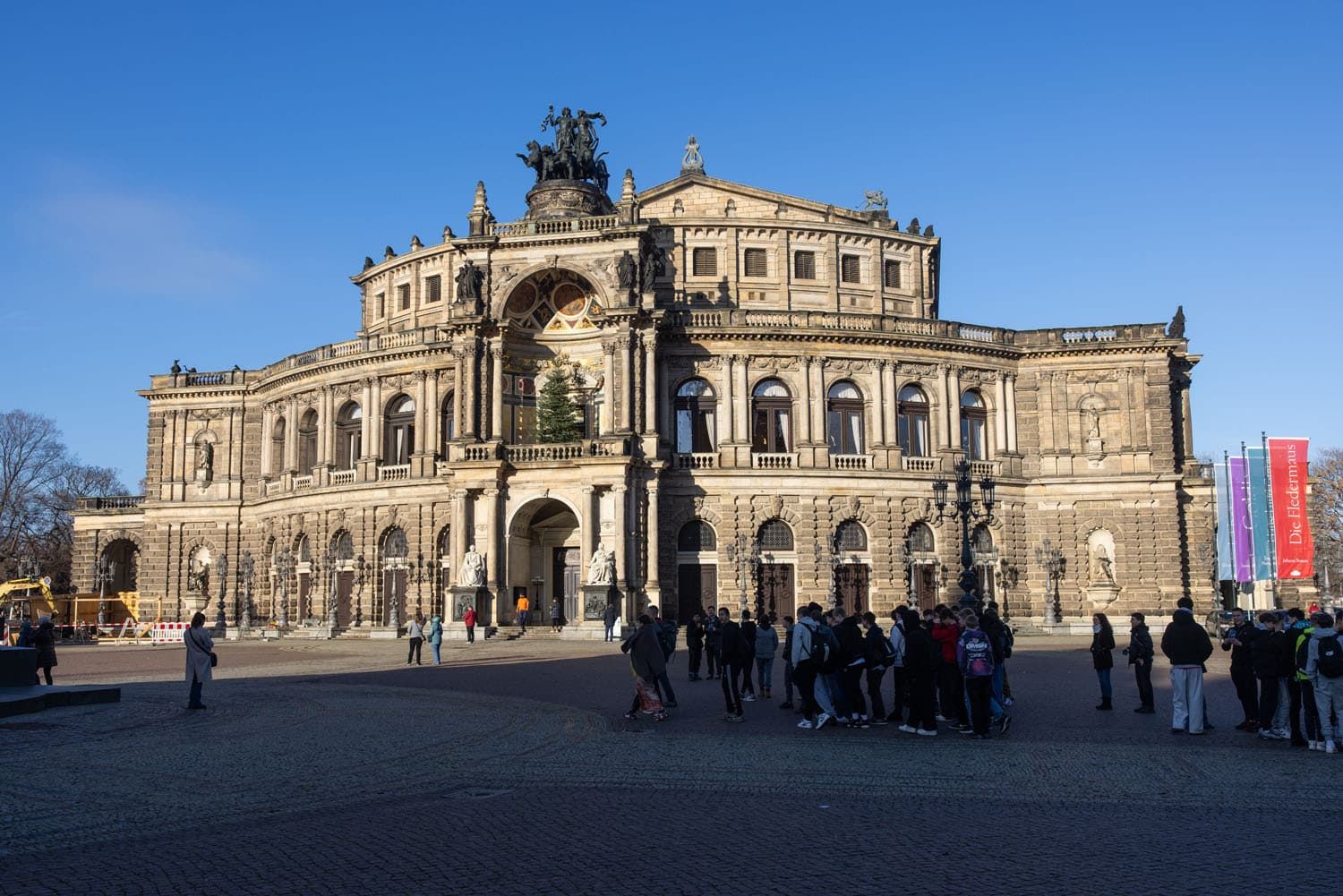
The Semper Opera House is one of Dresden’s most elegant buildings and an excellent reminder that the city’s cultural life extends beyond visual art and architecture. Theaterplatz, where the opera house sits, brings together several of the city’s strongest landmarks in one space, making it a particularly satisfying place to stand and take in the layout of the historic center. A short visit inside the opera house can be worthwhile even if you are not attending a performance, simply because the interior reflects the refinement associated with Dresden’s cultural identity.
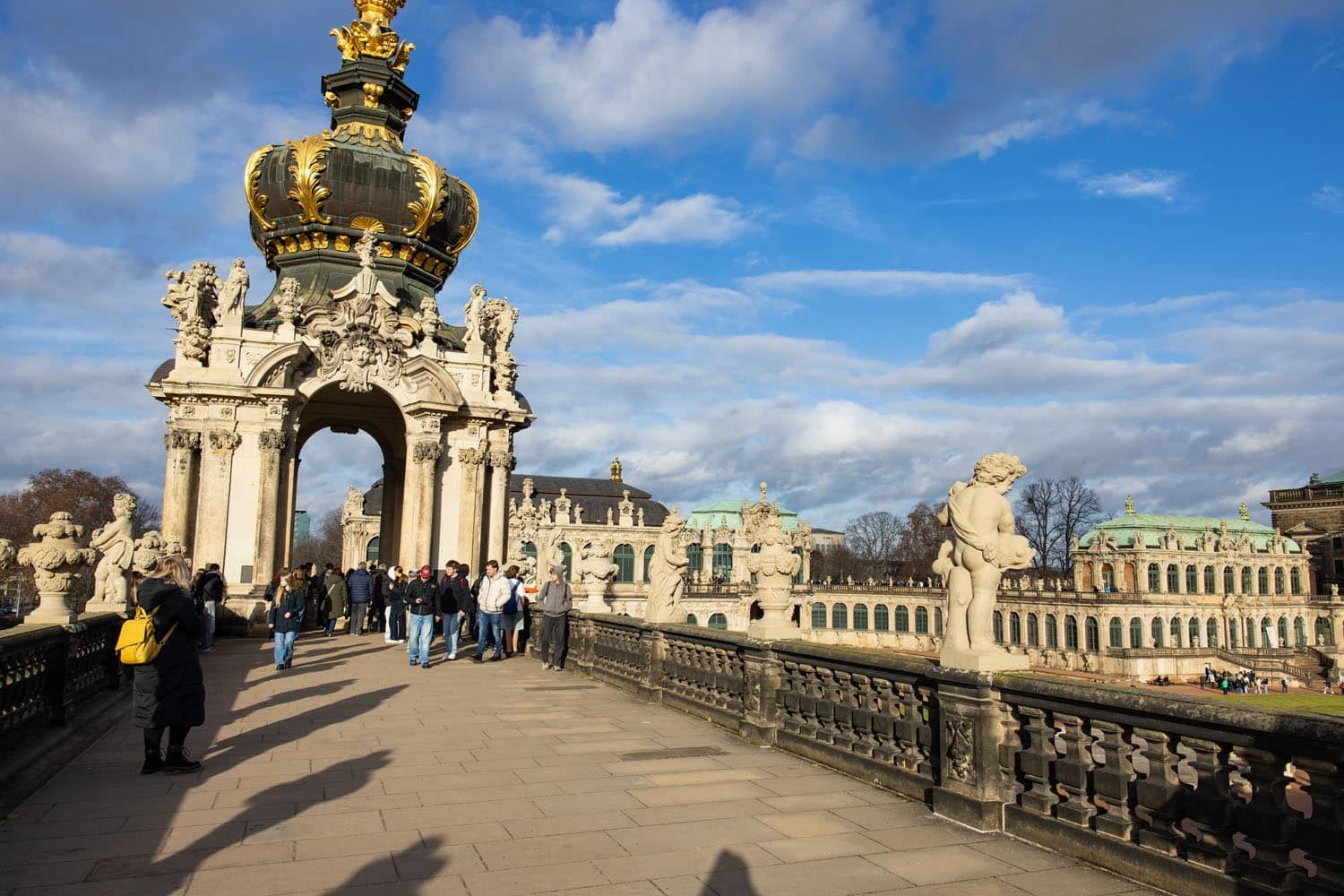
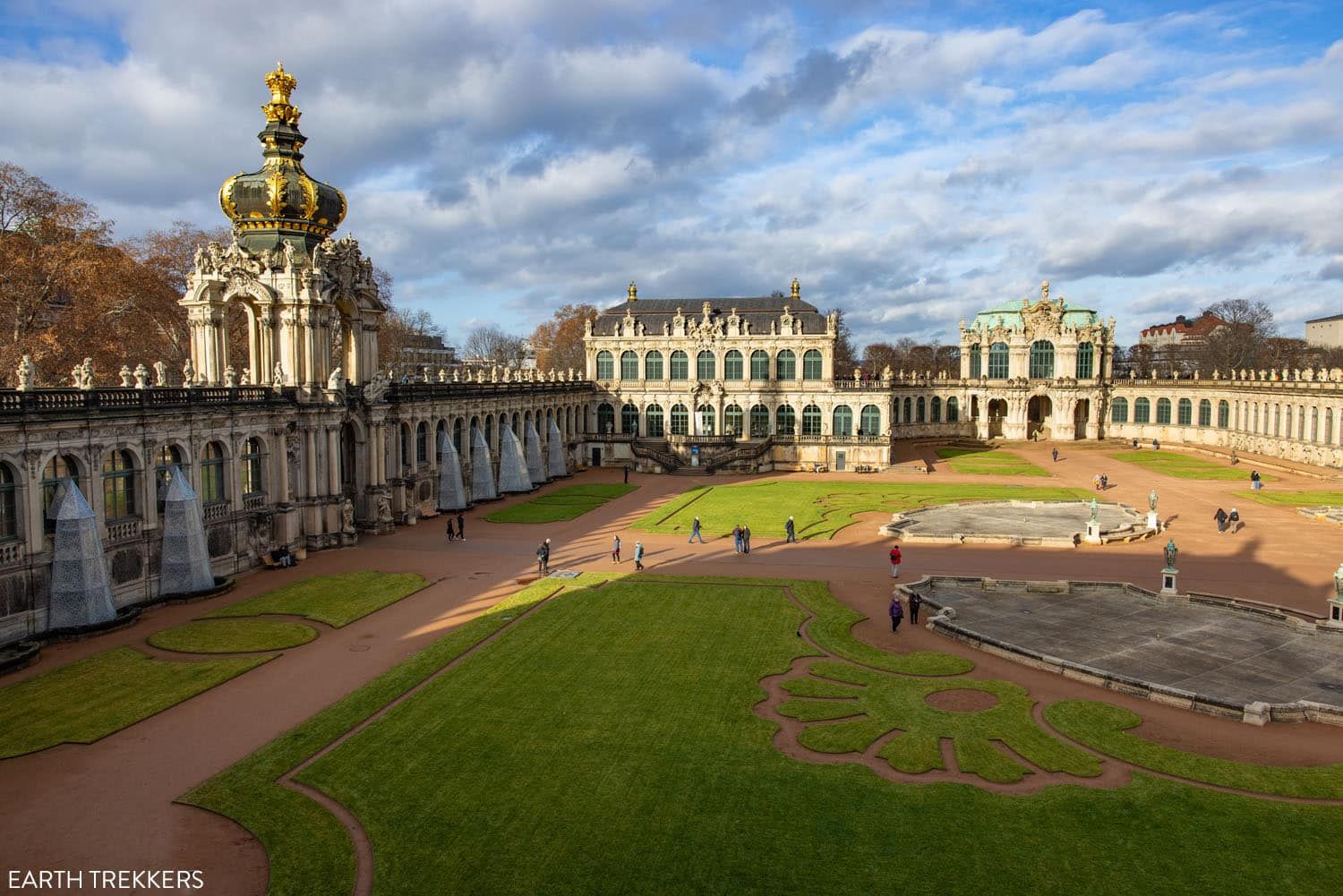
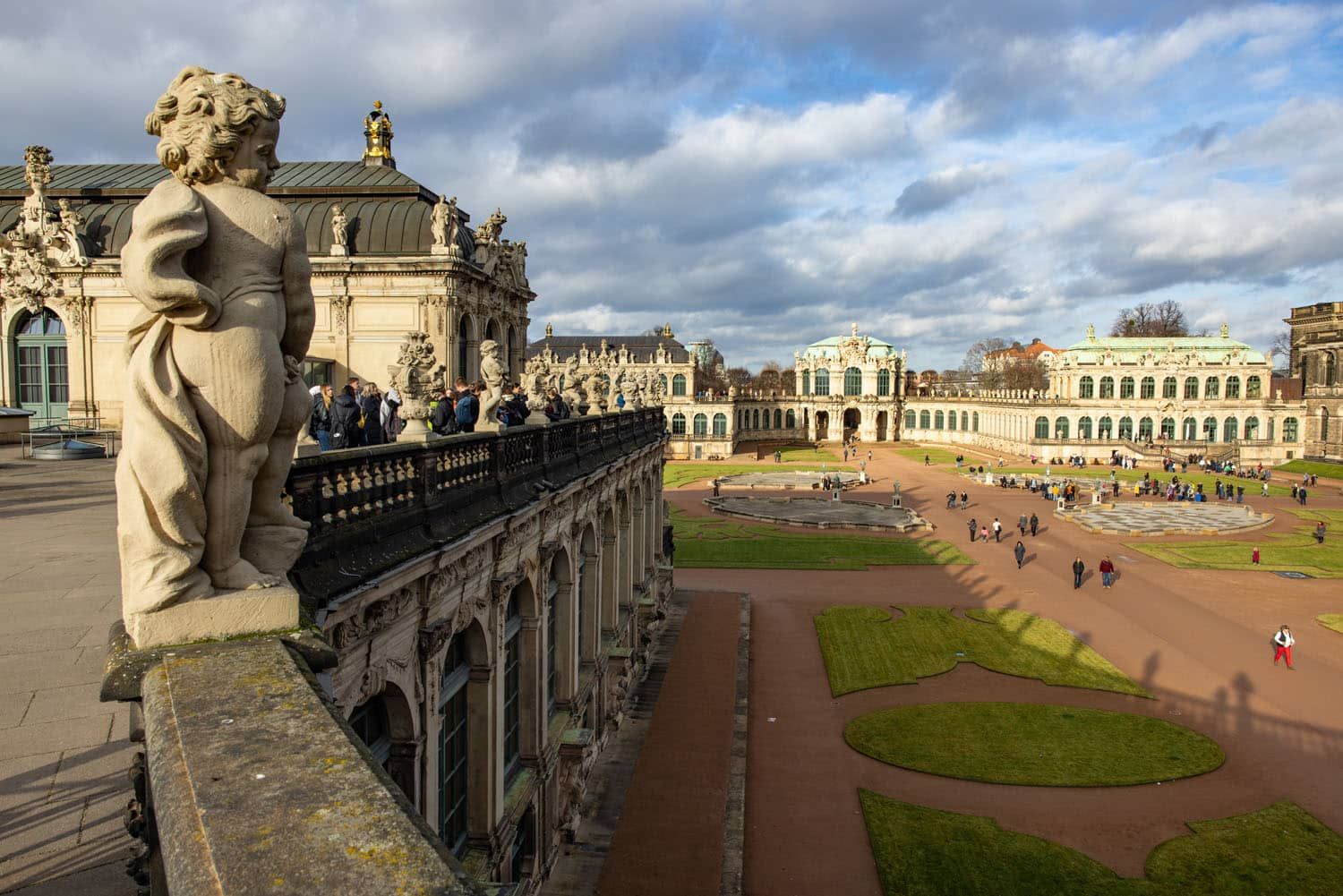
Nearby, the Zwinger is one of the great highlights of Dresden and deserves time rather than a quick walk-through. The complex has the scale and ambition that make it feel like a destination within the city, not just another palace. Built as a festival ground for the Saxon court, it still carries a sense of ceremony. The architecture is dramatic, but it is also inviting, especially if you take advantage of the free courtyard and walls before deciding whether to enter the museums.
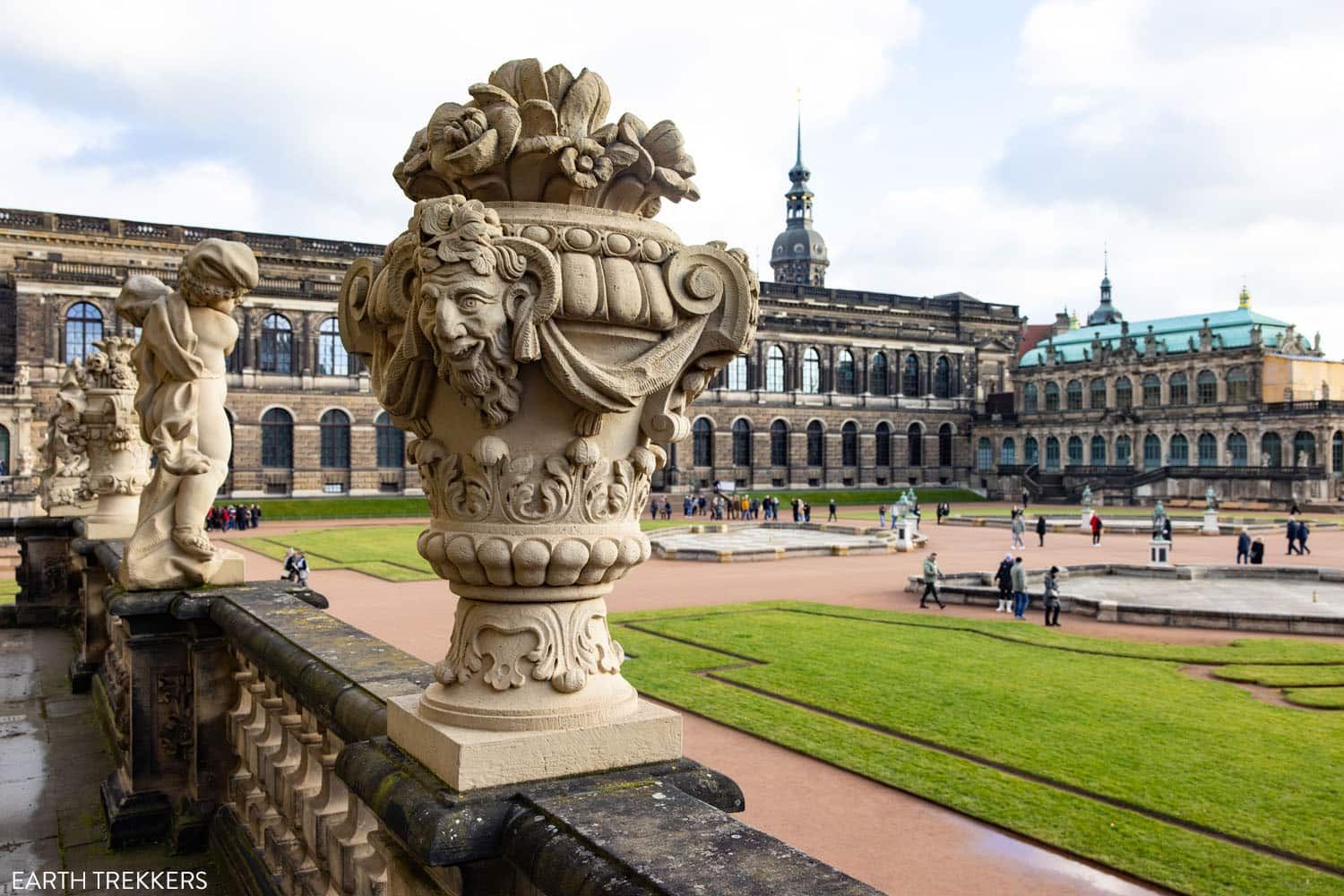
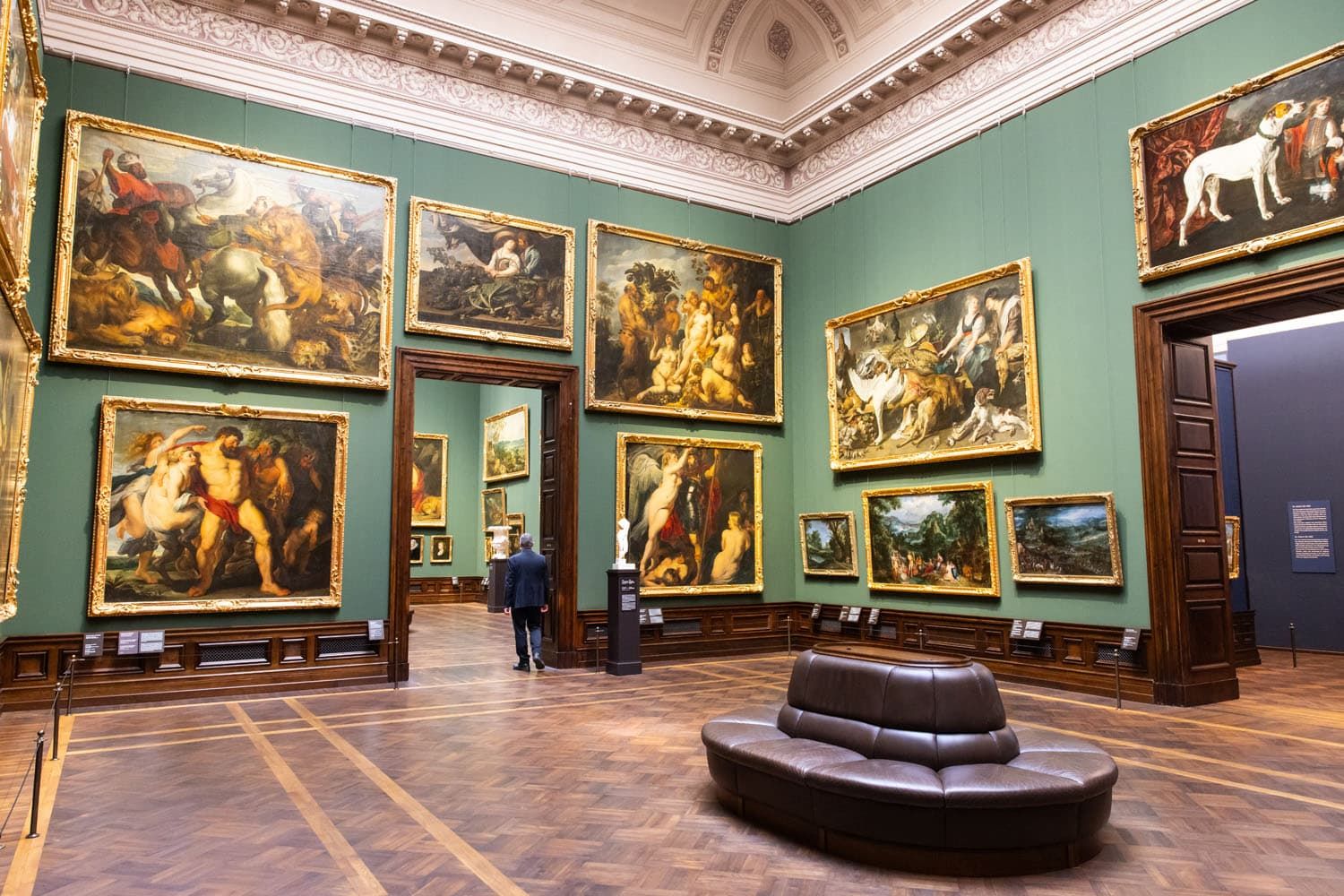
The museum collections inside the Zwinger are varied enough to appeal to different interests. The Old Masters Picture Gallery is the most obvious draw for art lovers, but the porcelain collection is equally memorable because it reveals a different side of courtly taste. One of the pleasures of the Zwinger is that you can tailor the visit to your energy and interests. A short visit still feels worthwhile, while a longer one can easily turn into an afternoon of careful viewing. Walking the walls afterward provides a different angle on the architecture and the wider palace grounds, and that free vantage point is one of the best simple experiences in the center.
Crossing the Augustus Bridge
The Augustus Bridge is one of those crossings that does more than connect two sides of a river. It connects two moods of the city. On one side is the historic density of the Old Town; on the other is the openness of the New Town, with a different urban rhythm and a broader feel. Walking across it gives you a break from museum interiors and reveals how Dresden’s relationship with the Elbe shapes both movement and perspective.
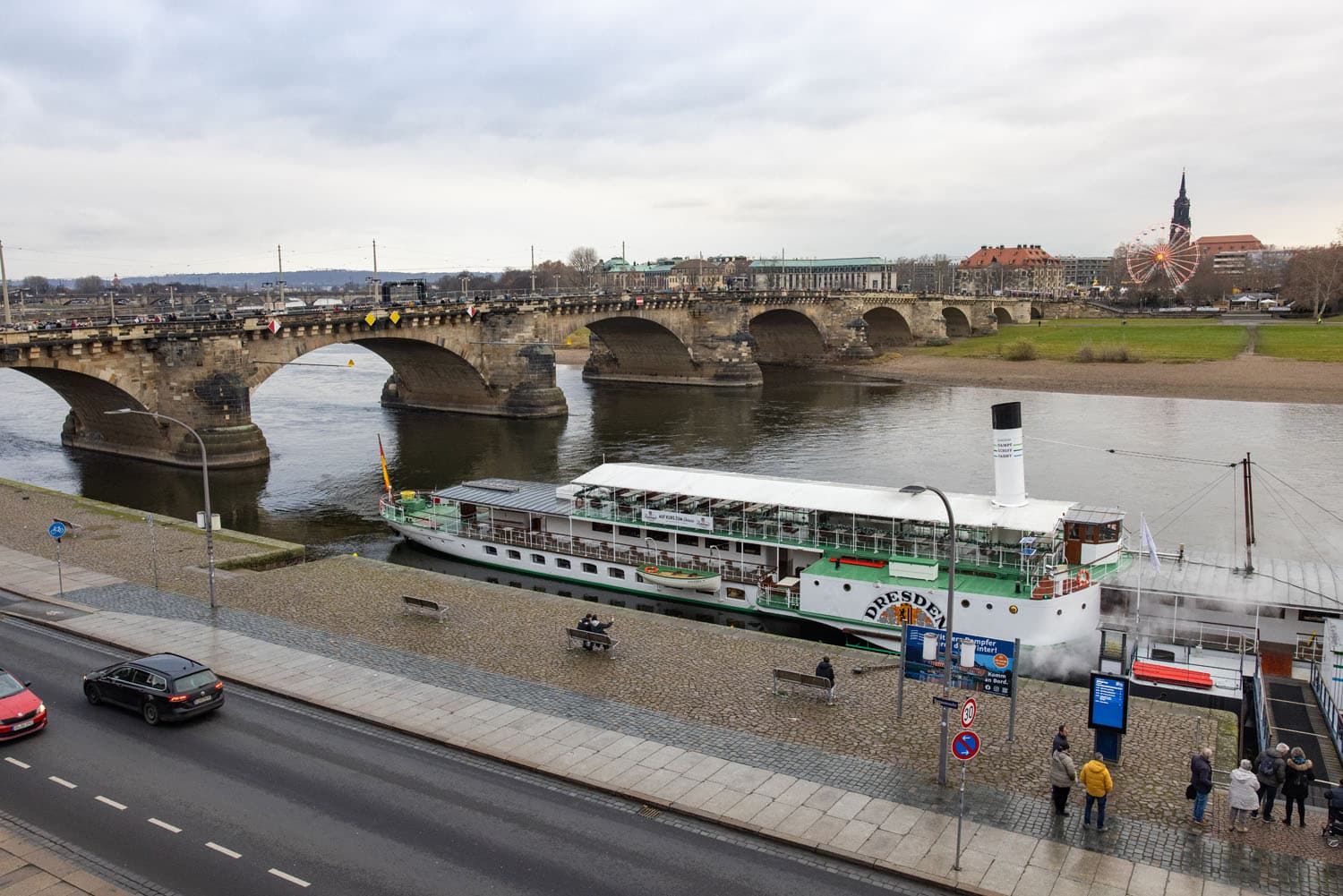
It is worth crossing at least once even if your main interests are concentrated in the Old Town. The bridge offers a straightforward, scenic transition and gives you a better understanding of why Dresden feels so balanced. The river, rather than dividing the city, gives it structure. That is one reason the historic center feels so coherent despite the scale of its landmarks.
Beyond the Core: Distinctive Dresden Experiences
If you have extra time, Dresden has a number of places that broaden the city’s personality. Pfunds Molkerei, often visited for its tiled interior and local products, is one of the more unusual stops. It is not essential in the same way as the major landmarks, but it can be fun if you enjoy sites that feel specific to a place rather than broadly tourist-oriented. Its small size and popularity mean it can be crowded, so it is best treated as a short, targeted visit rather than a major outing.
The Dresden Panometer is one of the city’s most distinctive cultural experiences, especially for travelers who enjoy immersive exhibits. Its huge panoramic installations create a sense of scale that is hard to replicate in more traditional museums. Because it sits outside the center, it requires a deliberate detour, but that separation also makes it feel like a different kind of cultural stop. It broadens the idea of what a Dresden visit can include.
The Kunsthof Passage adds another layer, particularly if you are interested in modern urban creativity. The courtyards and façades are playful and visually rich, and the district around them has a more contemporary, lived-in feel than the monumental Old Town. This contrast matters. Dresden is often described through its Baroque architecture, but places like this show that the city also has wit, experimentation, and a more relaxed side.
The Grand Garden of Dresden is ideal if you want to reset after a busy day of sightseeing. Its scale offers room to breathe, and the formal layout gives it a sense of calm that contrasts nicely with the decorative intensity of the historic core. Whether you walk through briefly or linger longer, it provides a welcome shift in pace. For many travelers, a city becomes more memorable when it includes not only major monuments but also a place where you can sit, slow down, and simply enjoy being there.
Getting There and Planning the Trip
Dresden is easy to reach by train from several major cities, which makes it especially convenient as part of a broader itinerary through Germany and nearby Central Europe. Berlin is the most common pairing, but Prague is also a natural fit, and the route works well if you are moving between capitals and regional cities on the same trip. That ease of access is one reason Dresden works so well for both longer stays and day trips. It does not demand a complicated travel setup, and once you arrive, the city center is simple to navigate.
For timing, two days is an excellent sweet spot. One day is enough for the main highlights, especially if you move efficiently and focus on the Old Town. Two days lets you see the museums in a more relaxed way, enjoy a proper meal, and make room for a few lesser-known places without feeling rushed. If your trip coincides with the Christmas markets, give yourself extra flexibility because the seasonal atmosphere naturally slows the pace of sightseeing. The point is not to check off landmarks quickly, but to let Dresden reveal itself through a sequence of connected places.
Where to Eat and How Dresden Feels at Table
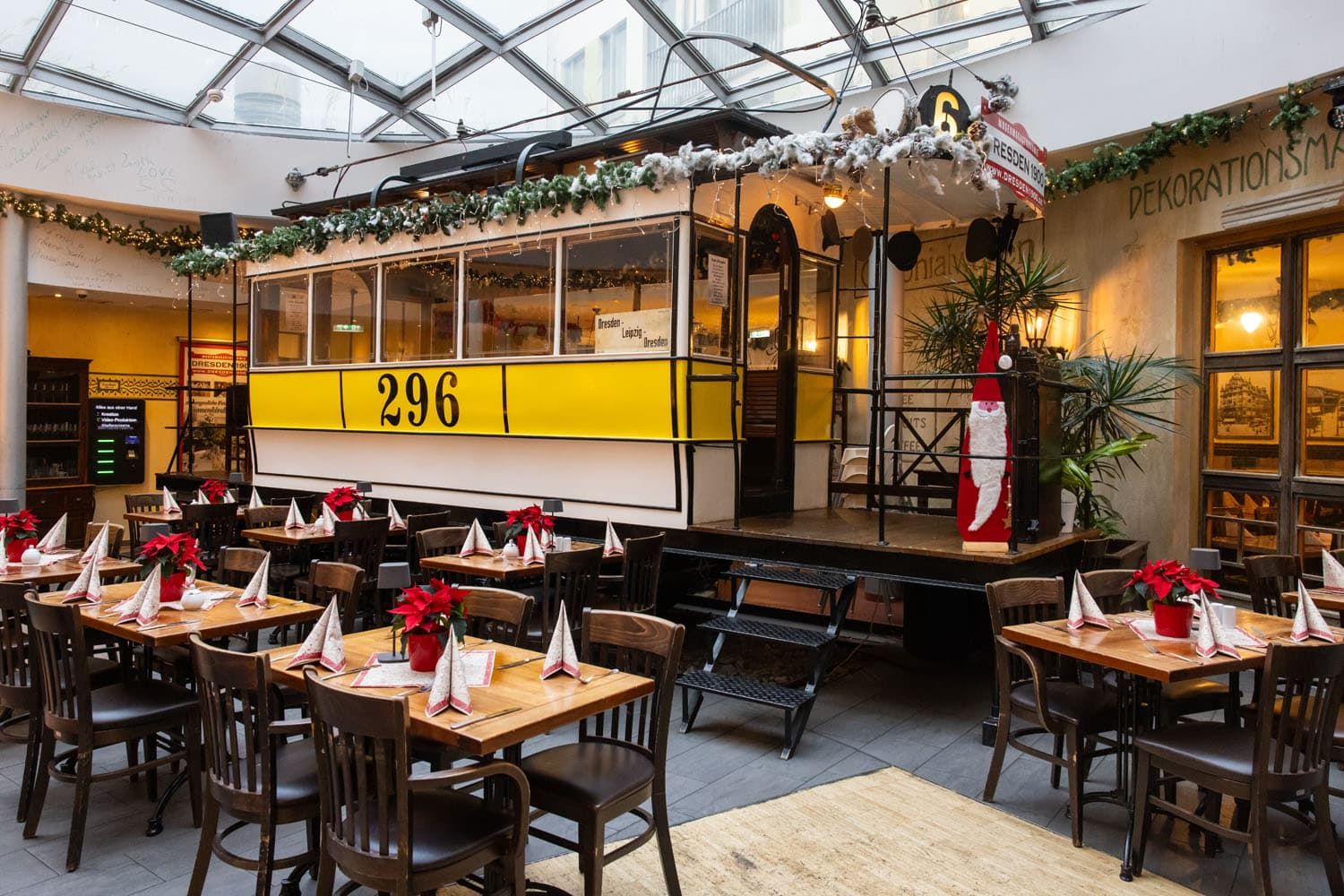
Dresden’s dining scene is broad enough that you can move easily between traditional German meals and more international options without much effort. In the Old Town, classic beer-hall style restaurants deliver the kind of hearty food that fits a day of walking and sightseeing. Italian, Spanish, and contemporary breakfast spots also fit naturally into the mix, which is useful if you want variety over a short stay. For breakfast in particular, it is worth choosing a place that feels unrushed, because the city lends itself well to a slower start before heading into the museums and squares.
One of the pleasures of eating in Dresden is the way meals can slot into the sightseeing pattern without much logistical trouble. Many travelers will want a lunch near Frauenkirche or the Zwinger, followed by an afternoon of museum time or a riverside walk. Dinner then becomes a chance to settle in after a full day. That rhythm suits the city well because it balances the formality of the architecture with the comfort of an everyday travel routine.
If you are visiting in December, expect some of the best casual food experiences to happen at the markets themselves. That is part of the appeal of Dresden in winter: a day can move from church interiors to palace rooms to outdoor stalls without losing coherence. The city remains manageable and elegant even when it is busy, which is not always the case in popular European destinations.
Why Dresden Stands Out
What makes Dresden memorable is not just the quality of its landmarks, but the way they fit together. The city offers a rare combination of grandeur and walkability, major museums and easy public spaces, famous sights and quieter corners. It is a place where a single day can include a palace treasury, a riverside terrace, a cathedral, a market square, and a bridge walk, all without the day feeling forced. That kind of coherence is hard to find, and it is a big part of why Dresden leaves a strong impression.
It is also a city that rewards different kinds of travelers. Architecture lovers will find enough to fill an entire weekend. Christmas market visitors will find a December trip that feels genuinely special. Art and history travelers will have enough collections and historic reconstructions to keep them engaged. Even those who prefer slower, more atmospheric city wandering will find that Dresden offers the right kind of scale. It is elegant without being overwhelming, rich without feeling inaccessible, and compact without being shallow.
If you have been looking for a German city that combines beauty, history, and a strong sense of place, Dresden belongs high on the list. It is easy to fit into a broader itinerary, but it is also rewarding enough to justify a dedicated visit. And once you have walked the squares, crossed the river, and stood beneath the dome of the Frauenkirche as the city lights come on, it becomes very easy to understand why so many travelers leave wanting more.