If you’ve been watching airfare with disbelief lately, you’re not imagining things. 2026 is shaping up to be one of those years when flight prices feel unpredictable in both directions: some routes are climbing fast, while others are quietly dropping to levels that would have seemed impossible just a few months ago. For travelers who love the thrill of a good fare, this is exactly the kind of moment when the right tools can make the difference between postponing a trip and booking one on the spot.
That’s where Dollar Flight Club enters the picture. Instead of expecting travelers to manually search route after route, price check after price check, the platform monitors airfare, compares it against historical pricing, and surfaces genuine deals rather than the sort of “sale” that barely moves the needle. If your travel style leans toward flexibility, curiosity, and being open to unexpected destinations, this kind of service can be incredibly useful. It is especially appealing if you enjoy building trips around great flight deals rather than forcing every journey into a rigid plan.
This guide takes a closer look at how Dollar Flight Club works, why it’s relevant right now, what has changed recently, and how to use it strategically. Whether you are chasing a long-haul adventure, trying to visit family more affordably, or simply looking for an excuse to go somewhere interesting, the platform offers a practical way to keep travel dreams from getting buried under high airfare.
Why get Dollar Flight Club?
At its core, Dollar Flight Club is a flight deal platform built to save travelers money by tracking airfare around the clock. The team scans routes continuously, compares current prices with historical patterns, and highlights deals that are meaningfully lower than normal. That distinction matters. Anyone can advertise a sale, but not every sale is genuinely good. A real deal is one that undercuts typical pricing enough to make booking feel like a win, and that is what this service is trying to identify.
What makes the platform especially appealing is that it is not just for people with a very specific destination in mind. Traditional search engines are excellent when you already know where you want to go and when you want to be there. Dollar Flight Club is different. It is designed for people who want to travel well and spend less, even if the exact destination is still open-ended. In that sense, it functions less like a standard search tool and more like a personal travel scout that keeps an eye out for opportunities you might never notice on your own.
That approach has a lot of practical value. Airfare is complicated, and most travelers do not have the time or bandwidth to monitor dozens of routes every day. Deals can disappear quickly, pricing can shift unexpectedly, and the best fares often appear without warning. Having an alert system in place means you are no longer relying on luck or endless refreshing. Instead, you get a curated stream of opportunities that match the airports and destinations you care about.
Dollar Flight Club also reports significant savings across its membership base, which gives it credibility beyond simple marketing language. When a platform has millions of users and a track record of helping travelers save substantial amounts on airfare, it becomes easier to see why so many people keep it in their travel toolkit. The promise is not just cheaper flights in theory, but a real chance to book trips that might otherwise feel out of reach.
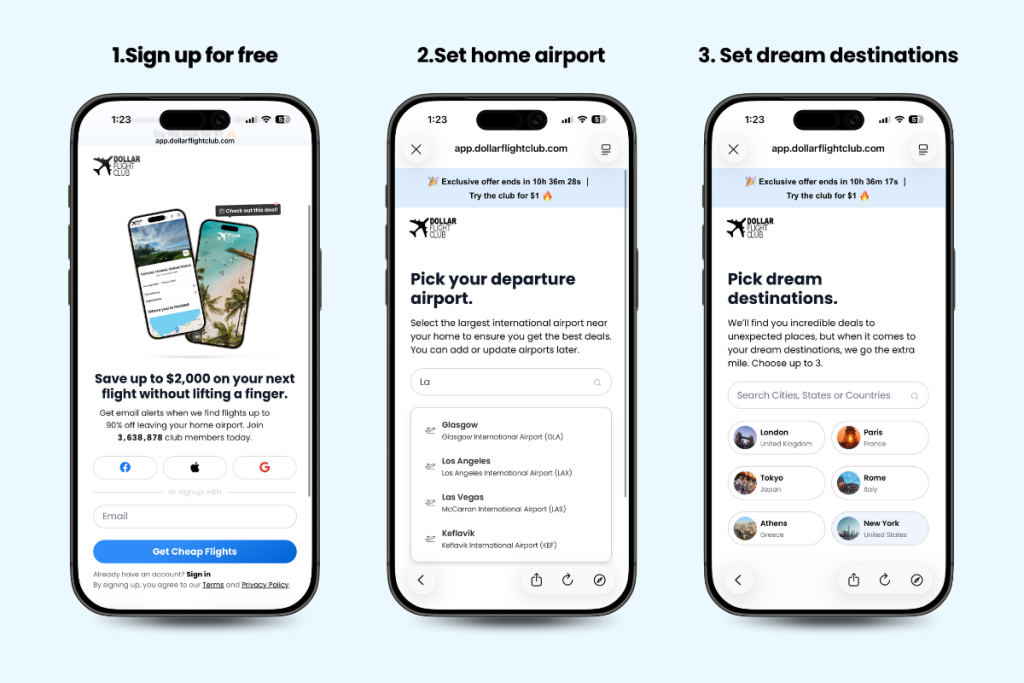
Another advantage is flexibility. You can choose up to four departure airports and as many as ten dream destinations, allowing the system to work around your actual travel habits. That matters if you live near more than one airport, visit family in different cities, or are open to using major hubs to catch long-haul deals. The more strategically you set your profile, the more relevant the alerts become.
My Experience with Dollar Flight Club
One of the most reassuring things about Dollar Flight Club is that it works internationally, not just in a narrow U.S.-focused way. Many travel tools are built primarily for American travelers, sometimes with Canada as an afterthought. That leaves a huge portion of the global travel community out of the picture. This platform feels more inclusive, which is a welcome change for anyone booking from outside the United States or living in a part of the world where airfare tools are often limited.
In practice, setting up a profile is straightforward. You start by entering your departure airport or airports, then choose a set of dream destinations that reflect the kinds of trips you might realistically take if the price were right. This is where the service gets more interesting than a standard price alert. Instead of restricting yourself to only the trips you are already certain about, you can include a mix of practical and aspirational places. That creates room for serendipity, which is one of the most exciting parts of affordable travel.
For a traveler based in Prague, for example, the system can be tuned in a way that reflects real-world possibilities. A nearby airport like Vienna might also make sense for some people, especially if the ground transfer is manageable. For dream destinations, a thoughtful mix of well-known cities, long-haul ambitions, and practical family visits gives the alerts a broader range. A profile like that might include places in South America, Africa, the Pacific, and major U.S. cities, depending on what matters most to the traveler.
What makes these alerts compelling is not just the absolute price, but the context. A fare like Newark for under $500 or Nairobi for just over that can feel remarkable depending on the season and the departure city. Even more striking are the lower-tier deals that sometimes appear for destinations such as Marrakech or Hurghada, which can be astonishingly affordable. When you see routes like that alongside more expensive long-haul options, the value of having a deal alert system becomes obvious. It saves time, reveals patterns, and makes it easier to recognize when something is genuinely worth booking.
Adding additional airports such as New York, Boston, or London can also be smart if you fly through those hubs regularly or are willing to position yourself strategically. Major airports tend to surface a wider range of international deals, and having them on your radar can open the door to cheaper onward travel. Sometimes the best deal is not from your home airport but from a nearby gateway city, and a good flight deal platform helps you see that possibility early enough to act on it.

That is one of the most appealing things about this style of travel planning: it rewards curiosity. If you are the kind of traveler who sees a surprising fare and immediately starts imagining what a week in a new city could look like, the platform speaks your language. Cheap flights are not just numbers on a screen; they are invitations. They can transform a place that had been sitting quietly on your mental wishlist into a real possibility for the coming season.
This works for travelers like us
Dollar Flight Club is particularly well suited to travelers who are already comfortable with a flexible, experience-driven style of trip planning. If you enjoy being spontaneous when the right deal appears, you are probably the ideal audience. The platform is especially useful for travelers who maintain a long list of potential destinations, are open to rerouting their plans if a better option appears, and would rather save money on airfare so they can spend more on the trip itself.
There is also a psychological benefit to using a service like this. Instead of feeling locked into a destination because you already committed mentally or financially, you can stay open. You might discover that a destination you had only casually considered suddenly becomes realistic when a low fare appears. That shift can be surprisingly energizing. Travel feels less like a chore and more like a conversation between your interests and the market.
Of course, not everyone travels in the same way. If you need fixed dates months in advance, have limited vacation time, or must coordinate around school schedules, a deal-driven platform may not be as transformative. In those cases, traditional flight searches and early booking strategies may still make more sense. But for travelers with some room to maneuver, the savings can be substantial, and the range of possibilities can be genuinely inspiring.
There is also an important mindset shift here: the best travel deal is not always the cheapest possible fare, but the one that opens a trip you actually want to take. Sometimes the real value lies in discovering a place you hadn’t considered in depth and realizing, thanks to the price, that the timing is finally right. That is where a platform like Dollar Flight Club can add real value beyond basic price comparison.
New updates on April 20
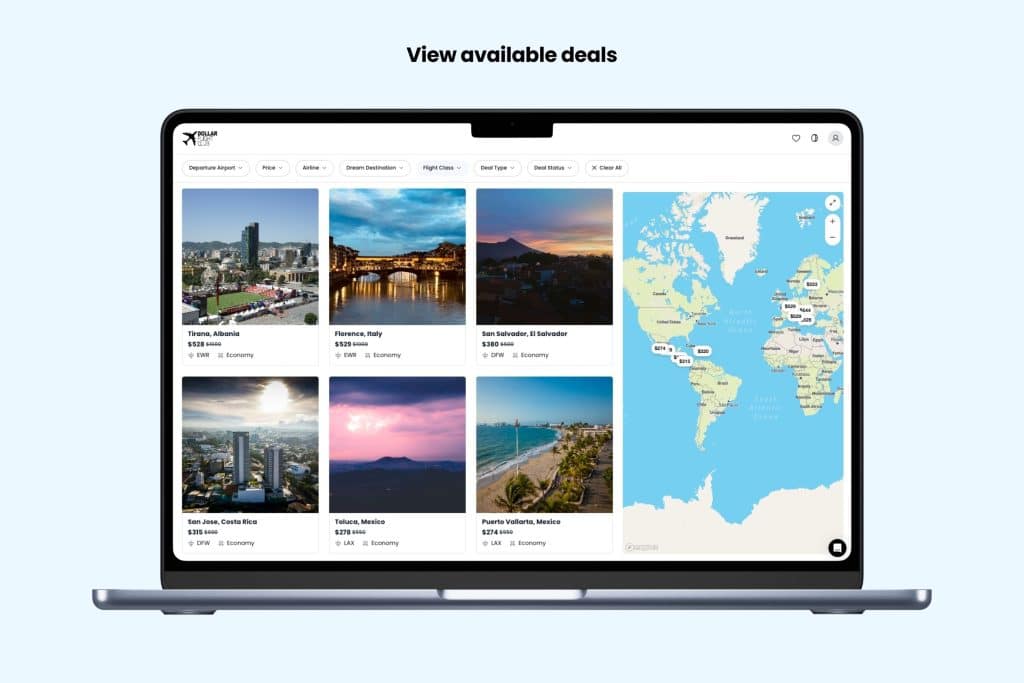
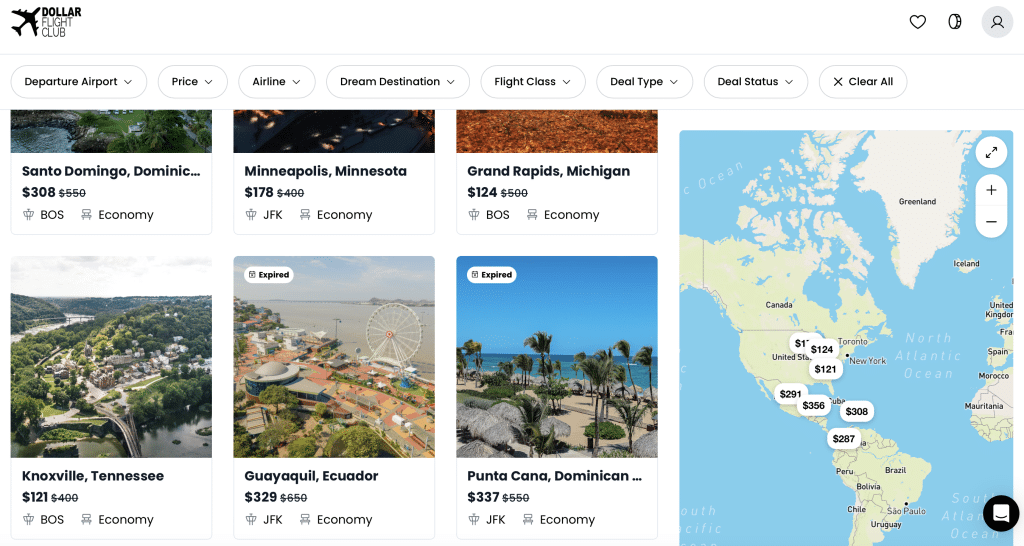
Recent product updates have made the experience noticeably stronger. One of the most useful additions is improved filtering and search. This sounds simple, but it changes how travelers interact with deals. Instead of scrolling through an overwhelming list, you can narrow results by departure airport, price range, airline, destination, flight class, deal type, and status. For someone looking for a very specific kind of fare, that saves time immediately. For someone browsing casually, it makes the entire experience feel cleaner and less chaotic.
The interactive map view is another meaningful upgrade. Visualizing deals on a world map makes it easier to compare opportunities at a glance. Rather than thinking narrowly about one destination, you can see the broader geography of what is cheap from your airport at a given moment. That opens up a more exploratory mode of planning. A traveler might start out hoping for one region and then realize that another part of the world is far more affordable at the moment. That kind of discovery is exactly what makes fare hunting fun.
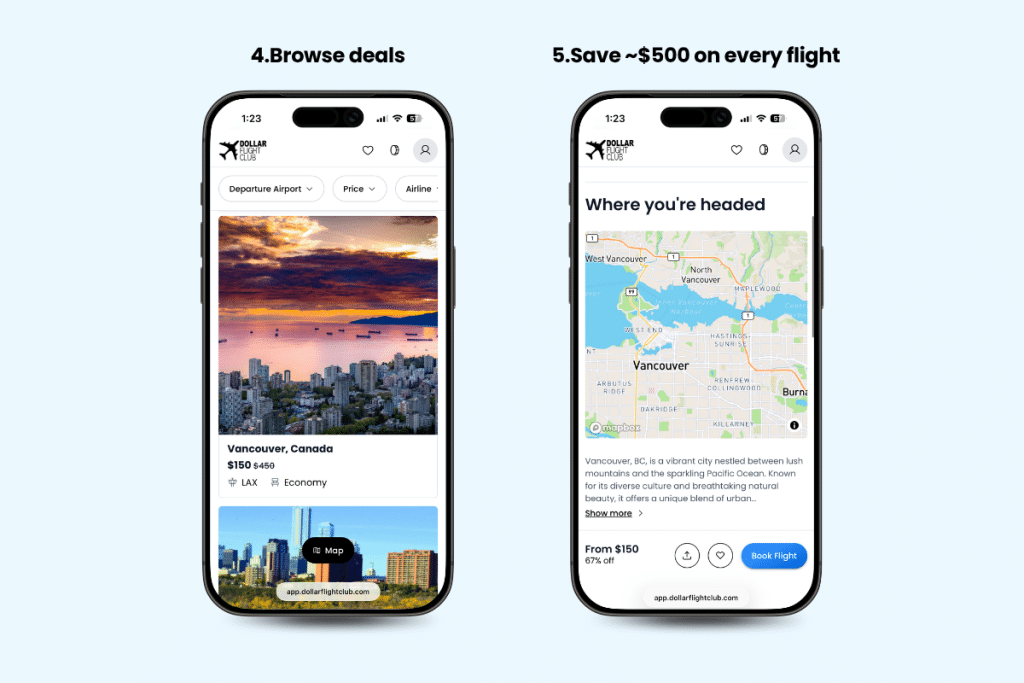
The enhanced destination recommendations add a layer of context that many travelers will appreciate. Instead of just seeing a price, you also get useful background on when to go, what to do, and what the destination is like once you arrive. That means the platform is not only helping you find a flight, but also helping you imagine the trip more clearly. If there are neighborhood insights, affordability notes, or perks tied to tours and experiences, those details can help turn a fare alert into a more complete travel decision.
Taken together, these features make the service feel less like a generic aggregator and more like a smart travel companion. It is not just showing you what exists; it is helping you understand what is worth considering. That distinction matters when airfare is unpredictable and quick decisions can lead to excellent trips.
How to find deals right now
If you want to get the most out of fare alerts, the best strategy is to lead with flexibility. Start from the deal, not the destination. Browse the map or alert feed first and let the prices tell you where opportunities are emerging. This is often the fastest way to uncover destinations you may never have prioritized otherwise. A cheap fare can be more persuasive than weeks of indecision.
It also helps to keep your travel window loose. When prices swing dramatically, a narrow set of dates can eliminate many of the best options. If you can travel a few days earlier or later, or shift by a week or two, your chances of landing a strong fare improve significantly. Flexibility is often the hidden ingredient behind the biggest savings.
When a fare looks too good to be true, move quickly but carefully. Mistake fares and unusually low rates often disappear within hours, so hesitation can cost you the deal. At the same time, it is wise to verify the booking details and understand the cancellation rules before you commit. For flights originating in the United States, the 24-hour cancellation window can be especially helpful if you need a brief moment to think. That balance of speed and caution is essential when hunting the best prices.
For international travelers or those chasing long-haul bargains, Premium features may be especially valuable. The free tier can absolutely be useful, but more advanced alerts and extras can make the experience much richer for travelers who want broader coverage. Features like lounge access perks or TSA PreCheck-related discounts can also add value beyond the airfare itself, particularly if you fly often and care about smoothing out the airport experience.
Hidden Gems
One of the nicest surprises with a good flight deal platform is the way it surfaces places you may not have been actively researching. That is where the hidden gems come in. A traveler might set up alerts for the obvious dream destinations and still end up falling in love with a less expected option simply because the fare was exceptional. This is how cities such as Marrakech, Seoul, or Guayaquil can suddenly jump from the background into real consideration. Sometimes a compelling fare is all it takes to remind you that the world is full of interesting places waiting to be rediscovered.
Hidden gems are not always the cheapest destinations in absolute terms. Sometimes they are the routes that combine affordability with richness of experience: a city with great food, strong local culture, easy transit, or a useful position as a gateway to surrounding regions. A deal to a major hub can be especially valuable because it gives you more options on the ground and often easier onward connections. In that sense, the best hidden gems are not always the places everyone is already talking about. They are the destinations that become exciting because the timing and the price suddenly align.
There is also a practical side to hidden gems. Less-obvious routes can sometimes offer better value, better availability, and a more memorable travel story. Instead of following the same well-worn path, you may end up in a destination that feels fresh and personal. That kind of trip tends to stick with people. Years later, they may not remember every detail of the fare, but they remember the feeling of booking something unexpected and realizing they had found a new corner of the world to explore.
Who should consider the free tier versus Premium?
The free tier is a smart place to start if you are curious but not yet ready to commit. It gives you a way to explore the platform, test how well the deals align with your airports and preferences, and see whether the alerts inspire actual booking behavior. For many travelers, that alone is enough to justify signing up. If the deals fit your style, you can continue with the free option and still get real value.
Premium makes the most sense for travelers who want more control, more coverage, and more serious deal hunting. If you travel often, use multiple airports, care about international routes, or want access to better perks, the upgrade can be worth it. It is especially useful for anyone who is willing to act quickly when a deal appears and wants the broadest possible range of opportunities. In other words, free is great for curiosity; Premium is better for commitment.
Ultimately, the best choice depends on how you travel. If airfare is one of the biggest limiting factors in your plans, even a modest improvement in deal discovery can have an outsized impact. A single well-timed fare can save enough to cover several nights in a hotel, multiple meals, or a major sightseeing experience once you arrive. That is why a platform like this can be so appealing to budget-conscious travelers who still want a premium travel experience on the ground.
The Takeaway
If you like the idea of turning airfare searching into an opportunity rather than a chore, Dollar Flight Club fits neatly into that mindset. It is especially useful for travelers who are flexible, deal-aware, and comfortable making decisions when a strong fare appears. With the new map, improved filters, and richer destination pages, the platform offers a browsing experience that is more practical and more inspiring than a standard fare alert tool.
For travelers who are always keeping one eye on the next trip, it can be a welcome way to discover savings without sacrificing ambition. The best part is that you do not need to treat it as an all-or-nothing decision. You can start with the free tier, see how the alerts feel, and decide later whether the added features are worth it for your travel habits. However you use it, the real appeal is simple: better information, better timing, and a better chance of saying yes when a great journey suddenly becomes affordable.
If the right fare appears, the world has a funny way of making room for a spontaneous adventure.