April 2026: A Standout Solo Journey Through Central Asia and a Busy Home Base in Prague
April 2026 was one of those travel months that feels larger than the calendar can comfortably hold. I spent 17 days on a solo journey through Central Asia, visiting Kazakhstan, Uzbekistan, and Tajikistan for the first time, and the experience was better than I had dared to hope. The trip had the kind of rhythm that makes long-form travel feel rewarding rather than exhausting: new cities, mountain scenery, train rides, craft workshops, a few unexpected mishaps, and plenty of moments that reminded me why solo travel can be so expansive. Back in Prague, the month kept its own pace with cherry blossoms, exhibitions, coworking days, concerts, and the usual daily life that makes returning home feel almost as layered as leaving it.
Why Central Asia Deserves a Spot on More Travelers’ Lists
Before this trip, Central Asia was one of those regions that I had been curious about for years but had not yet managed to experience firsthand. That made this journey especially satisfying. It was my first time in this part of the world, and I came away surprised by how accessible it felt. The logistics were easier than expected, the people were welcoming, and the mix of city culture and dramatic landscapes made the itinerary feel well balanced. For a solo traveler, that combination matters. You want some places to be convenient and walkable, others to feel exciting and a little bit wild, and Central Asia delivered both.
One practical lesson stood out immediately: if you’re traveling through Uzbekistan, buy your train tickets as soon as they go on sale. They typically appear 45 to 60 days in advance and they can sell out fast, especially on popular routes between the major Silk Road cities. That kind of planning is the difference between a smooth trip and a stressful one, and in a region where a few key routes do a lot of the heavy lifting, it pays to be organized.
Destinations Visited
The month took me through Prague in the Czech Republic, then across a sweeping Central Asian route that included Almaty, Moon Canyon, Black Canyon, Saty, Kolsay Lake, Lake Kaindy, and Charyn Canyon National Park in Kazakhstan; Tashkent, Samarkand, Bukhara, and Khiva in Uzbekistan; and Panjakent, Seven Lakes, and Durman in Tajikistan. That alone sounds like a packed itinerary, and it was, but the trip never felt like a blur. Each destination had a distinct personality, from modern-city energy to quiet mountain roads and historic urban centers full of layered architecture.
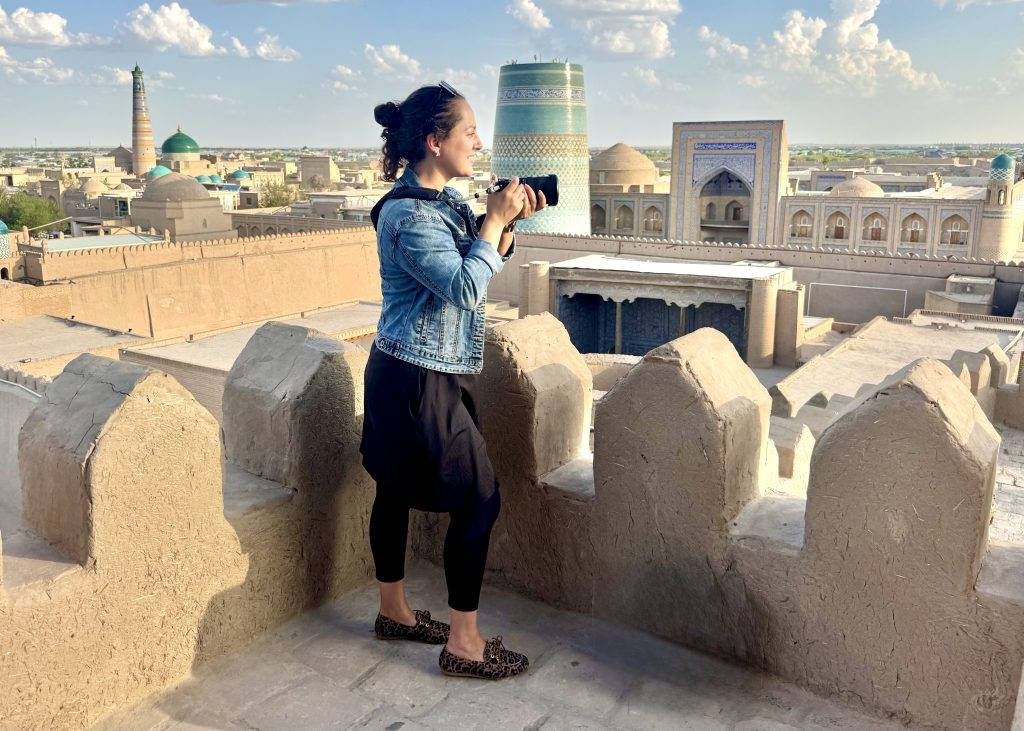
There’s something about the first image of a trip like this that sets the tone. This one felt especially personal, right down to the leopard print shoes. It captured the mood of an itinerary that was equal parts practical and playful, a reminder that even on a long-haul adventure, style and personality travel with you.
Almaty: Green, Walkable, and Easy to Love
Almaty was my first stop in Kazakhstan, and it immediately made sense why so many seasoned travelers rave about it. The city is green, spacious, and remarkably walkable, with a generous cafe scene, solid food, and mountain views in the distance if you’re lucky with the weather. I visited in mid-spring, which meant pleasant temperatures and a landscape just starting to wake up. For a city that can serve as both a jumping-off point and a destination in its own right, Almaty is a very easy place to settle into.
I especially recommend taking a tour with Walking Almaty. The owner, Dennis, is deeply knowledgeable about Kazakh history and culture, and his enthusiasm is the kind that makes a city feel alive rather than merely informative. One of the most memorable details from that tour was watching him literally help an older woman cross the street. It was such a simple act, but it gave the whole experience a warm, human quality that stayed with me.
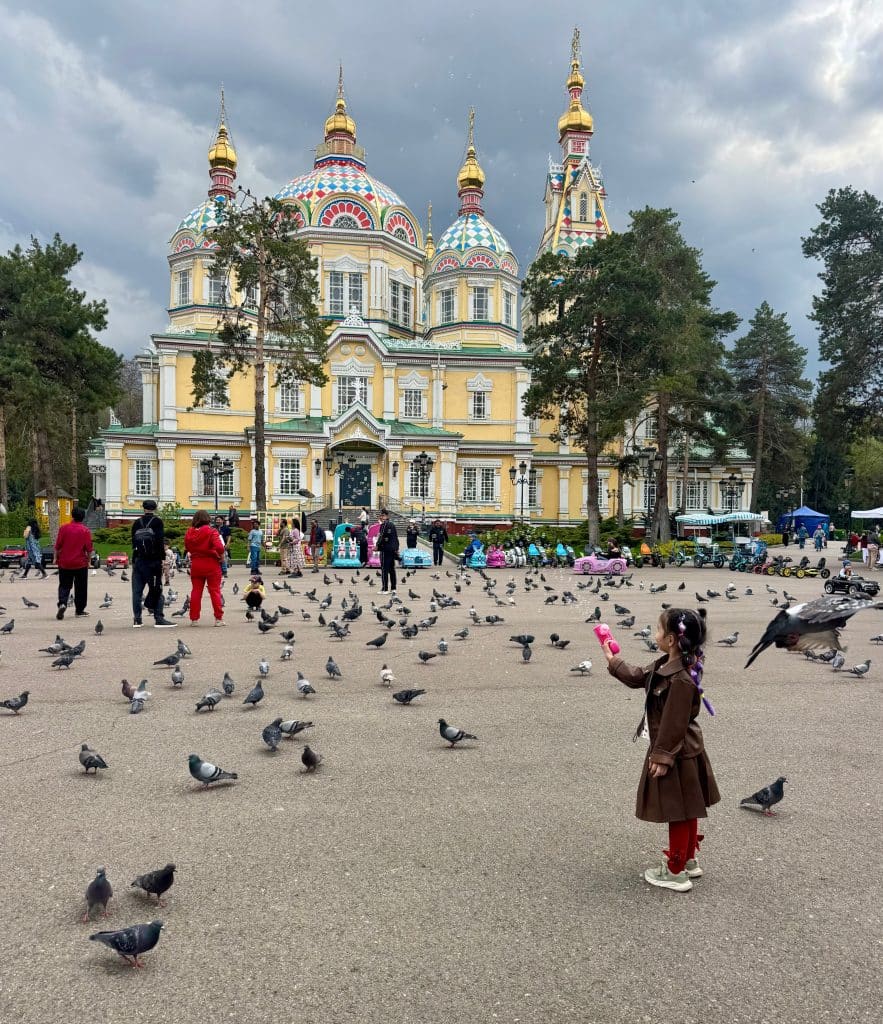
Ascension Cathedral was another highlight, not so much for a long checklist of sights as for the atmosphere around it. It turned out to be a great place for people-watching, and yes, pigeon-watching too. There’s a quiet pleasure in lingering somewhere like that, letting the city unfold around you instead of rushing to the next stop.
Almaty also showed me how affordable a world-class-feeling city can be. Between cafes, food, and general day-to-day spending, it offered a lot of value. It’s the kind of place where you can imagine extending your stay without much convincing, especially if you enjoy cities with a relaxed pace and easy access to nature.
That spirit of kindness and everyday life was part of what made the city feel memorable beyond the usual sightseeing checklist. Sometimes the best travel stories are not about monuments at all, but about the way a place makes space for ordinary moments.
Kazakhstan’s Natural Wonders: Canyons, Lakes, and a Night in Yurts
One of the most rewarding parts of the trip was the two-day tour through the Almaty region of Kazakhstan. Moon Canyon, Black Canyon, Kolsay Lake, Lake Kaindy, and Charyn Canyon are the sort of places that look unreal even in photographs, and seeing them in sequence made the landscape feel almost cinematic. If you’re considering this route, a two-day tour is the way to go. One-day versions exist, but they tend to start very early, end very late, and squeeze too much into one stretched-out day.
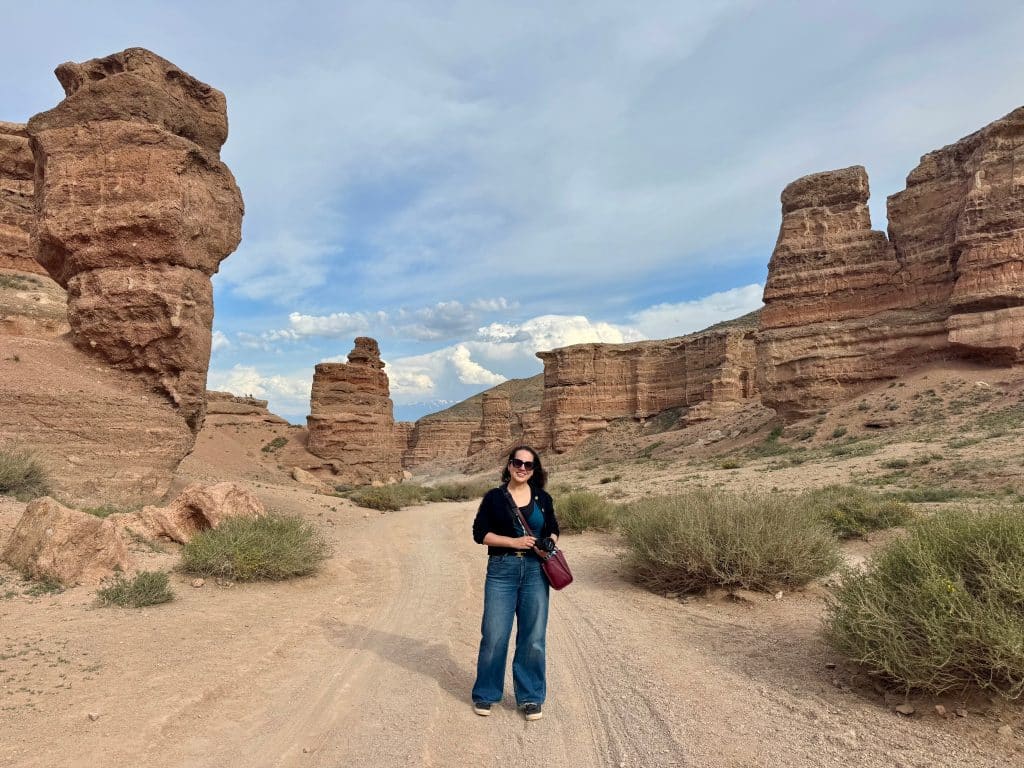
Charyn Canyon was my favorite of the bunch. It felt like it belonged somewhere in Utah or Arizona, with sandy rock formations and a trail that draws you deeper into the landscape as you walk. There’s a satisfying sense of scale there, the kind that makes city life feel far away for a while. The tour itself was large, with 43 people, but it was still fun. Good food, karaoke, and a night in yurts gave it a communal feel that suited the setting. Even in a group that size, the experience felt like a proper adventure rather than a packaged rush.
The yurt stay in particular felt memorable because it combined comfort with a sense of place. Waking up in the middle of a landscape like that makes you understand why Central Asia can be such a compelling destination for travelers who want something beyond the standard city-and-museum itinerary.
Uzbekistan: Silk Road Cities with Distinct Personalities
Uzbekistan was one of the most rewarding parts of the trip. I visited Tashkent, Samarkand, Bukhara, and Khiva, and each city offered a different lens on the country. Together they form a route that feels historic, photogenic, and deeply tied to the Silk Road, but the individual personalities matter just as much as the shared heritage.
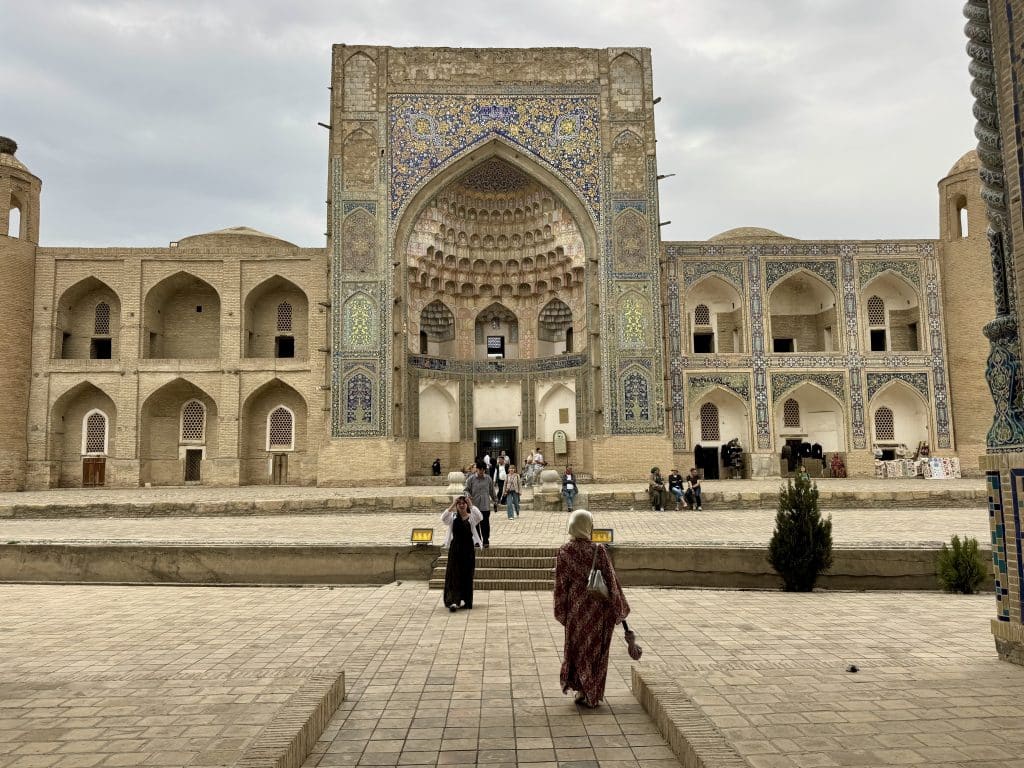
Bukhara was my favorite overall. The city center felt calm and pedestrian-friendly, with beautiful architecture and some of the best souvenir shopping I’ve ever encountered anywhere. It’s the sort of place where you can wander without a rigid plan and still stumble into something lovely. The craft traditions are strong, the atmosphere is relaxed, and the shopping feels more meaningful than transactional. If you like bringing home objects with a story, Bukhara is especially satisfying.
Samarkand had the most dramatic architecture of the trip. Shah-i-Zinda in particular was breathtaking, with turquoise tilework that invites you to slow down and stare. I also booked a costume photo shoot at the Registan early one morning, which was a fun way to engage with the city’s visual identity. Samarkand can feel grand and slightly otherworldly, a place that holds its own history very confidently.
Khiva was different again: a walled city in the desert, heavily oriented toward tourism, and undeniably beautiful. It’s busy, yes, but it’s also highly photogenic and special in a way that is easy to appreciate. The enclosed feel gives it a distinct atmosphere, and for travelers who enjoy historic settings that feel almost preserved in time, Khiva is well worth the stop.
Tashkent was less visually striking than some of the other Uzbek cities, but it was still a worthwhile part of the trip. I took a food tour, visited the Applied Arts Museum, and found some cool coffee shops. It’s a city that benefits from looking beyond the obvious highlights. It may not have the immediate wow factor of Samarkand or Khiva, but it has enough going on to make a comfortable and interesting base.
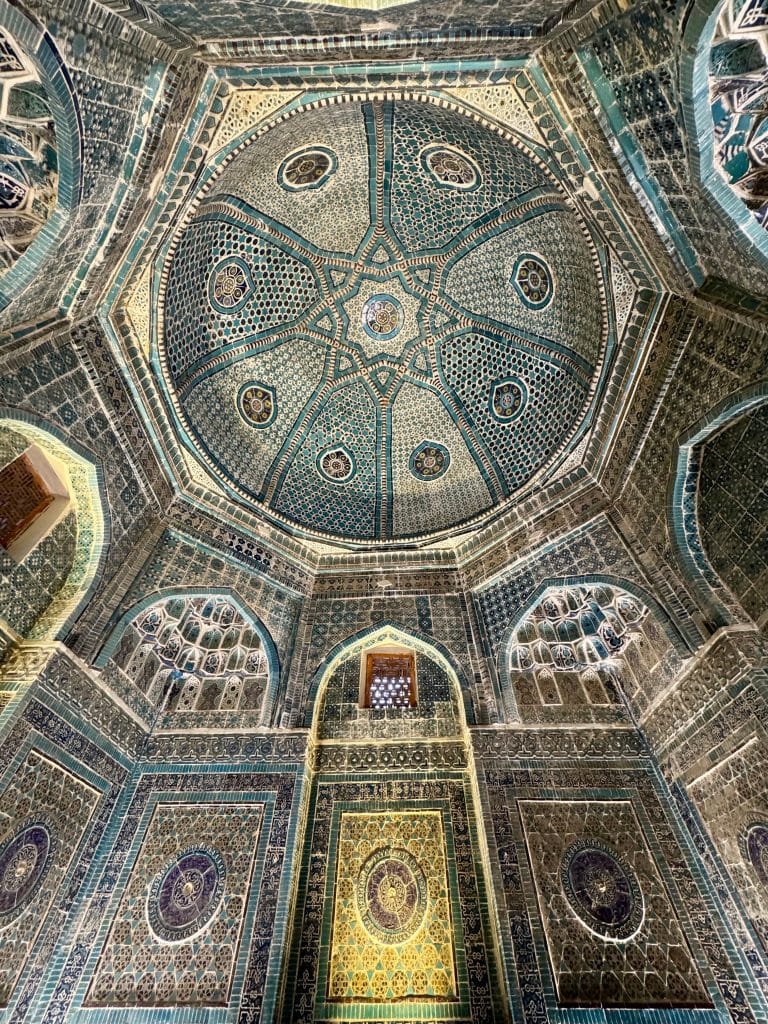
At the Shah-i-Zinda complex, the tilework alone is worth lingering over. The colors and patterns are so rich that they seem to absorb and reflect the light differently throughout the day. For anyone interested in architecture, photography, or Islamic art, this is one of the standout places in Uzbekistan.
I also took a few craft workshops and learned two Uzbek traditions: Suzani embroidery and Persian mini painting. Those classes were a highlight because they added a tactile, creative layer to the trip. Instead of only looking at beautiful craftsmanship in museums or bazaars, I got to try making it myself, which deepens your appreciation enormously. There’s something especially satisfying about learning a traditional art form in the place where it belongs, even if your own attempts are much less polished than the real thing.
Tajikistan: Mountains, Markets, and a Border Day Trip
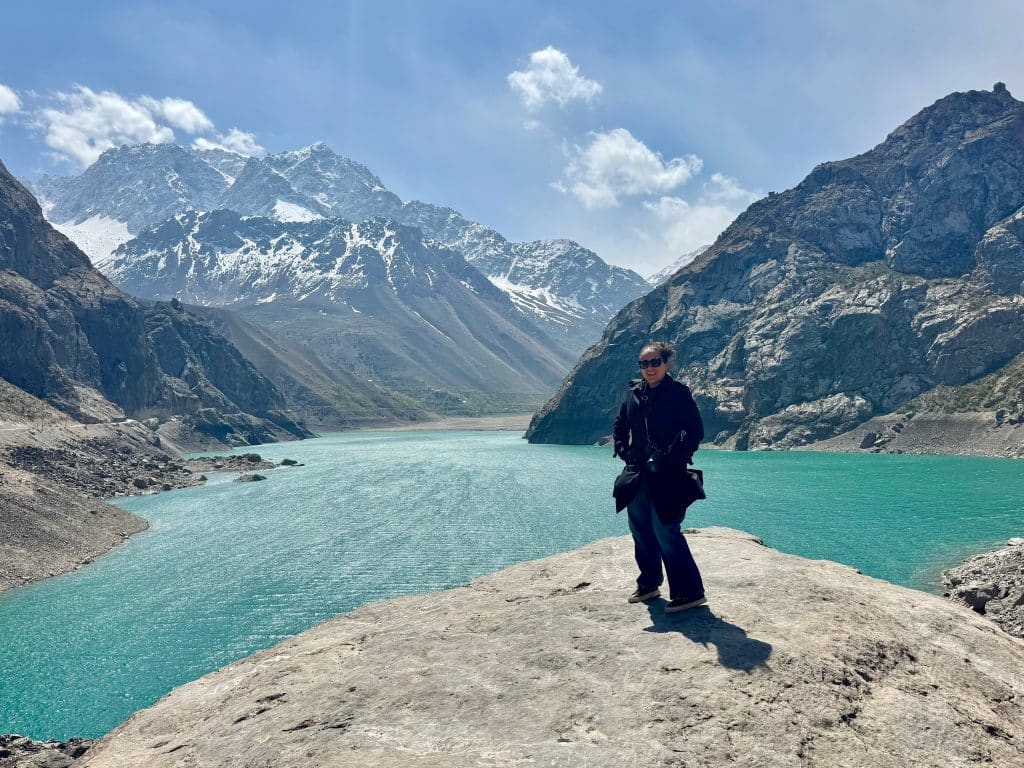
From Samarkand, I took a small-group day trip into Tajikistan, and the contrast with Uzbekistan made the journey even more interesting. Samarkand is only about 50 minutes from the Tajik border, so it’s surprisingly easy to add this cross-border experience to an Uzbekistan itinerary. The tour included Panjakent, its bazaar, the Seven Lakes in the mountains, and the ruins of Sarazm, a UNESCO World Heritage Site that was interesting but not the main reason to go.
The real highlight for me was the bazaar. It was not touristy, which made the atmosphere feel immediate and genuine. People were excited to meet us, and the interaction felt more organic than in a place built primarily for visitors. I also loved noticing how beautifully many Tajik women dress. Matching outfits, sequins, rhinestones, and bright details made the streets feel unexpectedly glamorous. I even saw one woman covered in sparkle working in a garden, which was one of those travel images that stays in your mind because it’s so specific and alive.
The mountain scenery was another reason the day trip felt worthwhile. The Seven Lakes were gorgeous, and even the journey up into the hills made the day feel like a real escape from city life. Tajikistan may not have been the most structured or polished part of the trip, but it was one of the most memorable because of those human and visual details.
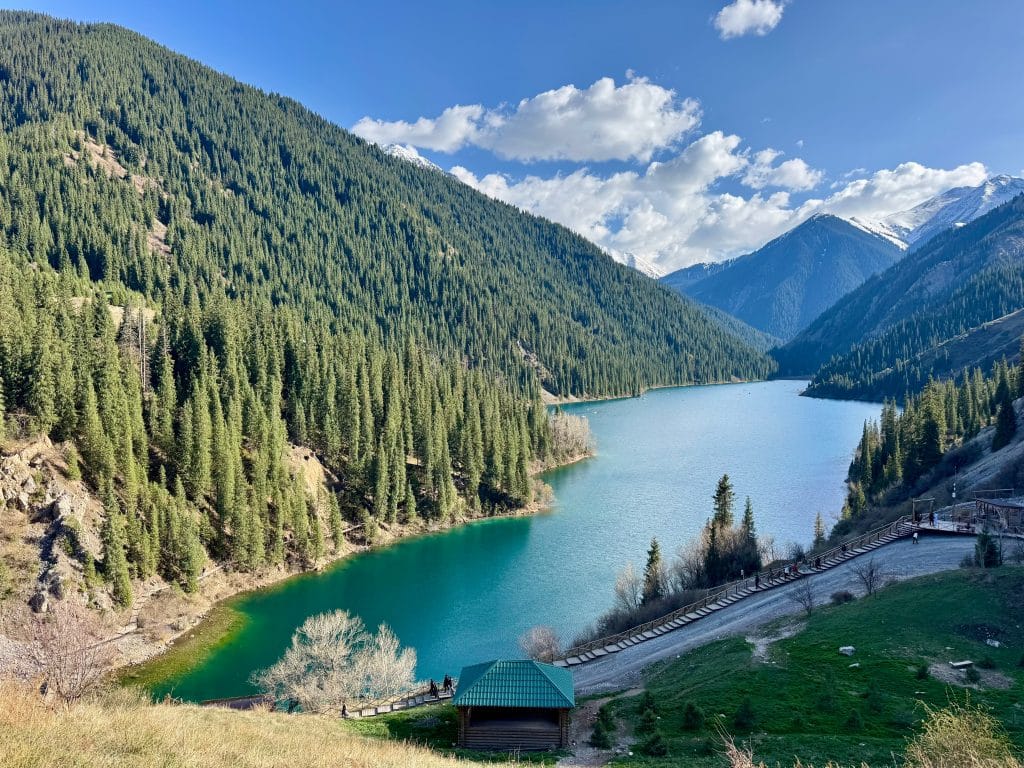
That view of Kolsay Lake is a good reminder that Kazakhstan’s natural landscapes are among the trip’s biggest rewards. Even outside the major cities, the region has a way of delivering moments of quiet beauty that feel expansive rather than staged.
Hidden Gems
Some of the best moments on this trip came from places that don’t always headline the itinerary. In Almaty, the combination of green streets, cafe culture, and mountain views makes the city feel like more than just a transit point. In Tajikistan, the bazaar in Panjakent offered a far more memorable experience than the more famous ruins nearby. And in Uzbekistan, Bukhara’s souvenir streets and slower pace made it easy to find treasures that felt personal instead of mass-produced.
Another hidden gem was the practical experience of traveling through a region that is still underrepresented in a lot of mainstream travel content. That means there is still room for discovery. You’re not just ticking off famous sights; you’re noticing how a city feels in the evening, how a local market sounds, how a guide explains a detail you would have missed on your own. For travelers who enjoy the feeling of arriving before the crowds do, Central Asia has a lot of that energy.
Back in Prague: Cherry Blossoms, an Exhibition, and a Great Concert
April also had a strong Prague chapter. Spring finally started to show itself, with cherry blossoms appearing just enough to make the month feel lighter. I missed most of the bloom this year, but I still got a few days of pink, which was enough to remind me why April can be one of the nicest months in the city. Prague also had its own small seasonal quirks, including green beer for Easter, which still amuses me every year.
We went to Titanic: The Artifact Exhibition, which had artifacts traveling from the Titanic disaster around the world. I found it a little oversold relative to what was actually on display, but I did appreciate the passenger stories. That human element gives even a modest exhibition more emotional weight.
I also upgraded my Revolut membership, which now comes with three WeWork passes a month. Since I work well around other people and enjoy changing up my environment, that felt like a useful little lifestyle improvement. Home is still home, of course, especially with cats around, but sometimes a coworking space gives the week a bit more structure.
The end of the month brought a concert I was very excited for: Miguel at SaSaZu. I adore Miguel, and Wildheart remains one of my favorite albums of all time. He delivered a great show, and it felt like exactly the right note to end the month on.

There’s a special satisfaction in seeing an artist you’ve loved for years perform with full confidence and charisma. That night had the right mix of nostalgia and energy, and it was one of those evenings that makes a month feel complete.
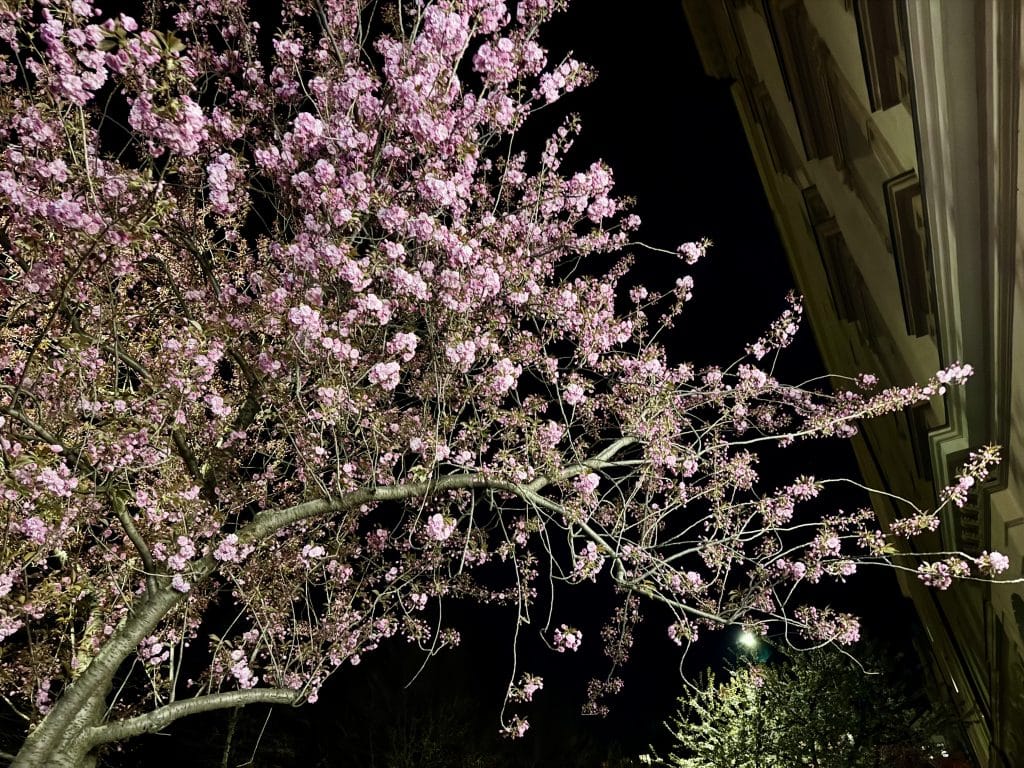
Spring in Prague also meant more time outdoors and a city that felt newly awake. Cherry blossoms, mild weather, and the general return of long light-filled days gave the month a more leisurely texture after the intensity of Central Asia.
Challenges and Travel Mishaps Along the Way
Not everything on the trip was smooth, of course. Charlie’s phone was stolen at Manifesto Market in Prague after a classic distraction scam, which was frustrating especially because it happened in a place we genuinely like and feel comfortable in. It was a reminder that even in cities that feel safe, you still need to stay alert. The fact that it happened away from the tourist center also reinforced an important travel truth: opportunists look for easy openings anywhere.
I also broke my phone screen in Samarkand after dropping it at the Registan. The damage started as a white line of broken pixels, and although the phone was still functioning, I decided to get it fixed before things got worse. A quick search led me to a repair shop next to a boba tea spot, which at least made the waiting time pleasant. It cost a painful $259, but I was relieved to have the repair done. Budgeting for unexpected mishaps is one of the smartest things a frequent traveler can do.
Sleep was another issue. Central Asia involved a lot of early mornings: tours, trains, flights, and one particularly rough 5:00 AM wakeup in the yurt when someone’s phone went off. The eastward time change made it harder to stay in rhythm, and the combination of early starts and travel logistics left me sleep-deprived at points. Still, I’d rather have a trip packed with meaningful experiences than one that feels too relaxed to remember.
And then there was the locked-room situation in Almaty, where I got locked out of my room in a hotel with no on-site staff. Since the staff was only reachable by WhatsApp and my phone was inside the room, I had to improvise. It was ridiculous in the moment and funny afterward, the sort of travel hiccup that becomes a story because the solution was so improvised.

Even the cats looked like they were running things back home while all of this was unfolding. That sense of domestic continuity is one of the pleasures of returning from a trip: the world keeps turning, the pets keep acting like royalty, and you can laugh about the chaos once it’s over.
What I Read, Watched, and Listened To During the Month
Long trips always mean a lot of reading for me, and April was no exception. I went through a wide range of books, from buzzy new releases to thoughtful novels and a practical negotiation guide. Some were stronger than others, but the overall reading month was rich and varied, which is exactly what I want when I’m moving through a lot of airports, train stations, and hotel rooms.
On the screen side, one of my favorite shows returned: For All Mankind. It remains one of the best series I’ve recommended to friends, especially because of its ambitious alternate-history premise and the way it keeps expanding the stakes across decades. I also saw the Michael biopic in the theater and loved the music and dance sequences, even if the plot itself was fairly thin. It was still a reminder of just how enduring Michael Jackson’s music is, from the Jackson 5 to the Bad era.
On the music front, I continued my project of listening through Rolling Stone’s 500 Greatest Albums of All Time, and April brought some great discoveries. Super Fly by Curtis Mayfield was a standout, as was Dusty in Memphis by Dusty Springfield. I also revisited Jagged Little Pill, which holds up better than almost any album I can think of from that era, and Renaissance by Beyoncé, which remains one of the most layered and rewarding pop albums ever made.
This book on negotiation was a useful reminder that travel and daily life both involve getting comfortable asking for what you want. Even if some of the advice feels written with a certain audience in mind, the practical lessons are still worth keeping around.
That landscape shot closes out the month’s travel energy well: expansive, striking, and a little bit humbling. Central Asia has a way of doing that, and I’m already looking forward to writing more about it in depth.
The craftsmanship around Samarkand felt especially memorable because it tied the visual beauty of the region to the lived experience of moving through it. Tilework, color, and history were everywhere, and they made even brief stops feel layered and significant.
Looking Ahead to May
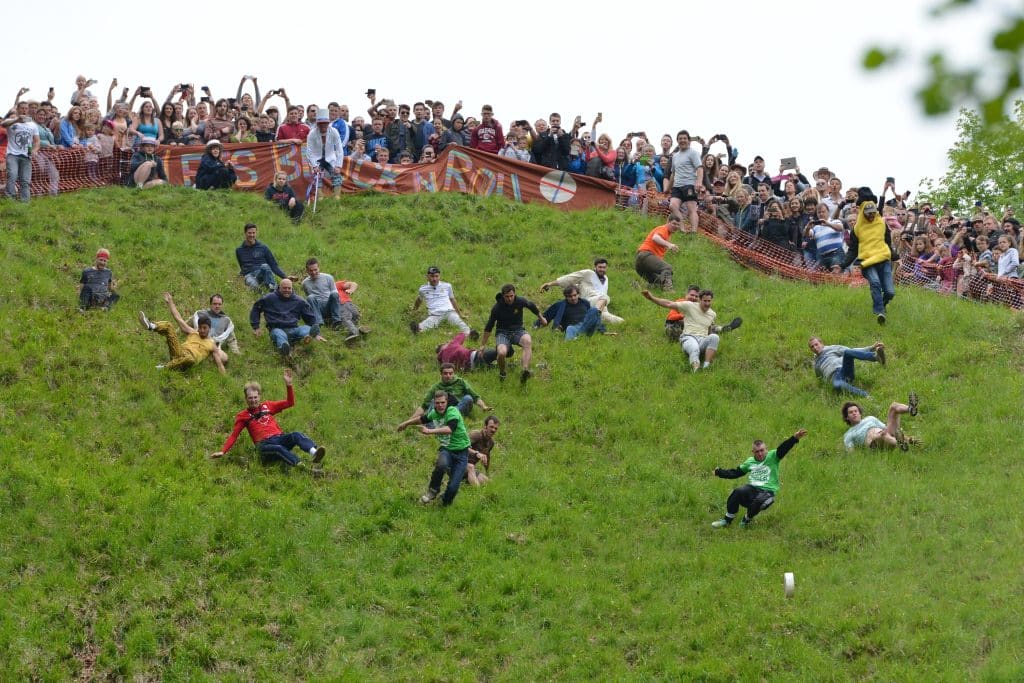
May is shaping up to be a very different kind of month, with more time in Prague and then a trip to England near the end. We’ll be exploring beyond London, starting with Cooper’s Hill for the annual cheese-rolling, which is one of those eccentric traditions that sounds almost fictional until you see how seriously it’s taken. The hill is famously steep and dangerous, and we’ll be there as spectators only, but it should be a memorable day all the same.
We’re also adding time in the Cotswolds and Bristol, plus a reservation at Wilson’s, a Michelin-starred restaurant that’s been getting attention for its sustainable approach. And Cheddar Gorge is on the list too, which feels delightfully appropriate for a trip built around cheese. It’s the sort of themed travel that makes a month feel especially fun, and I’m already looking forward to the mix of countryside, food, and odd British tradition that lies ahead.
For now, though, April’s combination of Central Asia, Prague life, unexpected mishaps, and a few excellent cultural moments is more than enough to sit with. It was a month full of movement, texture, and the kind of details that make travel feel personal long after you’ve unpacked.