There’s a particular kind of dread that arrives with winter in the mountains, especially when the forecast starts hinting at freezing rain. In places where the weather can turn from picturesque to punishing in a matter of hours, the question is never just whether the roads will be slick or the driveway will need shoveling again. The bigger question is whether the power will hold. For travelers, remote workers, and anyone spending time in cold-weather regions, that uncertainty shapes how you plan your days, how you pack, and how seriously you take even the smallest storm warning.
In British Columbia’s mountain communities, winter is both a privilege and a challenge. The landscape is stunning: dense forests dusted with fresh snow, ski hills humming with activity, and frozen lakes or outdoor rinks that invite families outside even when the air bites at your cheeks. But with that beauty comes unpredictability. Heavy snowfall, ice storms, and long stretches of extreme cold can all place real strain on the grid. What looks like a normal winter forecast on paper can become a full household disruption by late afternoon, which is why reliable backup power has become less of a luxury and more of a practical travel and lifestyle consideration.
## Why Winter Power Planning Matters in Mountain Destinations
When people think about travel preparedness, they often picture hiking boots, layered clothing, or a well-packed carry-on. In mountain destinations, though, power planning deserves a place on the list too. Whether you are staying in a cabin outside town, working remotely from a rental, or living year-round in a region where outages are part of the seasonal rhythm, your devices, lights, internet, and heat-related accessories all depend on a steady source of electricity. That matters even more in winter, when daylight is short and a loss of power can quickly change the mood inside a home from cozy to stressful.
For households with multiple people working from home, the stakes are even higher. Laptops, routers, phones, tablets, desk lamps, kitchen appliances, and charging stations all compete for limited backup options when the grid goes down. In that context, a portable power station is not just a gadget; it becomes part of the larger travel toolkit for cold-weather living. It helps preserve routines, keep communication open, and reduce the sense that you are at the mercy of the next storm front.
## A Practical Look at the BLUETTI Elite 200 V2
The BLUETTI Elite 200 V2 is designed for exactly this kind of environment. With 2,073Wh of capacity and 2,600W of AC output, it offers enough power to support a serious household workload instead of forcing you to ration every device. Four AC outlets, two 100W USB-C ports, and two USB-A ports make it possible to charge or run up to nine devices at the same time, which means you can keep multiple laptops going while phones, tablets, and smaller accessories stay topped up in the background. That flexibility is what turns backup power from a temporary stopgap into something far more useful in daily life.
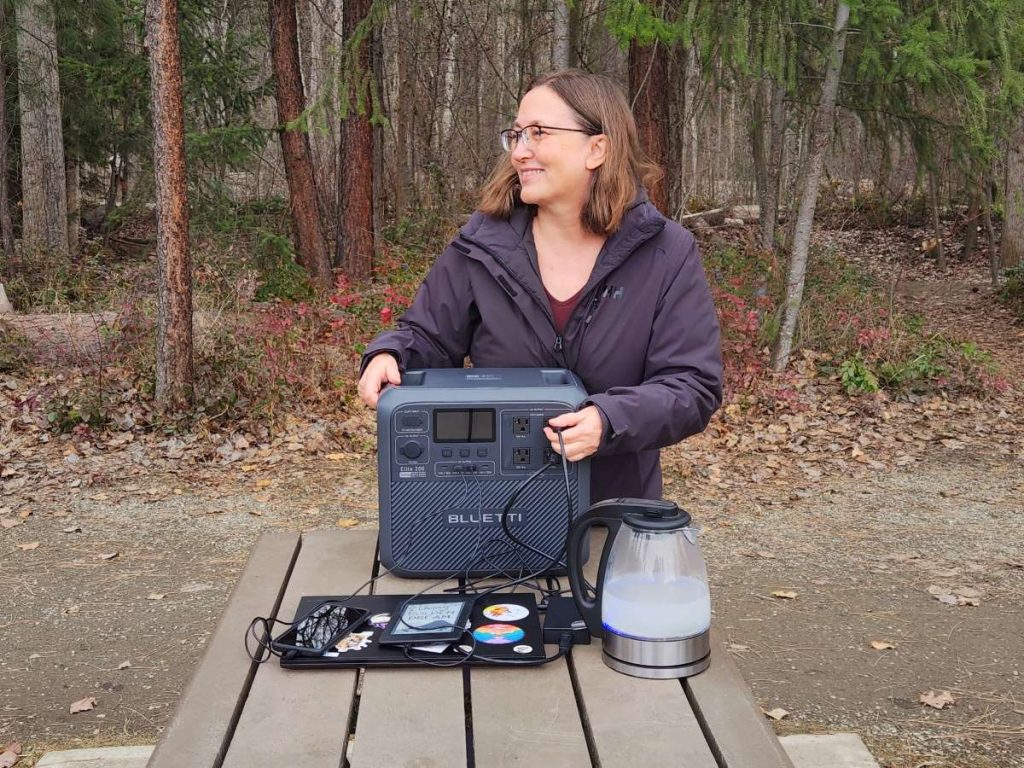
What stands out most in real use is not just the headline capacity, but the way it handles a normal workday without drama. Two laptops, several phones, a tablet, a Bluetooth speaker, and lighting can all run at once with no noticeable strain. On busier days, adding a kettle or a small fan still falls within the station’s capabilities. For travelers or remote workers who want one dependable power source rather than a patchwork of battery banks and half-charged backups, that kind of performance makes a meaningful difference.
The unit also includes Hercules mode through the BLUETTI app, which can support heating devices up to 3,900W. Even if you do not plan to push it that hard often, it is reassuring to know the station has extra room for high-demand scenarios. In winter, that sort of headroom can matter more than people expect, especially if you are dealing with occasional outages and want the option to power equipment that genuinely improves comfort.
## Real-World Use Indoors and Out
One of the most useful tests for any portable power station is how well it adapts to changing environments, because travel and winter living rarely happen in a neat, controlled setup. A device that works well in the living room but struggles outside in the cold loses much of its value if your actual life includes sheds, cabins, campsites, or outdoor workspaces. The Elite 200 V2 performs like a piece of equipment built for movement between settings rather than one that must stay in a single corner of the house.
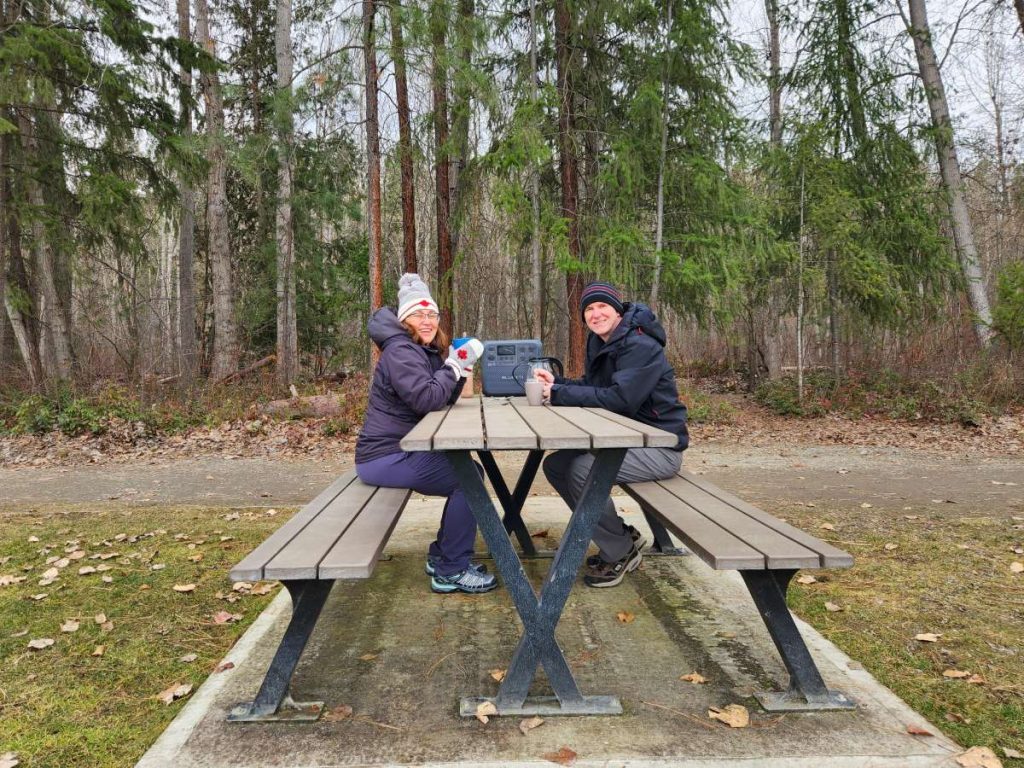
In a forested setting, with winter air still sharp even when the snow is not falling, the station proved surprisingly easy to use. Paired with a 200W solar panel, it created the kind of self-contained setup that feels especially appealing in remote or semi-remote destinations. Laptops ran smoothly, power remained stable, and even a kettle for hot chocolate worked without issue. That may sound like a small detail, but anyone who has spent a winter day outside knows how much morale depends on a warm drink. The ability to make that moment happen anywhere, without sacrificing productivity, is what makes portable power feel less like a backup and more like an extension of your travel freedom.
The display is another feature that adds real value. Being able to see what you are drawing from the battery and how much the solar panel is adding back helps you make better decisions throughout the day. In practical terms, that means less guesswork and fewer surprises. Instead of hoping the unit lasts, you can understand exactly how your energy usage is trending and adjust accordingly. For long winter days, especially when sunlight is limited, that visibility is a major advantage.
At just over 53 pounds, the Elite 200 V2 is not something you toss casually into a daypack, but it is still portable in the truest sense of the word. The integrated handles are helpful, and the form factor is compact enough that one person can move it from a house to a vehicle to an outdoor setup without turning it into a burden. That balance between sturdiness and mobility is important for travelers who want power they can actually bring along, whether the destination is a cabin, a campsite, or a temporary work location.
Cold-weather performance also matters. A station rated to operate at temperatures as low as -20°C is naturally better suited to Canadian winters than many consumer-grade batteries. In regions where mornings can start below freezing and stay that way for hours, a unit that remains dependable in the cold is worth serious consideration. It is the difference between buying something that looks good on paper and buying gear that genuinely matches the climate you live in or travel through.
## Hidden Gems: The Quiet Places That Make Winter Better
Winter travel in British Columbia is often associated with the major draws: ski resorts, famous mountain towns, and well-known lakes or viewpoints. But some of the best winter experiences happen in quieter places. A forest clearing with a picnic table, an unfussy trailhead with snow-packed trees overhead, or a tucked-away outdoor rink in a rural community can be more memorable than the postcard spots because they feel lived in rather than staged. These are the kinds of places where practical gear pays off the most, because you are not relying on infrastructure to make the experience comfortable.
Hidden gems in winter often reward the traveler who is willing to slow down. A short drive from a busy hill can lead to a peaceful pocket of trees where the only sounds are boots on snow and branches shifting in the wind. A roadside pull-off can become the perfect place for a thermos break or a remote work session if you have the right power setup. Even a familiar backyard can feel new when you can extend your time outside with reliable electricity for lights, devices, or warm drinks. In cold climates, those small, low-profile places often become the most meaningful ones.
## What to Know Before Buying for Travel or Home Backup
The most important thing to understand about a portable power station this size is that it sits at the intersection of travel gear and home resilience. It is not meant to be a tiny emergency battery for occasional phone charging. It is built to support real workloads, which means it can serve families, remote workers, off-grid setups, and anyone who needs more than a basic backup pack. That versatility is what gives it strong value, especially if you expect to use it both during outages and on trips.
The battery chemistry is also worth noting. BLUETTI uses automotive-grade LiFePO4 cells, and the Elite 200 V2 is rated for more than 6,000 charging cycles. In plain terms, that suggests a very long lifespan, potentially stretching across years of regular use without dramatic degradation. For travelers and homeowners alike, durability matters because a device like this should earn its place by being useful again and again, not just during a single season of anxiety.
The app is another strength. Many power stations come with companion apps that feel like an afterthought, but a well-designed interface can make a real difference when you are managing battery life, solar input, and multiple outputs at once. The BLUETTI app provides real-time monitoring, charging controls, and energy-saving settings in a way that feels intuitive. If you are using the station in a winter outage, that kind of clarity helps you stay calm and organized rather than treating the battery like a mystery box.
There are a few trade-offs to understand as well. The weight means it is best suited to deliberate movement rather than constant carrying. It does not include a built-in light, which some competing units offer for emergency use. It is also not expandable with additional battery modules, so if your future plans involve scaling into a larger whole-home system, that is something to factor in. Even so, for many mountain households and travel scenarios, those limitations are minor compared with the reliability it provides.
## How It Changes the Way You Travel in Winter
What makes a device like this interesting is not only the technical specification but the way it changes behavior. Once you know you can keep your laptops running, maintain lights, recharge phones, and even heat water without depending entirely on the grid, winter starts to feel less fragile. That matters when your life includes both remote work and weather that can shift quickly. It also matters if your travel style leans toward cabins, road trips, or stays in places where backup systems are not guaranteed.
Instead of asking whether a storm will ruin your day, you start asking how you want to spend the day if the storm arrives. That is a subtle but meaningful shift. It creates room for better planning, more flexibility, and a calmer response to poor weather. For anyone living in or traveling through mountainous regions, that peace of mind can be worth a great deal.
For households that need dependable winter backup and travelers who want more freedom away from standard outlets, the Elite 200 V2 offers a practical balance of power, portability, and longevity. It is substantial enough to handle real demands, yet manageable enough to move where it is needed. In a season defined by uncertainty, that kind of reliability is exactly what makes the cold months feel more livable, and sometimes even a little easier to enjoy.
As winter settles in and the mountains take on their quieter, snow-dusted rhythm, having power you can trust makes all the difference.