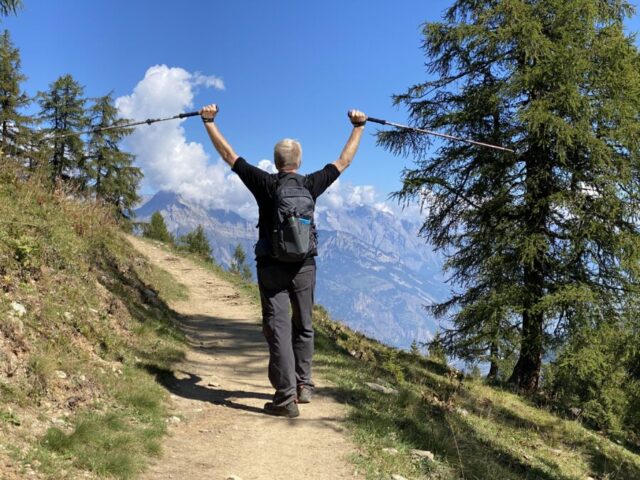
There’s something humbling about circling Mont Blanc on foot. The mountains don’t care how old you are, how experienced you think you are, or how many miles you’ve logged on other trails. They simply rise around you in a cathedral of rock, ice, and weather, and ask you to be prepared. That was the feeling I carried on the Tour du Mont Blanc, a route that has become one of Europe’s most celebrated long-distance hikes not because it is easy, but because it is magnificent, varied, and deeply rewarding for hikers who come ready to respect it.
At 66, I felt a little like the father of the hiking community while walking around Mont Blanc earlier this fall. Yet the trail never made me feel out of place. The TMB is absolutely doable for reasonably fit hikers, including first-timers who are honest about their limits and willing to plan carefully. In fact, I met plenty of people on the route who were older than me, and just as many who were younger but clearly underestimating how much endurance a multi-day alpine trek demands. The beauty of this hike is that it welcomes all kinds of travelers, provided they arrive with realistic expectations.
The Tour du Mont Blanc is often described in broad strokes: a legendary circuit around Western Europe’s highest peak, crossing France, Italy, and Switzerland. But the lived experience is more interesting than the label. One moment you’re climbing through fragrant forest and meadows dotted with grazing cows; the next you’re staring at glaciers that look close enough to touch. Villages appear like punctuation marks in the itinerary, offering coffee, soup, and a bed before the next demanding stretch. This rhythm of effort and reward is part of what makes the route so memorable. It is not just a hike; it is a moving portrait of the Alps.
Why the Tour du Mont Blanc Stands Out
There are many famous hikes in Europe, but few offer the same blend of accessibility, variety, and drama. The TMB is long enough to feel like a true expedition, yet well supported by mountain huts, guesthouses, and trail towns that make logistics manageable for non-experts. That balance is a big part of its appeal. You can choose a guided trip, book lodging independently, or carry a lighter pack and stay in comfortable accommodations along the way. For many travelers, that means the adventure feels ambitious without becoming intimidating.
What also sets the route apart is the constant change in scenery. Alpine forests give way to open passes. Quiet valleys turn into steep stone corridors. Waterfalls, pastureland, and jagged ridgelines each have their moment. Even on tired days, the trail stays visually interesting, which matters more than people think. When you are hiking day after day, monotony can be draining. The Tour du Mont Blanc avoids that trap.
Health and Safety Come First
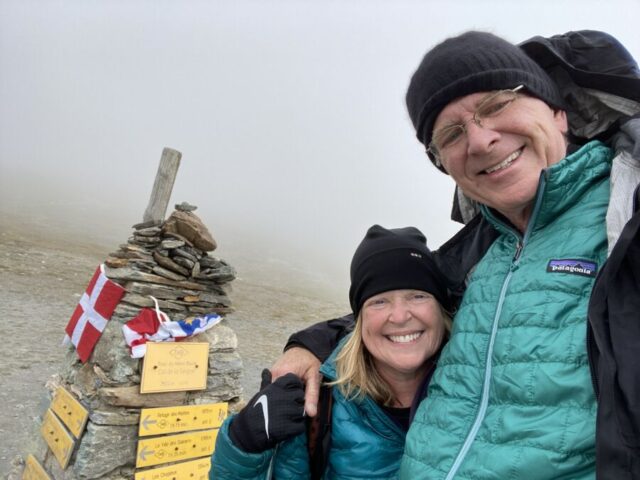
For total novices like Shelley and me, it was wise to stay proactive about health and safety from the beginning. Long hikes punish complacency. Small problems become big ones quickly when you are carrying a pack, descending steep terrain, or pushing through weather that changes by the hour. The smartest hikers are not the ones who act fearless; they are the ones who notice trouble early and respond without ego.
Good boots, liner socks, slippery powder, and moleskin for tender skin are essential. We kind of became gear geeks along the way, investing in good day bags, woolen clothes, and great hiking shoes. I was never so thankful for a wool cap in Europe. The right gear doesn’t just add comfort; it reduces friction, fatigue, and the chance that minor discomfort will snowball into something that slows you down for days. On a route like this, a blister is not a small inconvenience. It is a logistical problem, a mood problem, and sometimes a mobility problem.
The footwear lesson is especially important. Boots should be broken in long before you arrive, and they should match the terrain you expect to encounter. Trail shoes work for some hikers, but many people will prefer something more protective on rocky descents and uneven alpine paths. Liner socks can help manage moisture and reduce rubbing. Moleskin, tape, and blister treatment supplies should not be buried at the bottom of your bag. Keep them easy to reach. The same goes for anything you use often, because when you need it, you usually need it fast.
Pack for Performance, Not Just Comfort
I was skeptical about a lot of so-called “good ideas” before the hike, but two things I eventually appreciated were a daily baggie of trail mix and my metal water bottle. I complained about the steep price tag at first, but soon realized the bottle was worth every cent. On the trail, convenience often becomes value. If an item keeps your water cold, survives the abuse of a long trek, and doesn’t fail halfway through a climb, it earns its place quickly.
Trail mix sounds almost too simple to matter, but that kind of reliable food can make a real difference on a strenuous day. When energy dips and the next village still feels far away, a small handful of nuts, dried fruit, and chocolate can lift you without requiring a full stop. It is practical fuel, and on long walks practicality is often more useful than novelty. The same principle applies to every part of your pack: choose items that solve a real problem, not ones that merely look good in a packing list.
Wool clothing proved to be one of the best decisions we made. Wool socks help manage moisture, wool base layers regulate temperature, and a wool cap can be surprisingly valuable when you are exposed to cold wind at higher elevations. Synthetic layers have their place, but wool earned my trust over and over again. When you’re sweating on the climb and cooling quickly on the descent, fabric choice matters more than fashion.
A good day bag also matters more than many people expect. It should be comfortable, stable, and large enough to carry the essentials without feeling like a burden. Hydration, snacks, a light shell, sunscreen, basic first aid, and a few repair items should fit without turning every step into a struggle. A well-designed pack distributes weight efficiently, which becomes increasingly important after several hours on uneven ground.
Weather Can Make or Break the Experience
If the weather turns bad and it rains hard, much of the trail would become far less enjoyable and potentially dangerous. That’s not meant as drama; it’s simply honest. Alpine hiking is highly sensitive to conditions. Wet rocks, slick mud, fog, and wind can change the character of a day almost instantly. A route that feels straightforward in sunshine can become tiring and technical in poor visibility. This is why weather awareness is not optional on the Tour du Mont Blanc.
Hiking poles are essential, and even in perfect weather I would have been worried about a stumble without my own trusty set. They help with balance on descents, reduce stress on the knees, and provide an extra point of contact when the ground becomes uneven or loose. Many hikers discover their importance only after the first rough downhill. By then, the lesson has usually already been written in sore legs. Bring poles that you know how to use and adjust them properly for climbs and descents.
Rain gear also deserves attention. A light shell that truly blocks wind and precipitation can save an entire day, especially when temperatures drop at elevation. Even if the forecast looks poor, do not assume the day will remain miserable from start to finish. Mountain weather shifts. Sunshine can return quickly, but so can cold rain or drifting cloud. Pack for variability, not optimism.
Fueling the Body for Long Alpine Days
Food on the TMB is more than a pleasure; it is a performance tool. Eat a solid breakfast. The one day we had breakfast with no protein, climbing was noticeably tougher. That small difference made a big impression. Protein, healthy fats, and slower-burning carbohydrates help sustain effort over long ascents and prevent the energy crash that can make even a moderate climb feel punishing.
Hydration matters just as much. A metal bottle is sturdy, easy to refill, and less fragile than many alternatives. On warm days, you may drink more than expected; on cooler days, you may forget to drink enough. Either way, regular hydration keeps your energy steadier and reduces the risk of headache or fatigue. It is easy to focus on dramatic gear choices and overlook the basics, but on a hike like this the basics are what keep everything working.
Eating well also means eating early and often enough. A mountain trail is not the place to play catch-up with calories. Once your energy fades, recovery takes time, and steep terrain becomes much more punishing than it needs to be. Small snacks through the day are better than waiting until you feel depleted. That simple habit can save a lot of suffering.
Stretching and Recovery Make a Real Difference
After learning my lesson on other long hikes, I decided to be religious about stretching on the Tour du Mont Blanc from the start. I had a routine of six stretches and spent time throughout the day making sure I didn’t tighten up. That discipline paid off. Very often, the thing that ruins a multi-day trek is not one bad moment but the slow accumulation of tight calves, sore hips, and stiff hamstrings that gradually alter your stride. Once your walking form changes, strain spreads to other parts of the body.
Stretching does not have to be elaborate to be useful. The point is consistency. Take a few minutes in the morning before setting off, pause during the day when you notice stiffness, and do a proper reset at the end of the hike. That simple rhythm can help you start the next morning feeling like yourself instead of like a badly folded tent. Recovery is part of the hike, not something separate from it.
Rest matters too. Some travelers try to maximize every minute by pushing too hard, but a long-distance alpine route rewards restraint. Stop when your body gives you warning signs. Sit down when your feet need a break. Take the extra five minutes. You are not wasting time; you are preserving it.
Don’t Be a Hero on the Trail
One of the best lessons I learned on the TMB was simple: don’t be a hero. If skin is getting hot, wrap it up. I managed the entire hike without a blister and then, almost absurdly, got one on purpose in the last two hours by ignoring that rule. That was a reminder that success on a long trek often comes down to discipline in the boring moments. The hikers who finish most comfortably are usually the ones who intervene early, not the ones who power through discomfort and hope for the best.
This mentality applies to more than feet. If you feel unusually tired, slow down. If you are dehydrated, drink. If the weather changes, add a layer before you get cold. If a descent feels sketchy, use your poles and shorten your stride. The mountains reward humility. They are very willing to punish stubbornness.
There is also a social side to this. On a popular route like the Tour du Mont Blanc, you will meet hikers from all over the world, each with different levels of experience. Some move quickly, some move cautiously, and some are figuring it out as they go. The shared challenge creates a quiet camaraderie. People trade trail advice, compare weather notes, and ask one another about the next pass or the best café in town. It’s one of the lovely things about walking a famous route: you become part of a temporary community bound by sore legs and mutual respect.
Hidden Gems Along the Way
While the TMB is famous for its marquee views, some of the most memorable moments come from the less obvious places. Small mountain cafés can feel like hidden sanctuaries after a long climb, especially when they serve strong coffee, warm soup, or a slice of cake that tastes better than anything you’ve had in months. Quiet side viewpoints away from the main flow of hikers often offer the best photographs and the most peaceful breaks. Even a simple bench overlooking a valley can feel like a secret reward if you arrive at the right moment.
Another hidden gem is the slower pace of the trail itself when you allow it to happen. If you stop trying to race from one landmark to the next, the smaller details come into focus: the bell of a grazing cow echoing across a slope, the smell of wet pine after a brief shower, the sound of boots on gravel in the early morning. Those details stay with you long after the itinerary fades. The route may be famous, but those quiet experiences are what make it personal.
Village life is also part of the charm. A bakery opening early, a guesthouse host offering a local tip, a shop stocked with simple trail essentials — these are not grand attractions, but they are the kind of reliable, human-scale moments that shape the trip. On a demanding trail, small kindnesses feel enormous.
What Makes the Tour du Mont Blanc Worth It
The Tour du Mont Blanc is not a casual walk, and it should not be treated like one. It asks for preparation, respect, and a willingness to adapt. But it gives back far more than it takes. Every climb earns a view. Every careful gear choice pays off in comfort. Every disciplined stretch, snack, and blister check adds up to a better experience. For anyone considering the route, that is the real appeal: it is challenging enough to feel meaningful, yet accessible enough that a thoughtful, reasonably fit hiker can do it and feel proud of the achievement.
I’ll be sharing more photos, stories, and practical notes from Mont Blanc soon, but the most useful advice is already clear: prepare well, listen to your body, respect the weather, and don’t underestimate the value of good socks, good poles, and a steady pace. The mountains around Mont Blanc are magnificent, and if you meet them on their own terms, they have a way of making the effort feel worthwhile right up to the last bend in the trail.