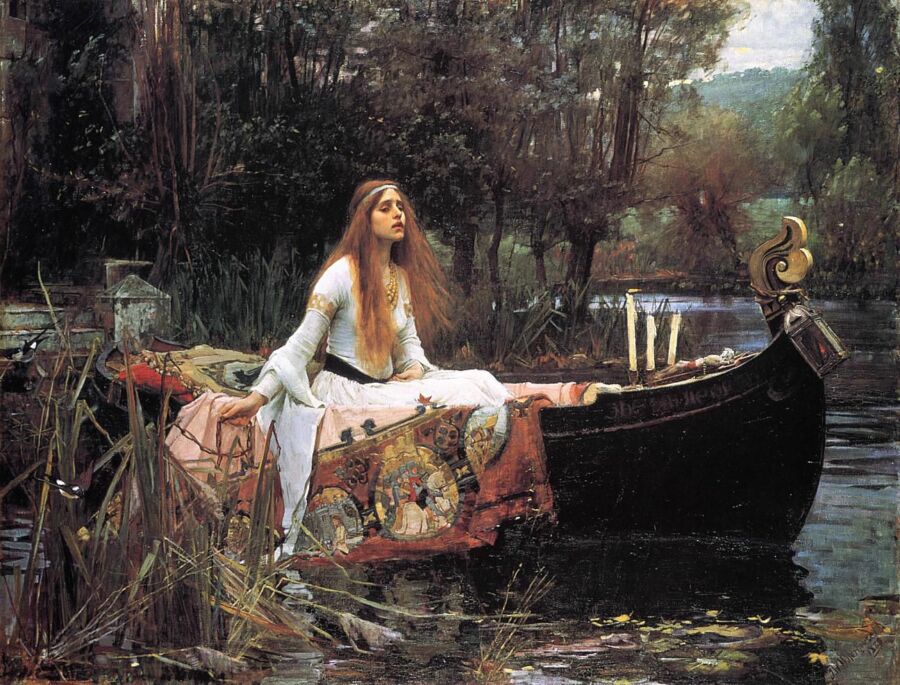
There’s something magical about standing before a masterpiece you’ve only ever seen in books or on screens. The play of light on the canvas, the texture of brushstrokes, the scale of the work—it all becomes real. For travelers who love art, Europe is a treasure trove of such encounters, and one of the most hauntingly beautiful paintings you can see is John William Waterhouse’s *The Lady of Shalott*. This iconic work, housed at the Tate Britain in London, captures a moment of tragic beauty that has captivated audiences for over a century.
As Europe reopens to visitors, now is the perfect time to plan a trip that includes this masterpiece. But *The Lady of Shalott* is more than just a pretty picture—it’s a story woven in pigment, a window into Victorian sensibilities, and a testament to the enduring power of romantic legend. Let’s explore the painting, its history, and how you can make it part of your next European adventure.
## The Story Behind the Painting
The Lady of Shalott is a character from Arthurian legend, immortalized in Alfred, Lord Tennyson’s 1832 poem. She lives in a tower on the island of Shalott, near Camelot, under a curse: she must never look directly at the outside world, only view its reflection in a mirror. She weaves what she sees into a tapestry, creating a safe but illusory existence. But when the handsome knight Lancelot rides by, she can’t resist and looks out the window. The mirror cracks, and the curse is set in motion. She leaves her tower, finds a boat, and floats down the river toward Camelot—and her death.
Waterhouse’s painting depicts the Lady at the moment she sets off in the boat, her expression a mix of fear, hope, and resignation. She knows her fate, yet she moves forward, driven by love or the desire for truth. The painting is a visual feast, with the Lady’s white dress and red hair glowing against the dark, reedy riverbank. The autumnal leaves, the flickering candles, the tangled chain—every detail tells part of the story.
## The Pre-Raphaelite Brotherhood and Waterhouse’s Vision
John William Waterhouse was born in Rome in 1849 to English parents, and he became associated with the Pre-Raphaelite movement, even though he came a generation later. The Pre-Raphaelite Brotherhood, formed in 1848 by artists like Dante Gabriel Rossetti and John Everett Millais, rejected the mechanistic art of the Industrial Age. They looked back to the detailed, symbolic, and emotionally rich styles of early Italian Renaissance painting—before Raphael. They loved medieval themes, romantic tragedy, and intense color.
Waterhouse’s *Lady of Shalott* is a perfect example. The colors—deep reds, vivid blues, greens—glow like stained glass, a hallmark of Pre-Raphaelite work. The artist focused on the Lady’s face, for which his wife modeled, and the texture of her dress and hair. The composition draws the eye down the river, making us feel the current pulling her toward an unknown end.
## Symbolism in Detail
Every element in the painting carries meaning. The three candles on the prow represent life, hope, or faith; only one still lit shows that her flame is nearly out. The tapestry she brought from the tower depicts the safe, reflected world she’s leaving behind. The first fallen leaf of autumn lands on her dress, signaling the end of a season and of her life. The reeds and dark water evoke melancholy. Even the birds seem to flee from her.
But the Lady’s expression is what truly haunts. She is not melodramatic; the Pre-Raphaelites disliked overacting. Instead, Waterhouse captured a quiet intensity—a mix of sorrow, love, and resolution. Her lips are slightly parted, her eyes looking ahead but not focusing. It’s a face that invites viewers to project their own interpretations. Is she a victim of love? A martyr for truth? A rebel against confinement? Victorians would have recognized the moral dilemma: choosing authentic life, even if it leads to destruction.
## Visiting the Painting: Practical Tips
*The Lady of Shalott* is part of the collection at the Tate Britain in London, along Millbank, near the Thames. The museum is easy to reach by tube (Pimlico or Vauxhall) or bus. It’s free for the permanent collection, so you can spend time with the painting without rushing.
To truly appreciate the work, try to visit on a weekday morning when the galleries are quieter. Stand at a distance to take in the composition, then move closer to examine the brushwork and details. Bring a notebook if you like—I always jot down my thoughts, and it deepens the experience.
While at Tate Britain, you can also see other Pre-Raphaelite treasures, such as Millais’s *Ophelia* and Rossetti’s *Proserpine*. The museum is a must for any art lover visiting London.
## Combining the Painting with Other London Attractions
London is packed with art and history. After your visit to Tate Britain, you can walk along the Thames to the Houses of Parliament or take a boat to the Tate Modern for contemporary art. Alternatively, explore the nearby neighborhoods of Westminster or Chelsea. If you’re on a longer trip, consider a day out to the countryside—the Lake District or Cornwall—where Waterhouse painted many landscapes.
## Why You Should Make Art a Focus of Your Travels
Art isn’t just decoration; it’s a gateway to understanding culture, history, and human emotion. Traveling to see masterpieces like *The Lady of Shalott* gives you a new lens on a place. You begin to notice how art reflects the values of its time, and how those values resonate today. The Lady’s journey is a metaphor for stepping out of comfortable illusions—something travel itself often forces us to do.
When you stand before this painting, take a moment to think about your own chains. What are you releasing? What river are you floating down? Art has a way of making us reflect on our own lives, and that’s part of why it’s so rewarding to seek out on your travels.
The Lady of Shalott may be heading to her doom, but her story has inspired countless viewers over the decades. Next time you’re in London, make time for her. She’s waiting in that quiet gallery, ready to share her melancholic beauty with you.