Lisbon is a city that captivates with its hills, tiled facades, and the mournful sound of fado, but for many travelers, the true heartbeat of the city is found in its casual eateries and corner tascas. Portuguese food is hearty, flavorful, and surprisingly affordable, and nowhere is this more evident than in the country’s love affair with sandwiches. While pastéis de nata get all the glory, locals are just as passionate about their sandes—savory, portable meals that tell a story of tradition, migration, and resourcefulness. In this guide, we’ll take you beyond the tourist trail to explore Lisbon’s best Portuguese sandwiches, starting with the one that put Portuguese street food on the map: the bifana.
The bifana isn’t just a sandwich; it’s a rite of passage. For us, it was the gateway to understanding Portuguese cuisine’s depth. Shortly after moving to Portugal, we bit into our first bifana at a tiny, crowded joint in Baixa, and we were hooked. The simplicity was deceptive: thin slices of marinated pork, slow-cooked until tender, stuffed into a crusty roll, and often served with a squeeze of mustard and a dash of piri-piri. It’s a quick, cheap lunch—usually under €5—that fills you up without weighing you down. But the bifana is just one piece of the puzzle. Portugal offers a surprising variety of sandwiches, each with its own regional twist, and we’ve made it our mission to hunt down the very best.
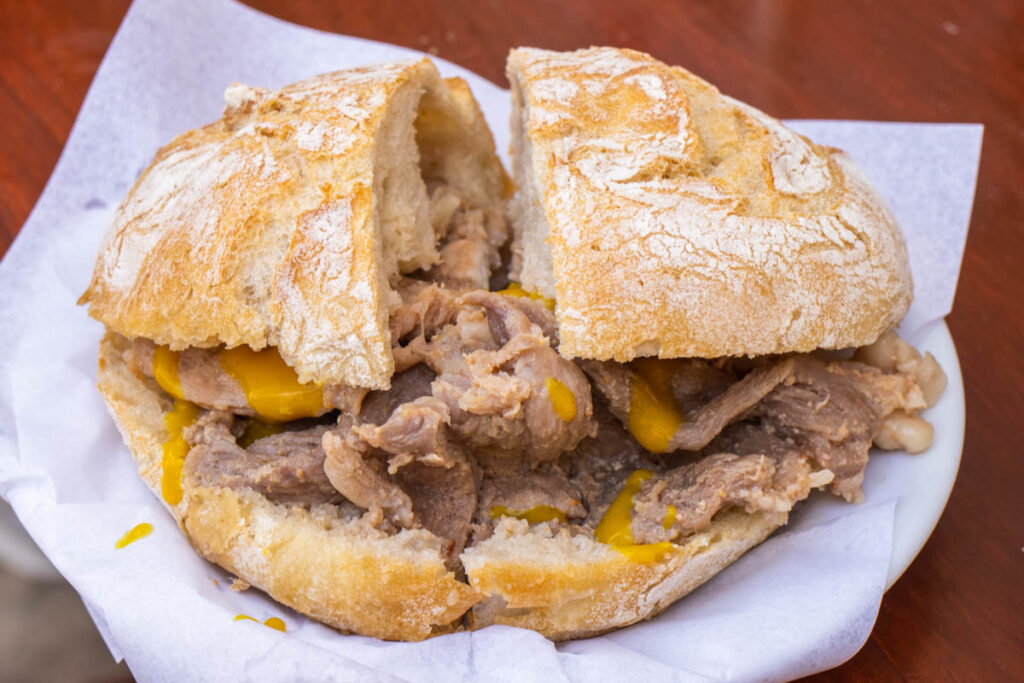
Both simple and satisfying, a bifana is essentially sautéed pork slices stuffed inside a roll. The best bifana stands cook their pork low and slow, making the addition of mustard and piri-piri sauce less of a necessity and more of a complement. The meat should be juicy, the bread slightly chewy, and the overall experience so straightforward that you wonder why it’s not replicated everywhere. Part of the magic is the setting: you’ll likely be standing at a counter, shoulder-to-shoulder with locals, washing down the sandwich with an imperial—a small, cold Portuguese beer. It’s a communal ritual that embodies Lisbon’s unpretentious charm.
Most travelers eat at least one bifana when they’re in Lisbon. Anthony Bourdain, whom many consider to be the ultimate traveler, ate bifanas at Cervejaria O Trevo when he filmed No Reservations back in 2011. As for us, we go to As Bifanas do Afonso in Baixa and A Parreirinha do Chile in Arroios. Luckily and fingers crossed for the future, this ultra quick meal costs under €5.
Plan to stand when you join the crowds at our favorite Lisbon bifana joints. Doing so is part of the experience. Also plan to pair your bifana with an imperial (i.e. small Portuguese beer).

If you prefer to sit while you eat and have a flexible budget, consider eating a bifana at Pigmeu in Campo de Ourique. The Michelin-selected restaurant serves its juicy pork inside Madeiran bolo do caco instead of standard sandwich rolls. This elevated version swaps the humble bread for a round, dense Madeiran flatbread cooked on a hot stone, often spread with garlic butter. The result is a richer, more decadent bifana that still honors the original. For a classic experience, though, nothing beats the original shabby-chic tascas where the bifana was born.
Where to Eat the Best Bifanas in Lisbon: As Bifanas do Afonso, A Parreirinha do Chile, and Pigmeu.
Beyond the Bifana: Lisbon’s Other Iconic Sandwiches
While the bifana may be the most famous, it’s far from the only Portuguese sandwich worth seeking out. One sandwich that often steals our hearts is the prego—a thin steak sandwich, usually served on a roll with garlic, mustard, or a fried egg on top. The name means “nail” in Portuguese, and legends abound about its origin, but what matters is the flavor: tender beef, perfectly seasoned, with just the right amount of sauce. Our favorite prego spot is A Conquinha in Chiado, where they serve it with a side of chips and a cold beer.
Another must-try is the francesinha, a monstrous sandwich from Porto that has made its way into Lisbon’s food scene. Imagine layers of cured meats, steak, and sausage, all covered in melted cheese and drowned in a tomato-beer sauce. It’s not for the faint of heart, but for those seeking indulgence, it’s a revelation. Try it at Café São Vicente in Alfama or at Bota Alta in Bairro Alto.
For a lighter option, seek out the sandes de leitão—suckling pig sandwich—from the central region of Portugal but increasingly found in Lisbon. The pig is slow-roasted until the skin is crackling and the meat falls apart, then served on a soft roll with a squeeze of orange. The best version we’ve found is at Leitão do Zé in the Mercado de Campo de Ourique.
Where to Eat: A Local’s Roadmap
Lisbon’s sandwich scene is scattered across neighborhoods, each with its own character. In Baixa, you’ll find the old-school tascas that have been serving bifanas for generations. In Arroios, a more multiethnic area, traditional Portuguese joints sit alongside Indian and Nepalese restaurants, but the bifana at A Parreirinha do Chile remains a classic. Campo de Ourique’s market offers a food hall experience with high-quality versions of multiple sandwiches, including the upscale bifana at Pigmeu. For francesinhas, head to Bairro Alto or Alfama, where the vibe is bohemian and the portions are generous.
Regardless of which sandwich you choose, the key is to embrace the culture: stand at the counter, chat with the person next to you, and complement your meal with a super Bock or Sagres. Each bite tells a story of Portuguese resilience and creativity—a delicious lesson in culinary history.
As we continue to explore Lisbon’s ever-evolving food landscape, we keep coming back to these sandwiches. They’re affordable, accessible, and deeply satisfying. In a city that can sometimes feel overrun by tourists, a simple sandes eaten at a crowded tasca is a reminder of why we fell in love with Portugal in the first place. So next time you’re in Lisbon, skip the fancy restaurants for one meal and join the locals at the counter. You’ll taste more than just pork or beef—you’ll taste authenticity.